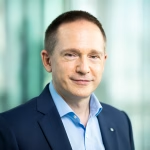


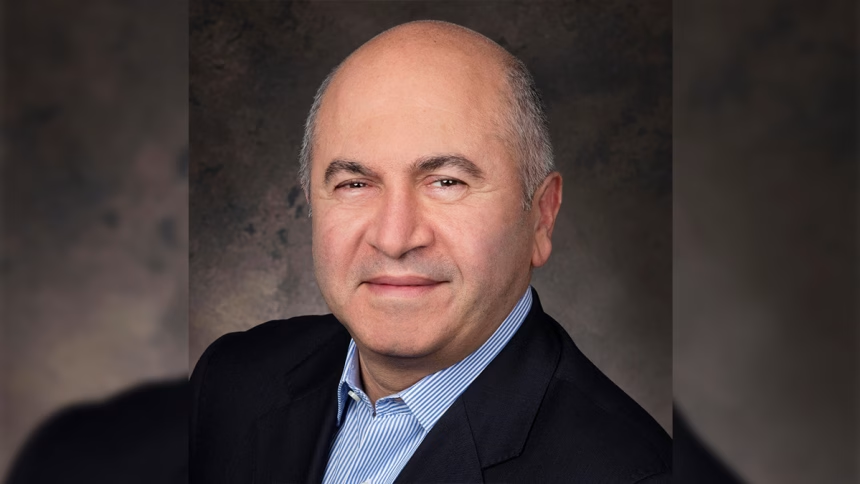

Healthcare in Saudi Arabia is moving forward at an impressive pace. From putting patients first to adopting advanced technologies, companies across the Kingdom are working hard to achieve the goals of Vision 2030. To explore these developments and understand how leading healthcare players are performing, MedEdge MEA sat down for an exclusive conversation with Muhieddine Makkouk, Vice President and General Manager of Danaher in Saudi Arabia. Known for his clear and thoughtful insights, Makkouk responded to interesting questions, sharing perspective that are both valuable and eye-opening. Read the full interview to discover more.
MedEdge MEA: Could you start by sharing how Danaher’s mission aligns with Saudi Arabia’s healthcare transformation journey under Vision 2030?
Muhieddine Makkouk: Danaher’s mission aligns closely with the Saudi Arabia’s vision to create a preventative, patient-centered and digitally enabled healthcare system. At the heart of this transformation is a clear priority-advancing diagnostics capabilities to enable earlier detection, more precise interventions, and improved population health outcomes. We believe diagnostics sit at the very foundation of this transformation, driving prevention, precision, and equitable access for every patient.
Danaher’s diagnostics businesses are uniquely positioned to support this ambition. We bring advanced technologies, deep clinical expertise, and a proven record of successful partnerships across healthcare systems, allowing us to translate the promise of Vision 2030 into lasting health impact through the combined strength of our operating companies.
Our goal is to help build a diagnostic ecosystem that is digitally connected and locally empowered, capable of delivering earlier and more accurate insights across the entire patient journey. By supporting innovation, sustainability and local capability, we’re helping realise Saudi Arabia’s ambition to create a world-class healthcare system for the future.
ME: In your view, what are the most important steps to strengthen innovation and localization in the life sciences sector?
MM: Strengthening innovation and localization depends on collaboration, between government, industry, and academia. Streamlining regulatory approvals, simplifying procurement, and addressing regional disparities can all help accelerate new access to technologies.
It’s encouraging to see Saudi Arabia already taking many of these steps, fostering a supportive policy environment that promotes local manufacturing, biotechnology R&D, and health tech innovation.
We see connecting global innovation with local impact as key to building a thriving life sciences ecosystem that delivers sustainable health and economic value.
ME: How do you approach leadership when it comes to empowering teams and developing Saudi talent within Danaher?
MM: At Danaher, leadership starts with investing in people. We invest heavily to recruit, develop, motivate, advance, and retain the best talent, with the goal of building the best workplace led by the best people leaders. We support the attraction, engagement and development of the talented individuals we need to realise our innovation and growth ambitions.
We’re investing in Saudi talent through specialized training, capacity-building, and our new internship programme for recent graduates, giving them hands-on experience with the latest technologies across the diagnostics sector. We’re also exploring collaborations with Saudi institutions to co-develop academic programmes in diagnostics, digital health, and life sciences, as well as launching joint research initiatives in areas such as infectious disease surveillance and oncology. We are committed to professional development and growth, with impactful talent development programmes that create a ripple effective of knowledge-sharing across the organisation.
By fostering local expertise and a culture of continuous learning, we are equipping emerging leaders with the skills, confidence and strategic insight to drive Saudi Arabia’s healthcare transformation from within, ensuring sustainable impact for years to come.
ME: Which emerging technologies do you believe will have the greatest impact on diagnostics and research in the near future?
MM: AI-powered healthcare is transforming the way we detect, understand, and treat disease. AI-enabled tools are already helping clinicians interpret results faster with greater precision, supporting earlier intervention and more personalised care.
Looking ahead, these technologies will further strengthen access by reducing reliance on centralised labs and allowing more testing to take place closer to patients. Combined with digital connectivity and data analytics, AI will help build a healthcare system that is more advanced, sustainable and equitable, empowering clinicians with real-time insights and freeing up valuable capacity across the health system.
We envision diagnostics seamlessly integrated at every point in the patient journey, from rapid point-of-care testing in emergency settings to diagnostic precision in maternal care, ensuring timely, informed decisions across all care pathways. Within regional health clusters, diagnostics will act as the connective tissue, linking hospitals, clinics and labs through secure digital platforms to ensure continuity of care, whether in major cities or remote regions.
ME: What key factors will define the success of healthcare companies across the Middle East over the next decade?
MM: In Saudi Arabia and across the Middle East, success will be defined by more than market presence, it will require a trust-based approach, long-term engagement, and alignment with national healthcare priorities. Companies must embed themselves within local ecosystems, building stronger partnerships with providers, regulators, and innovators.
For Danaher, this means investing in capacity building, workforce development, and collaborative initiatives that deliver tangible health outcomes. Those who combine global expertise with meaningful local impact will be best positioned to drive sustainable healthcare transformation across the region.