

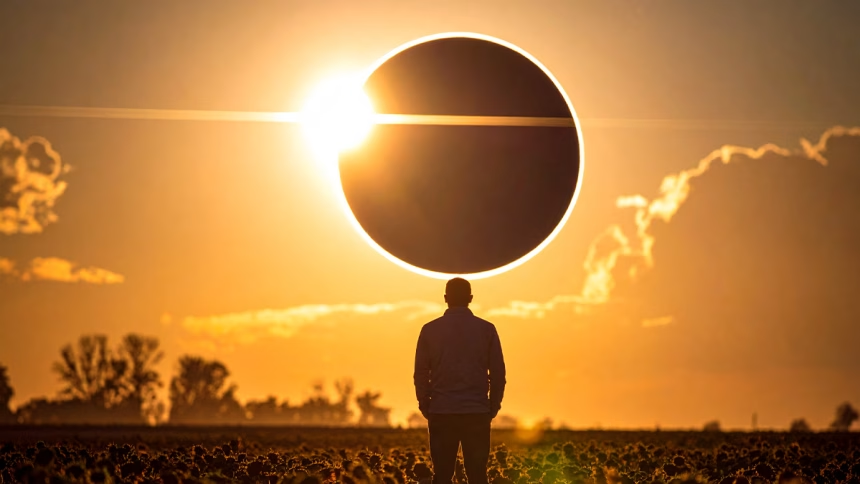
Looking directly at a solar eclipse without proper eye protection can cause serious and potentially permanent damage to your eyes. This condition is known as solar retinopathy or “eclipse blindness,” where intense solar radiation burns the retina, the light-sensitive tissue at the back of the eye responsible for converting light into neural signals.
How the damage occurs
When you look directly at the sun, even during a partial eclipse, solar rays, particularly ultraviolet (UV) and intense visible light, enter the eye and focus on the retina, causing photochemical injury to the retinal cells. This damage primarily affects the macula and fovea, which govern sharp central vision crucial for activities like reading and recognizing faces.
Also Read: UAE Eye Experts Advise 20-20-20 Rule to Protect Kids from Digital Eye Strain
Symptoms and effects
Solar retinopathy can result in symptoms such as:
- Blurred or distorted vision
- Central scotoma (a blind spot in the center of vision)
- Altered color perception
- Light sensitivity and headaches
These symptoms may not appear immediately and can develop hours or days after exposure. While some patients experience partial or complete recovery of vision within months, others suffer permanent damage that affects their quality of life.
Research and clinical evidence
A notable study after the 1999 UK solar eclipse documented 70 cases of eclipse-related visual loss, with onset mainly within two days post-exposure. While most patients improved or stabilized within six months, a minority retained some lasting deficits like central scotomas. Animal studies further confirmed cellular retinal damage due to UV exposure, showing neuronal cell death peaking days after exposure.
Click here to join our WhatsApp channel here
More recently, the 2024 North American solar eclipse caused confirmed cases of solar retinopathy in Quebec, even when individuals only briefly looked at the eclipse through windows or partially shielded eyes, proving that brief, unprotected exposure can still be harmful.
Safety recommendations
- Only view a solar eclipse safely during the totality phase when the sun is completely covered by the moon; even then, caution is warranted.
- At all other times, use certified solar viewing glasses or handheld solar viewers that meet the international ISO 12312-2 standard. Ordinary sunglasses, smoked glass, or unfiltered cameras are inadequate and unsafe.
- Avoid looking through optical devices like binoculars or telescopes without proper filters designed for solar viewing, as they concentrate sunlight and increase risk.
In summary, direct viewing of a solar eclipse without appropriate eye protection causes damage to the retina through intense light exposure, possibly resulting in temporary or permanent vision loss. Prevention by using certified eclipse glasses and adhering to safety precautions is the only effective way to protect your eyes during these rare celestial events.