

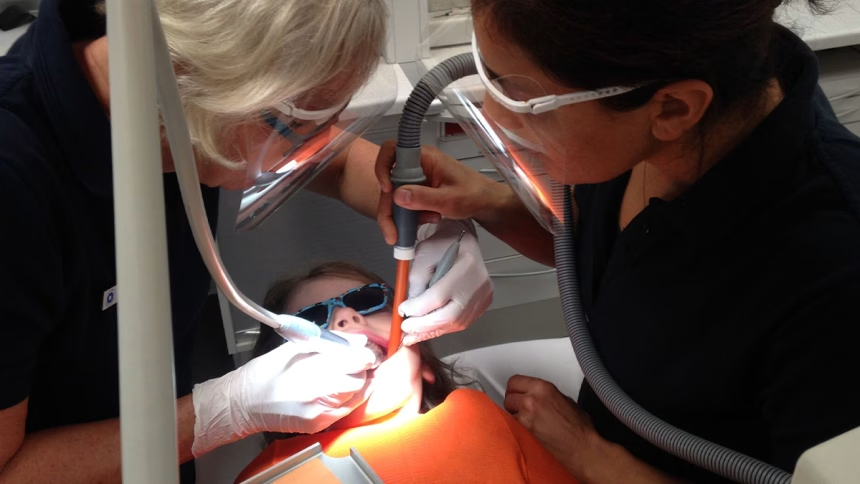

The World Health Organization has introduced a new global guideline promoting environmentally sustainable, mercury-free and minimally invasive approaches to preventing and managing dental caries worldwide.
March 2026- The World Health Organization has issued a new global guideline titled Environmentally Friendly and Less Invasive Oral Health Care for Preventing and Managing Dental Caries, aimed at helping countries adopt sustainable and patient-centred approaches to tackling tooth decay. The guidance offers evidence-based recommendations to prevent and manage dental caries through environmentally responsible and minimally invasive methods that prioritise patient safety, quality of care and environmental protection.
The document outlines a comprehensive package of safe, effective and mercury-free clinical interventions, drawing on the latest scientific evidence in prevention, non-invasive treatment and minimally invasive management of dental caries.
Dental caries remains the most prevalent noncommunicable disease worldwide, affecting an estimated 2.7 billion people. The condition often begins in early childhood and disproportionately impacts underserved communities. Traditionally, treatment has relied heavily on restorative procedures using dental amalgam, which contains mercury and presents risks to both human health and the environment.
Also Read: Abu Dhabi Leadership Visits Injured Patients at Sheikh Shakhbout Medical City
The new guideline aligns with global efforts to phase out mercury under the Minamata Convention on Mercury and supports broader oral health priorities under initiatives such as the Bangkok Declaration – No Health Without Oral Health. It aims to assist countries in expanding access to essential, cost-effective and safe oral healthcare services.
“This guideline represents a landmark in global oral health,” said Dr Benoit Varenne, WHO Dental Officer. “For the first time, countries have strong evidence showing that safe and less invasive interventions with mercury-free products can effectively prevent, stop and manage dental caries, while providing a more environmentally sustainable alternative to dental amalgam.”
“Oral health care must evolve to support planetary health,” said Ms Dévora Kestel, Director a.i., WHO Department of Noncommunicable Diseases and Mental Health. “By promoting mercury-free products and less invasive clinical procedures, this guideline strengthens both environmental protection and universal access to safe, essential oral health care.”