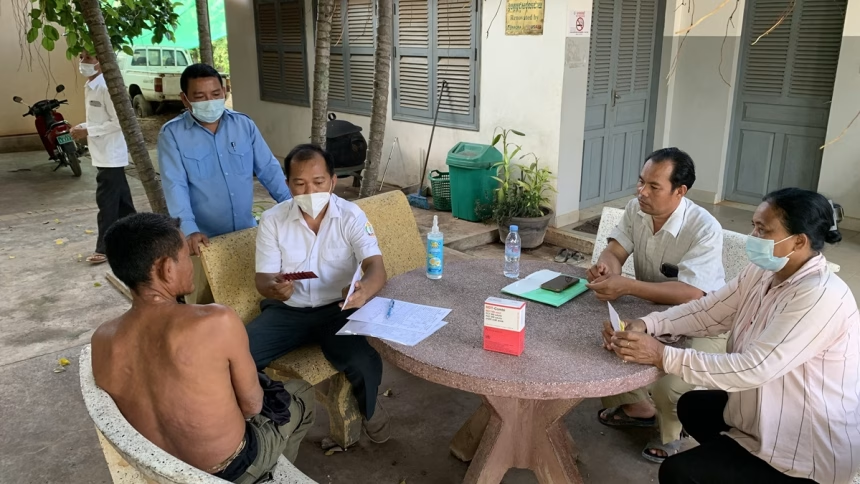
WHO renews its commitment to global leprosy elimination by ensuring continued access to treatment and preventive care.
Ahead of World Leprosy Day on 25 January, the World Health Organization (WHO) emphasized that access to treatment remains vital to global efforts to eliminate leprosy.
Also Read: Oxford Study Links Postpartum Blood Pressure Control to Improved Long-Term Brain Health in Women
Leprosy, caused by the bacteria Mycobacterium leprae, is one of the oldest known infectious diseases, primarily affecting the skin and peripheral nerves. If left untreated, it can lead to progressive, permanent disabilities and social stigma. However, the disease is curable through multidrug therapy (MDT).
Global elimination efforts have contributed to a decline in new cases in several regions. In 2024, of the 188 countries, areas, and territories that submitted data, 55 reported zero new cases. Despite this progress, WHO recorded 172,717 new cases worldwide during the same year.
Pharmaceutical companies, including Novartis, have played a key role in supporting leprosy elimination initiatives. Since 2000, WHO and Novartis have collaborated to provide MDT and clofazimine free of charge to leprosy patients worldwide. This partnership is considered one of the longest-running pharmaceutical donation programs in global health.
Marking 25 years of collaboration, WHO and Novartis have renewed their Memorandum of Understanding (MoU) for five more years (2026−2030). The extended agreement ensures continued supply of MDT and introduces funding for procurement and distribution of single-dose rifampicin (SDR) for post-exposure prophylaxis (PEP), reinforcing efforts to prevent new cases.