


Atrial fibrillation (AFib) is the most common heart rhythm disorder, causing the heart to beat irregularly and often rapidly, increasing the risk of stroke, heart failure, and other serious complications. As AFib becomes more prevalent across the Middle East – driven by demographic change, lifestyle factors, and earlier diagnosis – demand for treatment is rising sharply.
MedEdge MEA spoke with Dr. Mohamed Magdy, MD, PhD, Head of the Department of Cardiac Electrophysiology at Al Qassimi Hospital, Sharjah, Professor of Cardiology and Electrophysiology at Cairo University, Egypt, and Professor of Cardiology at the University of Sharjah. We explored how pulsed field ablation is reshaping AFib care, and why this new approach focused on precision, safety, and consistency matters now for patients, physicians, and healthcare systems across the region.
MedEdge MEA: Atrial fibrillation is becoming more prevalent across the region. What is driving the shift from traditional thermal ablation toward pulsed field ablation, and why does this matter now?

Dr. Magdy: Atrial fibrillation is rising rapidly in the region, driven by aging populations and lifestyle-related risk factors. At the same time, we are treating patients earlier and in greater numbers. This has pushed the field to look beyond effectiveness alone and place greater emphasis on safety and reproducibility.
Pulsed field ablation (PFA) represents a new generation of therapy that addresses these needs. It offers a different way to treat AFib, more aligned with today’s expectations around precision, patient safety, and healthcare efficiency.
ME: How does pulsed field ablation (PFA) differ from heat-based ablation, and what does that difference mean for safety?
Dr. Magdy: Traditional ablation relies on heat or cold to destroy tissue, which can sometimes affect nearby structures. Pulsed field ablation works through electrical energy that selectively targets heart muscle cells while largely sparing surrounding tissue.
This selectivity is significant. It reduces the risk of unintended injury and gives physicians greater confidence during the procedure. For patients, it means a safer approach without compromising treatment goals.
ME: Given PFA is often associated with a lower risk of collateral damage, how does this translate into real benefits for patients?
Dr. Magdy: For patients, the benefits are tangible. Procedures can be smoother, recovery may be faster, and the risk of certain complications is reduced. Many patients are able to return to normal activities sooner, with less post-procedural discomfort.
While long-term data are still developing, early experience suggests that PFA can improve both the safety profile and the overall patient experience.
ME: How is PFA changing the way complex or persistent AFib cases are treated?
Dr. Magdy: PFA allows electrophysiologists to focus more on strategy rather than managing thermal risk. In complex or persistent cases, that shift is important. It enables more consistent lesion delivery and greater procedural confidence, particularly in challenging anatomy.
It doesn’t replace clinical expertise, but it enhances the tools we use to apply that expertise more effectively.
ME: What are the latest innovations in PFA and what advantages do they offer?
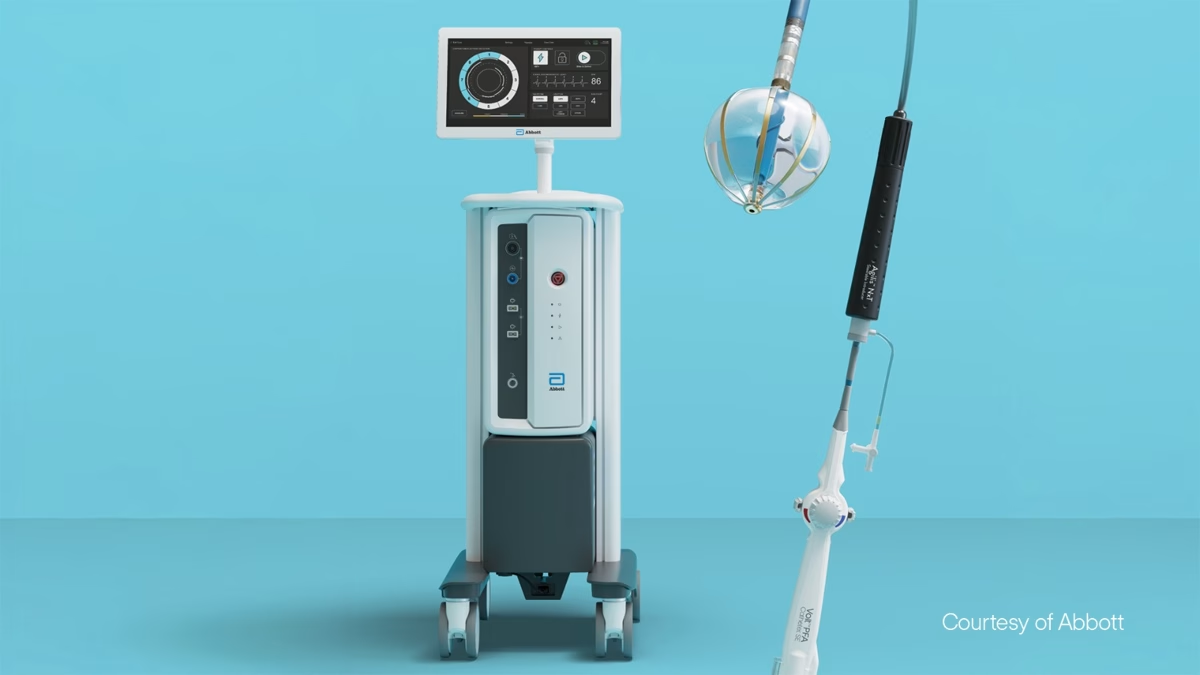
Dr. Magdy: Mapping and ablation are increasingly integrated in new systems, such as Abbott’s Volt™ PFA System. As Volt™ PFA is an all-in-one product that is clinically proven to simplify the treatment of AFib that is gentler on the heart, has shorter procedure times and supports better recovery and long-term results. This is very important because integration simplifies the procedure.
When mapping and ablation work seamlessly together, they improve workflow, reduce procedural complexity, and support more consistent outcomes. The technology allows ablation procedures to be performed in less time and with a lower risk of damage to surrounding tissues than thermal ablation. Volt™ PFA System provides a single-catheter PFA approach to improve workflow and provide procedural flexibility. The company designed Volt to address the limitations of existing PFA technologies. It paired a balloon-in-basket catheter with the EnSite X EP heart mapping system. Ensite X helps physicians visualize and position tools like the Volt PFA catheter in the heart.
For patients, this often means shorter procedures and greater predictability. For healthcare systems, it supports efficiency without compromising clinical precision.

ME: How do you see pulsed field ablation shaping future AFib care in the Middle East?
Dr. Magdy: As regulatory approvals advance and experience grows, pulsed field ablation is likely to become part of standard AFib care in the region. Its combination of safety, efficiency, and scalability aligns well with the Middle East’s focus on advanced, high-quality healthcare.
Over time, this could help expand access to advanced AFib treatment while supporting healthcare systems in managing rising demand more sustainably.