


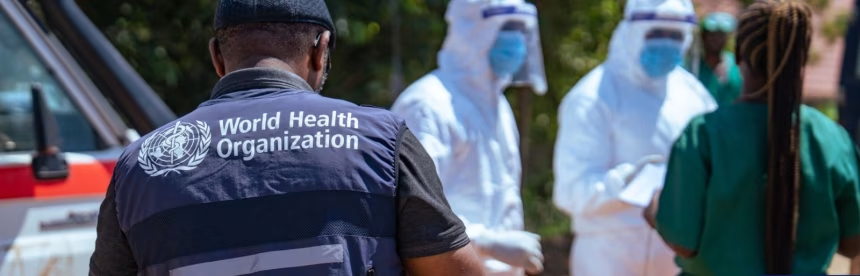

Kinshasa, DRC: Africa Centres for Disease Control and Prevention (Africa CDC) and the World Health Organization (WHO) have called for an urgent expansion of community-led efforts to contain the ongoing Ebola outbreak in the Democratic Republic of the Congo (DRC), following a joint high-level mission to Uganda and the DRC.
The mission assessed outbreak response activities, drawing lessons from Uganda’s successful containment while identifying operational challenges in the DRC. Both organizations stressed that early case detection, stronger contact tracing, improved access to treatment, and greater support for frontline health workers are critical to controlling transmission.
As of 4 August 2026, the DRC had reported 3,973 confirmed Ebola cases, 1,801 deaths, and 776 recoveries across 51 health zones. Contact follow-up remains at 75%, below the recommended 95% target needed to rapidly interrupt transmission.
“In some areas of eastern DRC, the Ebola outbreak is outpacing our response, making it imperative that we rapidly scale up every aspect of our efforts to contain it,” said Dr Tedros. “We stand in solidarity with the Government, affected communities, and the courageous health workers serving under exceptionally difficult circumstances. But this must be backed by sustained commitment, greater resources, and stronger international support. Together, we must guarantee safe access for responders, protect civilians and health workers, and mobilize the support needed to end this outbreak and save lives.”
Click here to join our WhatsApp channel here
“Containing and ultimately stopping this outbreak will come from communities,” said Dr Jean Kaseya, Director-General of Africa CDC. “When people have information they trust, can report symptoms early and seek care without fear, we can break every chain of transmission. Our responsibility is to bring the response closer to communities and give frontline teams the support they need.”
Africa CDC and WHO urged immediate action to expand testing, treatment, laboratory and ambulance capacity, strengthen infection prevention and control, ensure timely support for healthcare workers, maintain essential health services, and improve access to affected communities. The organizations also emphasized the importance of trusted community leaders in building public confidence and encouraging early reporting of symptoms.
Also read: Qatar Launches Online Permit System for Travellers Carrying Controlled Medicines
Following visits to Kampala, Bunia, and Kinshasa, the delegation reaffirmed its commitment to supporting the Government of the DRC through coordinated technical assistance, regional preparedness, and resource mobilization to bring the outbreak under control.