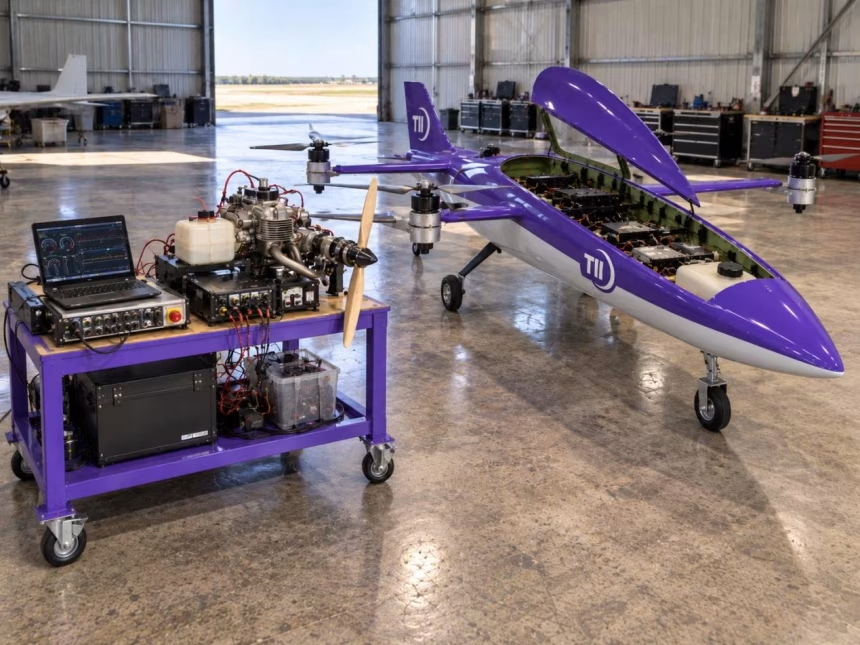

The Technology Innovation Institute (TII), the applied research arm of Abu Dhabi’s Advanced Technology Research Council, has become the first Middle Eastern institution to receive Qualcomm’s Tech for Good Grant.
The funding will support a research collaboration to advance TII’s SADEED Prognostics and Health Management platform for deployment on Qualcomm’s Dragonwing IQ9 edge AI processor.
The technology is designed to enable aircraft to monitor the condition of safety-critical systems directly onboard, reducing reliance on continuous cloud connectivity. Using artificial intelligence, SADEED can identify early signs of component degradation and potential faults before they develop into failures.
Click here to join our WhatsApp channel here
The initiative comes as Abu Dhabi expands its Advanced Air Mobility ecosystem, including cargo drones and electric vertical take-off and landing aircraft. Predictive maintenance could help improve aircraft safety, reduce unplanned downtime and support more efficient maintenance by shifting from fixed inspection schedules toward condition-based monitoring.
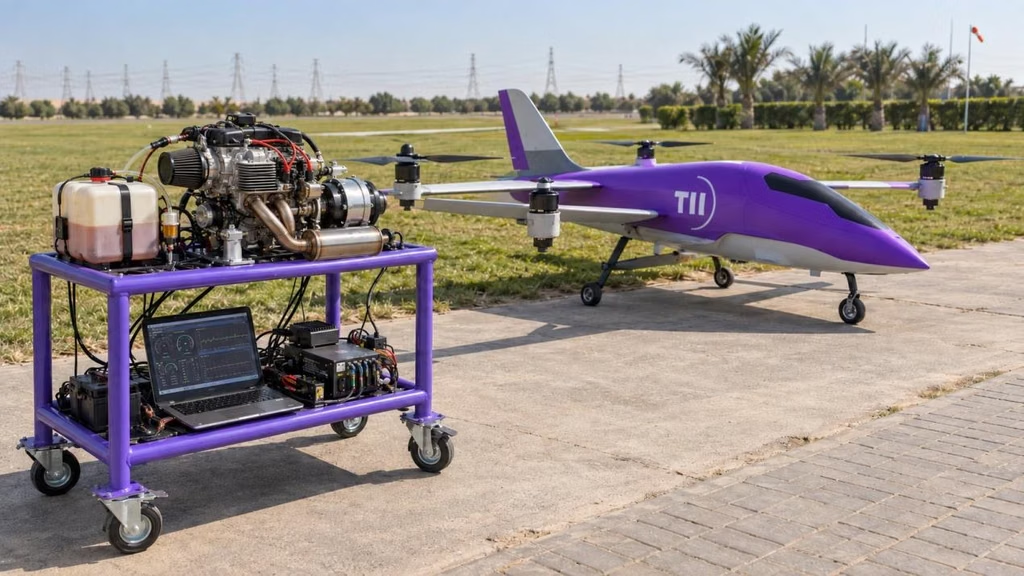
Dr. Najwa Aaraj, CEO of Technology Innovation Institute, said: “The future of aviation will depend not only on how aircraft fly, but on how intelligently they understand and manage their own health. SADEED gives aircraft the ability to identify emerging issues before they become critical failures, helping enhance safety while reducing unplanned downtime and maintenance costs. Through this collaboration with Qualcomm, we are taking an important step toward moving our PHM technology from advanced research to real-world onboard operations. Because SADEED is platform-agnostic, its potential also extends well beyond Advanced Air Mobility to industries where the reliability, performance and safety of critical machinery are paramount.”
Also read: UAE Records More Than 1,000 Organ Transplants in 30 Months
Dev Singh, Vice President, Business Development at Qualcomm International, Inc., said: “Autonomous aircraft and cargo drones are a powerful example of Physical AI in action and cannot rely on a connection to the cloud to know something is wrong. Running TII’s SADEED platform on the Dragonwing IQ9 series processor aims to move that intelligence onboard, helping to give operators real-time, sovereign control over safety-critical health data instead of sending it elsewhere. This is exactly the kind of physical AI capability we’re working to build for the region: edge processing that is designed to help autonomous systems operate more safely and reliably in the field.”
The project builds on more than two years of research by TII’s AI Diagnostics and Prognostics team. The collaboration aims to move the platform from research toward real-world onboard applications while maintaining secure, local processing of safety-critical data.
The technology could also have applications across other industries where reliability and predictive maintenance are essential.