


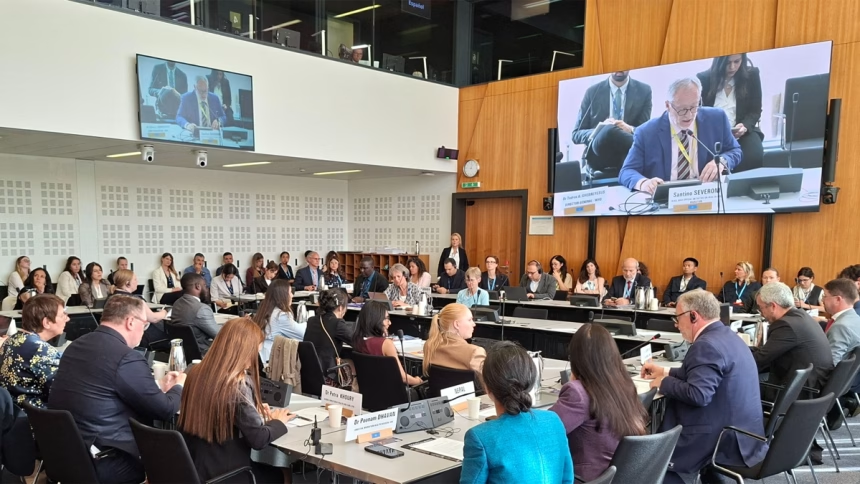

At a high-level event held on the margins of the Seventy-ninth World Health Assembly (WHA79), countries and partners reaffirmed the urgent need to strengthen refugee and migrant health through inclusive national health systems and shared practical experiences for turning global commitments into action. Hosted by the Government of Spain, co-sponsored by the Governments of Brazil, Colombia, Egypt and Nepal, and supported by the World Health Organization (WHO), the event focused on translating policy commitments into practical approaches to improving access to health services.
Also read:Unsafe food causes illnesses and deaths annually, young children at highest risk
“Ensuring equity for migrants and refugees means recognizing their right to health,” said Javier Padilla, Secretary of State for Health, Spain.
“All people residing in Spain, regardless of administrative status, are entitled to health care on equal terms. This is how we build stronger, more equitable health systems and improve health outcomes for all.“
As human mobility continues to shape health systems worldwide, participants highlighted the need to strengthen health system adaptability and operationalize inclusive policies. While many countries have integrated refugee and migrant health into national frameworks, equitable access to services, particularly for people in vulnerable situations, remains uneven. Displaced and migrant populations contribute to health systems, economies and communities; their inclusion and participation are essential to achieving universal health coverage (UHC) and strengthening health system resilience.
“The question is no longer whether migrant and refugee health should be included, but how commitments are translated into practice,” said Dr Santino Severoni, Head of WHO’s Special Initiative on Health and Migration. “This requires stronger data and evidence, sustained partnerships and a shared commitment to making health systems work for everyone, everywhere.”