

For millions of individuals managing type 1 diabetes (T1D), life is a continuous balancing act. Between blood sugar monitoring, insulin injections, dietary vigilance, and navigating stress or illness, every day demands meticulous attention. But new research from China may mark a turning point, offering a glimpse of a future where T1D no longer requires lifelong insulin therapy. Your Own Fat Cells to Cure Type 1 Diabetes.
Understanding the Challenge of T1D
Type 1 diabetes is an autoimmune disease where the body’s immune system mistakenly destroys insulin-producing beta cells in the pancreas. Without insulin, glucose cannot be effectively absorbed from the bloodstream into cells, leading to severe metabolic complications. Despite significant advancements in insulin delivery systems and glucose monitoring, replicating the body’s natural insulin regulation remains elusive.
A New Frontier: Turning Fat into Insulin-Producing Cells
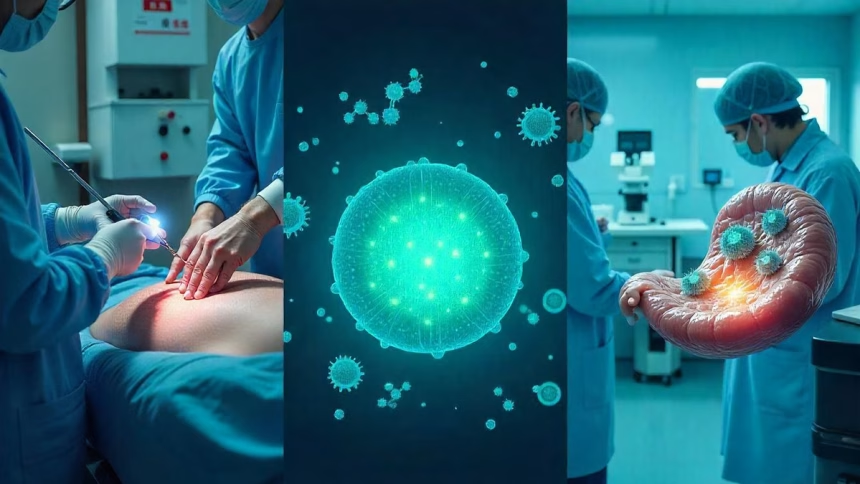
Recent research in China demonstrated a novel approach: using a patient’s own fat cells to regenerate insulin-producing islets. This groundbreaking procedure involved extracting fat cells from a woman with T1D and chemically reprogramming them into pluripotent stem cells. These were then guided to become beta-like cells capable of producing insulin.
Unlike traditional stem cell therapies that often rely on donor material or embryonic sources, raising both ethical and medical challenges, this method used the patient’s own cells. This minimized the risk of immune rejection and bypassed the need for aggressive immunosuppressive drugs.
Once ready, the reprogrammed cells were implanted into the patient’s abdominal wall rather than the pancreas or liver, which are common but less ideal transplant sites due to potential complications or limited cell survival. In this new location, the cells began producing insulin, eventually allowing the patient to maintain stable blood sugar levels without external insulin for over a year.
Why This Approach Matters
What sets this procedure apart is the potential scalability and personalization. Fat cells are abundant and easily collected. Converting them into insulin-producing cells opens a doorway to patient-specific therapies, which may one day offer a more permanent solution than external insulin.
Additionally, locating the transplanted cells in a sub-abdominal site rather than major organs allowed researchers to minimize complications and, importantly, retain the ability to retrieve the cells if needed.
Clinical Outcomes and Implications
The patient who underwent this procedure achieved insulin independence within approximately 75 days after transplantation. After one year of follow-up, she remained free from external insulin requirements, representing an unprecedented success in diabetes cell therapy.
This achievement is particularly significant because it demonstrates that a patient’s own cells can be successfully reprogrammed to replace the function destroyed by autoimmune disease. The procedure offers the potential for a more permanent solution to diabetes management, moving beyond the daily burden of insulin injections and constant blood glucose monitoring.
Hurdles That Remain
Despite the success seen in this individual case, several questions linger:
- Durability: Will the reprogrammed cells continue producing insulin over many years?
- Autoimmune response: Can the therapy protect these new cells from being attacked like their predecessors?
- Accessibility: Is this method practical and cost-effective for large-scale application?
Past efforts in beta cell transplantation, such as those using cells from cadaveric donors or stem-cell lines, showed only temporary success due to immune rejection and the need for constant immunosuppression. Moreover, creating personalized cell therapies for every patient remains a logistical challenge in terms of time, expertise, and cost.
Exploring Alternatives to Immunosuppression
One of the biggest hurdles in T1D cell therapy is the immune system’s aggressive response. To combat this, researchers are exploring strategies like encapsulating the transplanted cells in biocompatible materials or genetically engineering them to evade immune detection. Others are testing localized drug delivery systems that minimize systemic side effects while protecting the graft.
Although promising, these innovations are still in development. Many remain in preclinical or early-phase trials and have yet to show consistent success in enabling insulin independence.
What’s Next?
This case, though singular, offers a valuable proof-of-concept for regenerative diabetes therapies. It demonstrates that with the right approach, the body’s own tissues can be repurposed to restore insulin function. As clinical research continues, the diabetes community is watching closely, hoping that this could signal the start of a future where insulin injections are no longer the only answer.
Disclaimer: This article is for informational purposes only and does not constitute medical advice. Clinical outcomes may vary, and further research is needed before such therapies become widely available.
References:
Researcher: Dr. Hongkui Deng Institution: Peking University, China Research
- Wang S, et al. Transplantation of chemically induced pluripotent stem-cell-derived islets under abdominal anterior rectus sheath in a type 1 diabetes patient. Cell. 2024;187(22):6152-6164.e18.
- https://www.nature.com/articles/s41421-024-00662-3
- From bench to bedside: future prospects in stem cell therapy for diabetes