


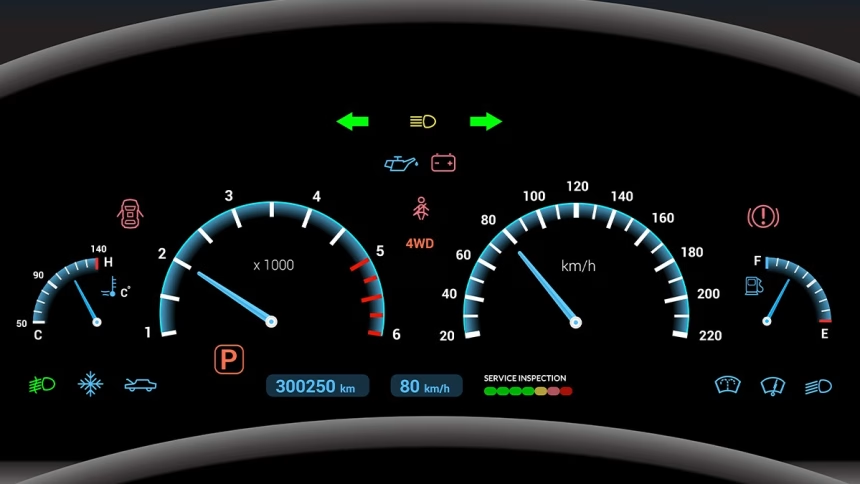
Your car’s dashboard blinks a warning—low tire pressure or a strained engine—and you’re quick to act, averting a breakdown. Your body, though, offers only faint murmurs—early signs of diabetes, liver strain, or heart trouble—that too often slip by unnoticed until a crisis erupts. For decades, vehicles have enjoyed intuitive, real-time diagnostics; humans have lagged far behind. Now, as chronic diseases strain global health systems, lifespin’s General Health Assessment (GHA) introduces a long-overdue dashboard, illuminating your well-being with precision and clarity.
The mind’s blind spot: Why we dismiss our health
Picture this: a “check engine” light glows, and you’re at the mechanic within hours; nobody wants to be stranded on the interstate. Yet, persistent fatigue, a nagging ache, or a subtle shift in energy? Most of us shrug it off as stress or a restless night. Behavioral science unravels this paradox: car troubles strike swiftly, demanding instant fixes, while health threats unfold over years, fading into the background of busy lives (Kahneman, 2011). Cars deliver unmistakable, universal alerts—a red icon means trouble, no debate. Our symptoms, though, are elusive, personal, and open to misinterpretation, easily blamed on a late coffee or a tough week.
We treat cars as prized assets, scheduling oil changes to preserve their value, yet neglect our health, infinitely more precious, until it falters. This disconnect isn’t just a habit; it’s a mental quirk that prioritizes the tangible over the gradual. With chronic illnesses now impacting 1.5 billion people worldwide (WHO, 2022), from diabetes to heart disease, this oversight carries a steep cost. In today’s health crisis, where prevention could lighten the load on overburdened systems, we desperately need a shift, a way to see our body’s signals as clearly as a car’s dashboard.
Silent threats: The body’s hidden warnings
A car’s live updates catch issues as they brew—low fuel, a worn belt. Our bodies, by contrast, harbor silent risks, detectable only with the right tools. These unseen markers whisper of trouble long before symptoms scream:
- Diabetes’ Stealthy Climb: Metabolic changes, like insulin resistance, begin a decade before diagnosis, quietly affecting 463 million adults globally (IDF, 2019). Without a check, it’s a ticking clock with no chime.
- Liver’s Lifestyle Burden: Metabolic Dysfunction-Associated Steatohepatitis (MASH), driven by poor diet and inactivity, lurks in one in four people (Younossi, 2016), its early signs buried until scarring sets in.
- Heart and Stroke’s Subtle Clues: Lipoprotein shifts—tiny cholesterol carriers—predict cardiovascular disasters, claiming 17.9 million lives yearly (WHO, 2021), yet stay invisible without proactive scans.
These hushed threats mirror a car’s unseen wear—a fault line building beneath the hood. Unlike vehicles, our bodies lack a built-in alert system to flag them early, leaving us blind to risks until they’re dire.
The metabolome: A real-time health mirror
Why do these silent threats matter? Enter the metabolome, the dynamic layer of small molecules (sugars, lipids, proteins) in your blood that reflects your health in real time. Unlike genomics, which maps your DNA’s potential—like blueprints hinting at what might happen—the metabolome shows what’s happening now. Genomic testing, widely known and accepted, is like groping an elephant in a dark room: everyone feels a piece—trunk, leg, tail—but describes a different beast. It reveals your odds of a condition, say diabetes or heart disease, but not whether it’s unfolding today and how severe it gets. Metabolomics flips on the light, offering a systemic, immediate snapshot of your health’s true state.
Don’t wait for the engine to seize, lifespin’s GHA catches risks when fixes are simple, not when they’re severe. Your car’s replaceable; your health is not!
This real-time mirror is what makes the metabolome so powerful. It captures how your body processes food, fights stress, or flags inflammation—your most direct health phenotype. Where genomics predicts a storm might brew, metabolomics shows the clouds gathering overhead. For diabetes, it tracks sugar imbalances as they start; for MASH, it spots liver stress from last night’s fries; for heart risks, it measures lipoprotein shifts signaling trouble. This immediacy outshines genetic insights in both precision and urgency, giving you a window to act before the forecast turns grim.
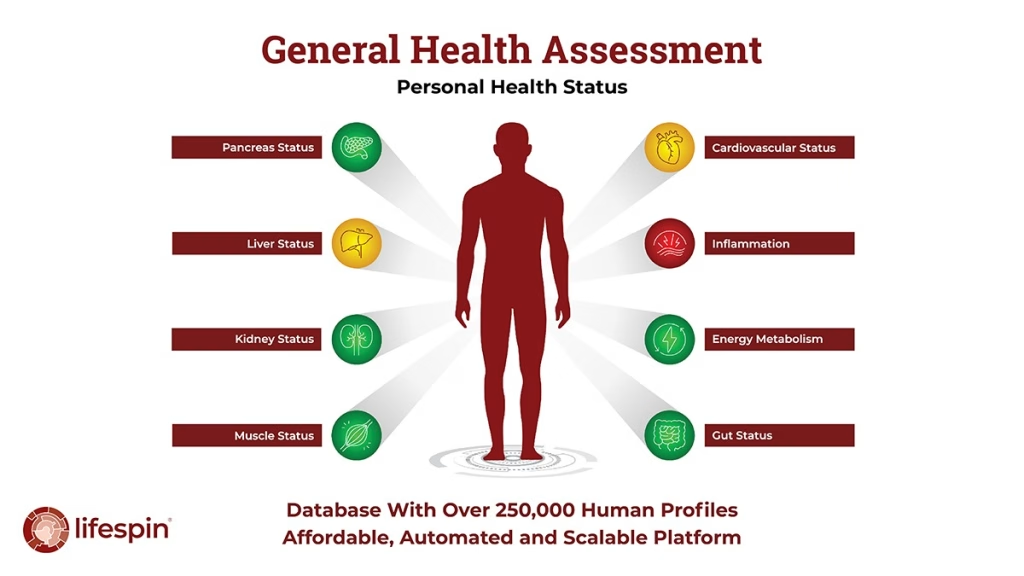
lifespin’s GHA: Your dashboard arrives
lifespin’s General Health Assessment (GHA) harnesses this metabolomic edge, crafting a health dashboard as intuitive as your car’s. With just 0.5 mL of blood—scanned via Nuclear Magnetic Resonance (NMR)—it maps 250 vital markers in minutes: sugar balance, liver function, cholesterol patterns. Powered by AI and a database of over 250,000 profiles, this cloud-based tool pairs with at-home blood collection kits, slashing costs by 90% compared to standard tests. Its traffic-light system cuts through the noise:
- Green: All’s well—keep rolling.
- Yellow: Early ripples—tweak habits, check again soon.
- Red: Trouble ahead—see a doctor now.
Unlike spot-check blood tests chasing one marker, GHA’s metabolomic sweep sees the whole picture, no guesswork, just clarity. It’s fast, affordable, and fits anywhere, from a clinic to your kitchen counter.
Turning whispers into action
Imagine catching diabetes a decade early—GHA flags insulin hiccups, nudging you toward better meals instead of lifelong meds. Or spotting MASH from too many burgers—it signals liver strain, letting you pivot before scars form. For your heart, lipoprotein shifts warn of stroke or attack risks, opening a door to prevention over panic. In a world where chronic diseases clog healthcare (WHO, 2022), GHA’s real-time insights make prevention a daily habit, not a distant hope—mirroring the foresight cars have mastered for generations.
Your health Deserves a dashboard
You’d never ignore a car’s flashing alert, yet let your body’s faint pleas slide. lifespin’s GHA ends this mismatch, offering a dashboard as sharp as your vehicle’s. Cars have dodged breakdowns with smart tech for decades; now, humans can dodge health crises too. Don’t wait for the engine to seize, GHA catches risks when fixes are simple, not when they’re severe. Your car’s replaceable; your health is not.


