
As Abu Dhabi prepares to welcome global health leaders, researchers and policymakers to this October’s Future Health Summit, under the theme “To Sense Is to Predict,” it is worth asking what predictive, precision healthcare actually requires. It requires evidence. And evidence is only as good as the population it is drawn from.
Medical breakthroughs do not always begin with a new treatment. They begin with asking the right questions for the right population.
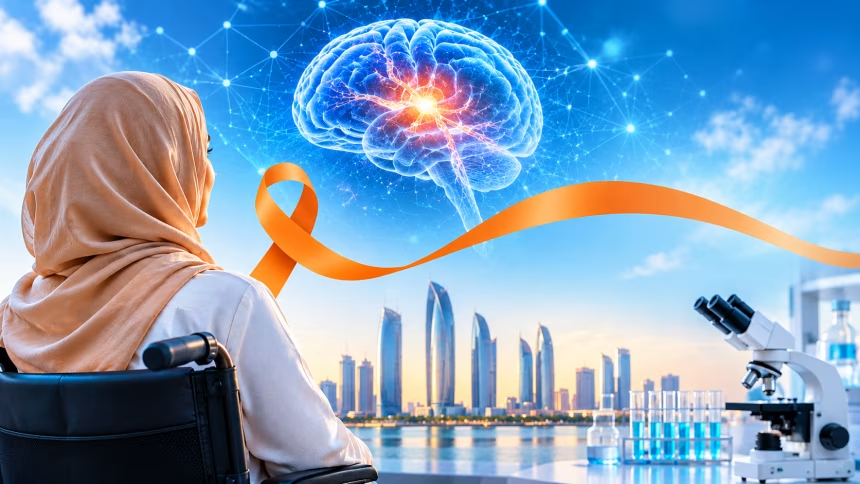
For decades, much of our understanding of multiple sclerosis (MS) has been shaped by research conducted in Western countries. That work has transformed how we diagnose and treat MS, but the global evidence base does not adequately represent every population, and the studies conducted in the West might not be fully applicable in our region. Middle Eastern and North African (MENA) populations remain significantly underrepresented in scientific literature, including genomic research, despite representing a substantial share of the world’s population. This is ultimately a question of equity. Without representative research, there cannot be true equity in how we understand disease or translate scientific progress into care. Genetics, environmental exposures, lifestyle and access to healthcare can all influence disease risk and experience, yet these differences are difficult to understand when entire populations remain comparatively absent from the evidence.
We have also seen the epidemiological picture of MS in the Middle East change considerably over recent decades, challenging older perceptions that it was relatively uncommon in this part of the world. When patients from the region are missing from the evidence base, there will inevitably be questions that evidence cannot fully answer.
Closing this gap requires research designed around populations we actually treat. That does not mean replacing international evidence with regional evidence, nor does it mean assuming that MS is fundamentally different here. It means making the global evidence base more complete by ensuring that patients from our region are represented within it.
Advancing More Representative MS Research
Children with MS offer a particularly important example. Data around pediatric-onset MS is relatively limited, posing a major challenge for management of the disease, which makes meaningful research difficult when countries and institutions work independently and in areas such as the MENA, where published studies are scare and limited to relatively small cohorts. The lack of regional data is particularly critical given the potential influence of genetic backgrounds, environmental exposures, and healthcare system and treatment variations. To support informed clinical decision-making, a recent study led by the Harley Street Medical Center in Abu Dhabi brought together registry-based analysis on children living with MS from across 10 MENA countries to better understand the epidemiology, clinical characteristics, imaging features and treatment patterns of pediatric-onset MS in the region. Funded through the National Multiple Sclerosis Society’s (NMSS) Research Grant Program, the study was presented at the European Committee for Treatment and Research in Multiple Sclerosis (ECTRIMS) Congress in Barcelona last year.
Click here to join our WhatsApp channel here
This is not an isolated example. The same Research Grant program is currently backing a study that will utilize AI-assisted software to enhance brain MRIs that will ensure no misdiagnosis is taking place between MS and Neuromyelitis optica spectrum disorders (NMOSD) a completely different disease, as is often the case given their similar clinical and radiological features. The study will be collecting brain MRIs and clinical assessments from six MENA countries. The significance goes beyond any single study. Regional collaboration allows us to investigate questions that individual centers may not have the patient numbers or resources to answer alone, while also giving researchers the opportunity to identify patterns that may otherwise remain invisible. This is particularly important for less common patient populations, but the principle applies much more broadly across MS research.
There are encouraging signs that the research community around MS in the UAE is expanding. When the NMSS Research Grant Program opened its first cycle in 2023, it received 15 letters of intent; by 2026, that figure had risen by over fourfold. The importance of that growth is not simply the number of applications. It points to a growing community of researchers from the UAE asking questions about MS and seeing an opportunity to investigate those questions here. Building research capacity starts with creating an environment in which clinicians, scientists and academic institutions can pursue ideas that emerge from the patients and communities around them.
Also read: SSMC and National Media Authority Partner on Public Health Education
Understanding MS Beyond Treatment
The questions being asked must also extend beyond what happens inside the clinic. When we speak about MS research, attention understandably turns to new therapies, biomarkers, genetics and disease progression. But living with a chronic neurological condition has consequences that clinical measures alone cannot capture. MS can affect a person’s ability to work, their family responsibilities, independence, wellbeing and long-term financial circumstances, while also placing demands on caregivers and healthcare systems.
Understanding that wider economic and social burden is therefore part of understanding the disease itself. Better evidence in these areas can help healthcare systems determine where support is needed, how resources should be allocated and what patients require at different stages of their lives, ultimately improving their quality of life. Research has a role not only in improving how we treat disease, but also in helping us understand what living with that disease actually means. None of this is achieved through one study or one funding cycle. Research capacity develops over years and requires sustained funding, reliable data, collaboration between institutions and connections between regional researchers and international scientific networks. But funding is only valuable if it ultimately produces knowledge that can be shared, tested and built upon.
Strengthening the Global Evidence Base
This also reflects a much wider direction for healthcare in the UAE. Under We the UAE 2031, the country has set an ambition to become a leading global center for medical research as part of a future-ready healthcare system. Achieving that ambition will depend not only on attracting expertise and adopting advances developed elsewhere, but also on the ability to generate meaningful scientific evidence here and contribute it to the world.
International collaboration remains essential. Through MENACTRIMS and representation on the Scientific Advisory Board of the Multiple Sclerosis International Federation, there is an opportunity to connect what is being learned regionally with the wider scientific community. Risk profiles for MS vary significantly across geographical landscapes and distinct ethnic populations, and this is why localized regional research becomes indispensable especially if we can pinpoint what those contributing unique factors are. The objective should never be to create a separate body of “Middle Eastern MS research”. Rather, evidence generated here should become part of the global understanding of the disease.
The future of MS care in our region will continue to benefit enormously from discoveries made elsewhere, just as research conducted here can contribute to discoveries that benefit patients elsewhere. By asking questions here, building stronger datasets and collaborating across borders, we can develop evidence that not only better reflects our populations but paves the way for more personalized, genetically tailored therapeutic approaches which is something valuable to MS research worldwide.
As this October’s Future Health Summit brings the world’s attention to what predictive, evidence-led healthcare can achieve, that is precisely the kind of foundation worth building on.
The stronger and more representative that evidence becomes, the fewer blind spots we leave behind.