


The World Health Organization (WHO) has launched a five-year strategy for its Hub for Pandemic and Epidemic Intelligence, aiming to enable every country to detect and understand emerging health threats within 24 hours of their appearance by 2030. The initiative focuses on strengthening early detection and helping countries contain outbreaks before they develop into larger epidemics or spread internationally.
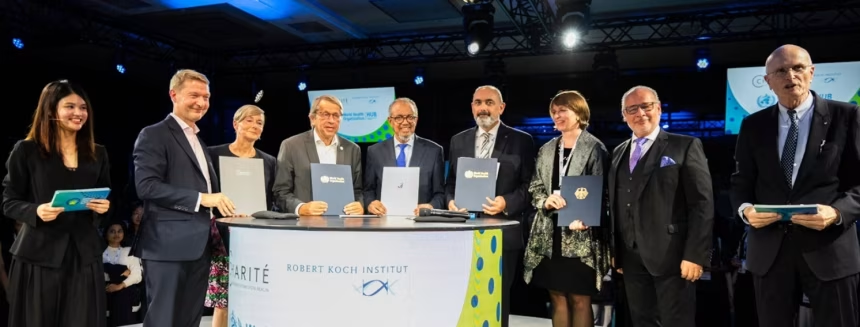
Established in 2021 with support from the German Government following gaps exposed by the COVID-19 pandemic, the Hub has worked with 160 WHO Member States, 190 partner organisations and thousands of scientists and policymakers to improve epidemic intelligence and support faster public health responses.
Also read: WHO Reports No Evidence of Ongoing Transmission After Pneumonia Death in Russia
WHO Director-General Dr Tedros Adhanom Ghebreyesus said, “Five years after its establishment, the WHO Hub for Pandemic and Epidemic Intelligence has become an integral part of the global health security system. Its new strategy charts a clear path towards 2030, uniting governments and partners around a shared goal: a world in which every country can rapidly respond to health threats before they turn into major crises.”
The new strategy focuses on five initiatives: Epidemic Intelligence from Open Sources (EIOS), which uses artificial intelligence to identify potential health threats; the International Pathogen Surveillance Network, which strengthens genomic sequencing and bioinformatics; and the Collaboratory, which connects experts in modelling and data science. It also includes the Collaborative Surveillance Initiative, supporting health threat detection in more than 83 countries through a One Health approach, and a new digital initiative to improve secure health data sharing and responsible AI adoption.
Click here to join our WhatsApp channel here
WHO Director-General Dr Tedros Adhanom Ghebreyesus highlighted the Hub’s role in strengthening global health security and coordinating governments and partners around a shared preparedness goal. The organisation said achieving the 2030 ambition will require sustained investment, trusted partnerships and cooperation across sectors, disciplines and borders.