


Infectious diseases specialist Diyani Dewasurendra was on assignment in Malakal, South Sudan, when a cholera outbreak began. She goes through what happened during the first 72 hours and explains why vaccination is important for bringing outbreaks under control.
‘‘Every epidemic begins with a suspicion – a sudden rise in illness, recurring symptoms and the first severely ill patients. In crisis zones, infectious diseases can spread at lightning speed. Every minute counts when trying to contain them. The first 72 hours are critical: we need to act fast and strategically to save lives and prevent a disaster.’’ said Diyani Dewasurendra, infectious disease specialist.
Hour 0–12: first signs and initial measures
At our hospital in Malakal, we suddenly saw a spike in children arriving with severe diarrhoea. In a region with limited access to safe water, that’s a red flag. On top of that, it was March – the final month of the dry season. Since November, there had been almost no rainfall and many water sources had dried up.
We knew cholera was a possibility – but we had to be sure.
We collected samples and sent them to the lab. At the same time, we began monitoring case numbers. As soon as the first tests came back positive for cholera, we had to act quickly. The outbreak was now officially confirmed – and every minute counted.
Together with the World Health Organisation (WHO) and other partners, we tested the water quality and investigated potential sources of contamination.
In a region where many people lack access to clean water, a disease like cholera can escalate quickly. One of the most dangerous aspects is that the only available water source is often a river – the same river where animals bathe, where people wash themselves, and from which they drink. In situations like this, contamination with germs can have catastrophic consequences.
Hour 12–24: isolation and protection measures
The top priority is to stop the disease from spreading further. We immediately set up a cholera isolation ward at the hospital. In Malakal, this was especially challenging, as we already had a separate isolation area for measles. We had to ensure that patients with the two highly contagious diseases wouldn’t come into contact and that other patients would remain protected from infection.
At the same time, we started prevention efforts: we installed additional handwashing stations and educated the public about the importance of hygiene and handwashing.
Our health promoters went into surrounding communities to explain the early symptoms of cholera and when to seek treatment. Cholera is a severe diarrhoeal illness and diseases like this are especially dangerous for small children. Though treatable, an infection can lead to death within just a few hours if left untreated.
Hour 24–48: treating patients and identifying the source
While treating the first patients, we also assessed the water supply. In many parts of South Sudan, there are no wells or pumps – people collect water from rivers or ponds, which are often contaminated.
I remember one situation where a mass cattle die-off occurred and hundreds of carcasses were left lying along the riverbank. Yet people had no choice – they had to continue drinking from the river. Many didn’t realise that the water could be dangerous.
Together with the World Health Organization (WHO) and other partners, we tested the water quality and investigated potential sources of contamination. We knew we couldn’t just treat the disease – we had to prevent more people from getting infected.
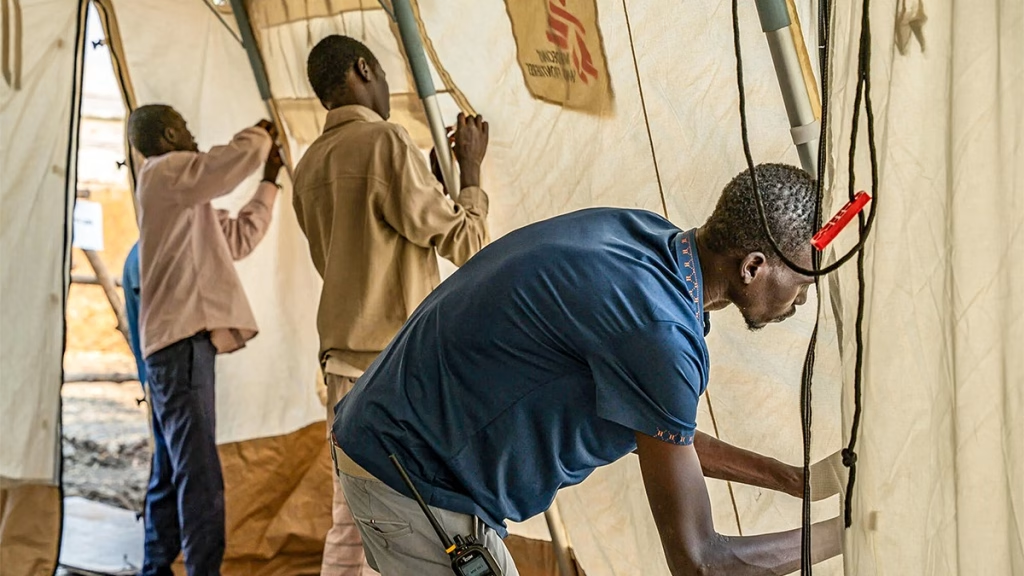
That’s why we started distributing clean water. In some villages, we used charcoal filters or chlorine treatment to improve the water supply in the long term. We also installed sanitation facilities like latrines.
Hour 48–72: vaccination campaign and epidemic control
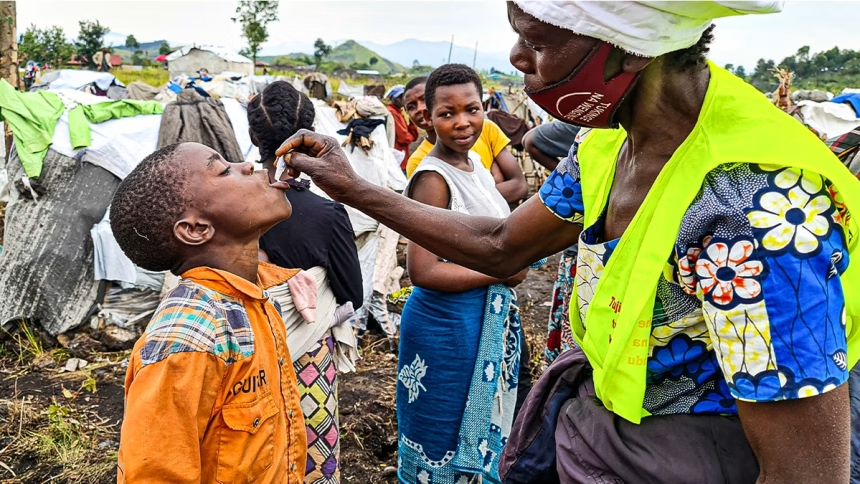
Now the goal was not just to slow down the outbreak, but to bring it under control. In addition to treating those already infected, the next major step was vaccination. Cholera can be contained with an oral vaccine – a major advantage, as it allows us to quickly and efficiently vaccinate large groups of people.
Before starting the vaccination campaign for the community, we had to protect our medical teams. Doctors, nurses and support staff are in direct contact with patients, so vaccination is essential for their survival. Only after that could we begin the large-scale rollout for the affected communities.
As soon as we explained the purpose and benefits of the vaccine to the first groups, acceptance increased rapidly.
Education also played a crucial role. In crisis areas, people are not generally sceptical of vaccines – but often, they simply don’t know that a vaccine exists. As soon as we explained the purpose and benefits of the vaccine to the first groups, acceptance increased rapidly.
Acting fast saves lives
The first 72 hours of an epidemic determine whether it can be contained or spirals into a disaster. In the case of the 2023 cholera outbreak, we were able to respond quickly and limit the number of cases to 1,471. After 90 days, on 16 May 2023, intervention was closed as the cases decreased significantly and the outbreak was contained.
This outbreak once again showed how crucial early diagnosis, isolation, identifying the source of infection and fast vaccination. Each of these steps is vital to saving lives.
We work under extremely difficult conditions in crisis zones, but access to vaccines remains one of our most powerful tools in the fight against epidemics. At the same time, we must not forget that long-term solutions, such as access to clean water, are just as important to prevent future outbreaks.
Source: Médecins Sans Frontières Website
Link: https://www.msf.org/first-72-hours-cholera-outbreak