


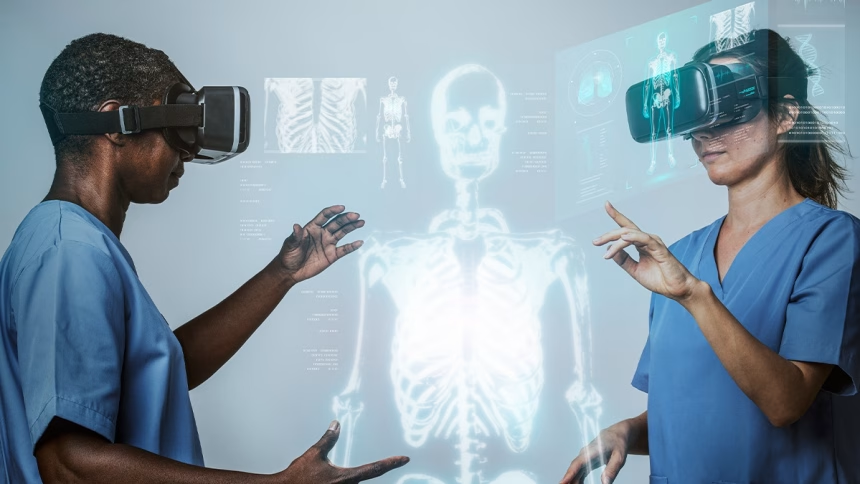
Virtual wards represent a transformative shift in healthcare delivery, offering hospital-level care to patients in their homes through digital technology and coordinated clinical support. As healthcare systems worldwide struggle with rising demand, aging populations, and limited resources, virtual wards emerge as a scalable, sustainable solution that enhances patient experience, reduces unnecessary hospitalizations, and redefines how care is delivered. This article explores the rationale, structure, outcomes, and future of virtual wards, making the case for their broader adoption as a critical evolution in modern healthcare.
A system under pressure
Modern healthcare systems face unprecedented challenges. Chronic disease prevalence is rising. Hospitals are overburdened. Aging populations are driving demand to historic highs. Post-pandemic, healthcare systems are also managing a backlog of deferred care while workforce shortages continue to strain capacity. Traditional models of hospital-based care that are centered around brick-and-mortar institutions are struggling to keep up.
In this context, virtual wards offer a compelling alternative. By leveraging digital tools, remote monitoring, and interdisciplinary care teams, virtual wards bring hospital-level care to patients’ homes, blending clinical oversight with comfort, safety, and convenience. But more than a temporary fix, virtual wards signal a lasting transformation in healthcare delivery.
What are virtual wards?
Virtual wards are digitally supported care models that allow eligible patients to receive acute care or complex chronic disease management at home rather than in a hospital bed. Patients are “admitted” to the virtual ward and monitored through wearable sensors, smartphone apps, connected medical devices, and video consultations. Multidisciplinary teams, including physicians, nurses, pharmacists, and care coordinators, manage and review each patient’s condition daily, escalating care when needed. These teams also round on patients in person as needed to conduct physical assessments, administer medications, or perform procedures, ensuring that care is responsive and comprehensive.
Virtual wards are not telehealth in its basic form. They are structured, protocol-driven, and outcome-focused programs designed to provide proactive, continuous care, mirroring the intensity of inpatient services without the physical infrastructure.
The case for virtual wards
1. Hospital capacity relief : Virtual wards help alleviate hospital crowding by transitioning stable patients out of physical wards without compromising quality. This is especially critical during surges, such as influenza season or pandemics, when beds are scarce. Health systems like the UK’s NHS have implemented virtual wards to reduce pressures on emergency departments and inpatient units, with promising results.
2. Cost efficiency and value-based care : Inpatient care is among the most expensive components of healthcare. Virtual wards reduce the length of stay in hospitals and avoid admissions altogether in some cases, offering substantial cost savings. These savings are not only financial but operational with fewer beds, reduced need for physical infrastructure, and optimized staff utilization.
3. Improved patient outcomes : Research indicates that virtual wards can match or exceed traditional inpatient outcomes for select populations. Patients with chronic obstructive pulmonary disease (COPD), congestive heart failure, or post-surgical recovery can benefit from personalized, monitored recovery without the risks of hospital-acquired infections or disorientation. Hospital-acquired infections affect a significant percentage of inpatients, with rates ranging from 5% to 10% in general hospitals, contributing to increased morbidity, longer stays, and healthcare costs. . Virtual wards significantly mitigate these risks by keeping patients in familiar and lower-risk environments.
4. Enhanced patient experience : Patients often prefer recovering at home, surrounded by familiar settings and supported by family. Virtual wards enhance satisfaction, reduce stress, and improve adherence to care plans. This patient-centered model aligns with the growing shift toward value-based care.
5. Enabling precision and proactive care : With real-time data flowing in from connected devices, virtual ward teams can detect deterioration early and intervene before hospitalization is needed. This shifts the model from reactive to proactive care and closing gaps that lead to readmissions or complications.
6. Better healing environment : The home setting offers a more therapeutic environment for many patients. Being close to loved ones, in familiar surroundings, can improve emotional well-being and contribute to faster recovery. Virtual wards support this healing process while maintaining medical oversight and safety.
Designing a virtual ward: Key components
Building a virtual ward requires more than technology. It involves reimagining workflows, ensuring regulatory compliance, and creating multidisciplinary teams. Key elements include:
- Patient selection criteria: Not all patients are suitable for virtual wards. Clear protocols determine eligibility based on diagnosis, stability, home environment, and digital literacy.
- Technology infrastructure: Devices such as blood pressure monitors, pulse oximeters, glucose monitors, and wearables transmit data to centralized platforms. Interoperability with the electronic medical record (EMR) is crucial.
- Clinical oversight: Care teams monitor dashboards, conduct virtual rounds, and manage care plans. Escalation pathways must be clearly defined for patients who deteriorate.
- Data security and privacy: As with all digital health models, compliance with health information privacy regulations is critical.
Global adoption: Early wins and lessons learned
Several health systems have launched virtual ward pilots or full-scale programs. The NHS in England aims to scale virtual wards to 40–50 beds per 100,000 population. In Australia, virtual hospitals like Sydney Local Health District’s “rpavirtual” offer diverse services, from palliative care to COVID-19 management.
Early evidence shows reduced readmissions, lower cost per episode, and high patient satisfaction. However, success depends on robust change management, clinician engagement, patient readiness, and clear reimbursement models.
Challenges and barriers
While promising, virtual wards face hurdles:
- Change management: One of the most significant challenges is securing agreement across clinical teams regarding protocols and patient eligibility. Building consensus among clinicians on which patients are appropriate for virtual care, and aligning on escalation pathways, can be time-intensive and fraught with resistance.
- Digital divide: Older or socioeconomically disadvantaged populations may lack the devices, internet access, or digital literacy needed to participate.
- Clinical skepticism: Some clinicians may resist change, concerned about liability, workflow disruption, or quality of remote assessments.
- Workforce training: New competencies are needed for managing patients virtually, both clinical and technical.
These challenges are real but solvable with targeted strategies and cross-sector collaboration. Effective management changes, financial reform that rewards value over volume, and robust workforce development initiatives can pave the way forward.
Virtual wards and the future of healthcare
Virtual wards are not just a trend, they are a strategic response to the systemic challenges facing modern healthcare. They represent a shift toward decentralized, digitally enabled, patient-centered care that emphasizes outcomes over locations. With the integration of artificial intelligence, predictive analytics, and advanced remote monitoring, virtual wards will become even more intelligent and responsive.
Virtual wards challenge the notion that healing requires hospitalisation and prove that with the right tools and teams, high-quality care with better outcomes can happen anywhere.
As virtual ward models mature, we will see their application expand, from acute exacerbation management to long-term condition support, mental health, and post-operative recovery. Partnerships with home health providers, primary care, and digital innovators will further strengthen this ecosystem.
A ward without walls
In an era where hospital resources are precious and patient expectations are rising, virtual wards offer a vision of healthcare that is smarter, more scalable, and more humane. They challenge the notion that healing requires hospitalization and prove that with the right tools and teams, high-quality care can happen anywhere.
Virtual wards are more than a digital convenience; they are the next big thing in healthcare, and they’re here to stay.


