


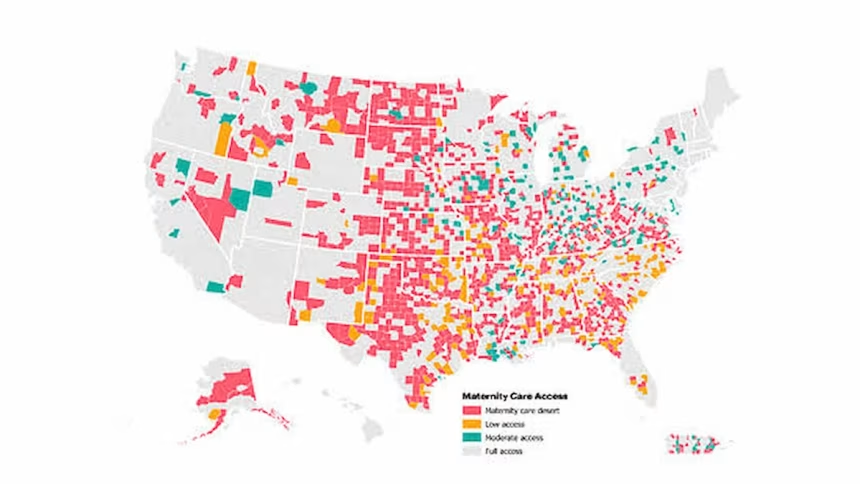

March of Dimes has released its 2026 Nowhere to Go: Maternity Care Deserts Across the U.S. report, highlighting persistent gaps in access to maternity care and the impact of hospital closures and healthcare policy changes.
The report found that 34.6% of U.S. counties are maternity care deserts, affecting 2.4 million women of reproductive age and 149,000 infants born annually.
An additional 3.4 million women and 209,000 infants live in counties with low or moderate access to maternity care. More than half of U.S. counties also lack a hospital offering labor and delivery services, affecting nearly 370,000 births each year.
Also read: Click here to join our WhatsApp channel here
Access challenges are particularly severe in rural communities, where nearly 58% of counties lack obstetric clinicians, compared with about 19% of urban counties.
The report identified at least 96 labor and delivery unit closures across 35 states between January 2024 and May 2026. In nearly 60% of affected counties, the closed unit was the only local birthing facility. These closures increased travel times by an average of 25 minutes for affected communities.
Women living in maternity care deserts travel approximately three times farther on average to access labor and delivery services. Longer travel distances can contribute to delayed prenatal care, unplanned out-of-hospital deliveries, higher maternal morbidity and increased NICU admissions.
“Across the country, families continue to face unnecessary barriers to maternity care with shifting healthcare and policy decisions threatening to widen gaps and weaken essential services,” said Cindy Rahman, President and CEO, March of Dimes. “Now is the time to reimagine what maternity care can and should be by building a system that creates healthier beginnings, stronger communities, and better outcomes for generations to come. March of Dimes remains committed to that transformation, and by working together, we can build a future where every family has access to the care they need.”
March of Dimes is advocating for expanded healthcare access through policy initiatives, mobile health centres, increased access to doulas and community-based programs addressing social determinants of health.