

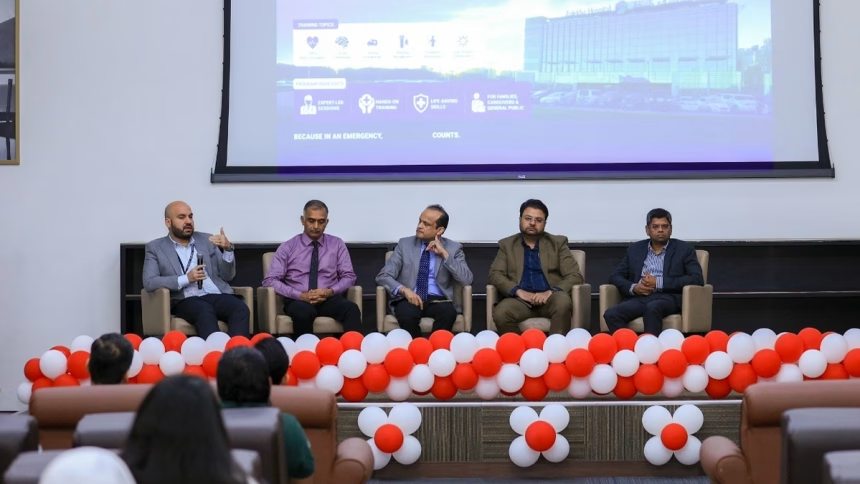

Zulekha Hospital Dubai brought together more than 125 community members for an emergency preparedness event titled “Seconds Save Lives” held on 14 June. The session was designed to equip families, school staff, and caregivers with practical knowledge on recognising and responding to medical emergencies.
The event opened with an introduction to the hospital’s Emergency Department, delivered by Dr. Parithosh Thakur, Director of Administration, who also provided an overview of the department’s multidisciplinary team before the clinical sessions commenced.
Dr. Mohammed Hashmat Faheem, Head of Emergency Medicine, addressed the importance of recognising emergency situations early and seeking prompt medical attention. He emphasised that delays in reaching emergency care can have a direct bearing on patient outcomes and encouraged attendees to act on serious symptoms without hesitation.
Click here to join our WhatsApp channel here
Dr. Salah Al Deen Al Omar, Consultant Emergency Medicine, focused on first aid errors commonly seen in emergency settings. He advised against moving patients with suspected neck or spinal injuries and outlined correct responses to severe bleeding and burns. On paediatric burns in particular, he offered specific guidance: remove clothing from the affected area and run it under room-temperature water for 20 minutes before heading to hospital. He noted that this single step can determine whether a child recovers without scarring or requires a skin graft. He also drew attention to how serious illness in older adults can sometimes present with subtle or easily overlooked symptoms.
Dr. Rajan Maruthanayagam, Specialist Interventional Cardiology, presented data on cardiac arrest survival rates, noting a stark difference between outcomes inside and outside hospital settings. He explained that heart muscle begins to deteriorate the moment blood supply is interrupted, and that symptoms of a heart attack can differ considerably from person to person, particularly among women and those with diabetes. He advised the audience to call an ambulance rather than self-transport, as paramedics can begin assessment and treatment during transit.
Also read: UAE Approves New Oral Breast Cancer Treatment for Hormone-Resistant Cases
Dr. Shyam Babu Chandran, Consultant Neurology, described stroke as one of the most frequently missed emergencies globally, with only a small proportion of patients reaching hospital within the critical treatment window. He explained that a stroke produces no pain, and that its symptoms vary depending on where in the brain blood supply is affected, making recognition difficult for bystanders. He referenced a recent case in which a patient who arrived at the hospital with leg weakness was diagnosed with a stroke via specialised imaging and treated with clot-dissolving medication, leaving hospital the following morning.
Dr. Dhiraj Shedabale, Specialist Paediatrics, addressed emergency scenarios specific to children, including choking and seizures. He noted that seizures in children do not always present with visible convulsions, making careful observation an important skill for parents and caregivers.
A hands-on CPR and Basic Life Support demonstration conducted by the hospital’s Life Support and Training Team was among the most attended segments of the day, with participants practising techniques directly under clinical guidance. The event concluded with an open question-and-answer session, during which attendees sought advice on real-life emergency situations from the panel of specialists.
The “Seconds Save Lives” initiative reflected Zulekha Hospital Dubai’s ongoing commitment to community health education, reinforcing the message that timely recognition and response in a medical emergency can significantly influence outcomes for patients.