

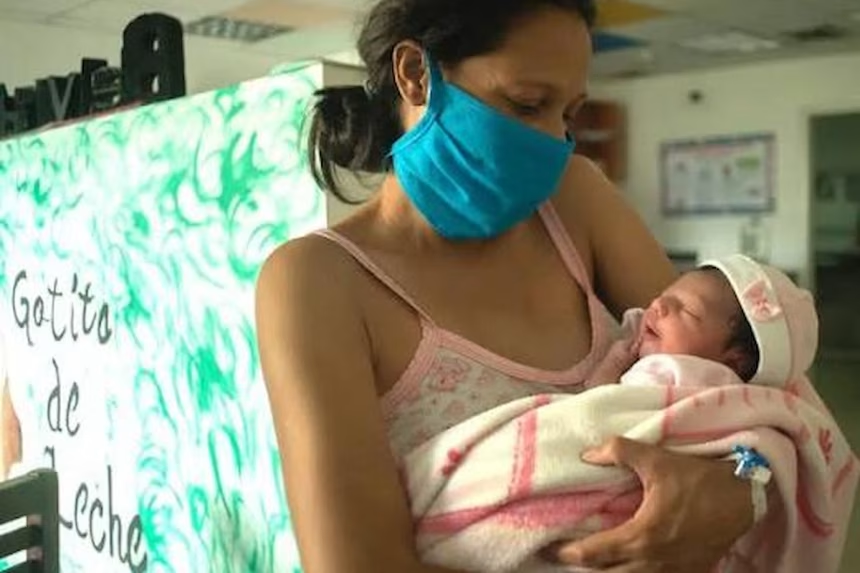

WHO and UNICEF have called on countries to strengthen breastfeeding support by investing in stronger health systems, maternity protection, and community-based services to ensure every child gets the healthiest start in life.
Ahead of World Breastfeeding Week 2026, the agencies stressed that breastfeeding remains one of the most effective ways to protect child health by providing optimal nutrition, strengthening immunity, preventing serious illnesses, and supporting cognitive development. For mothers, breastfeeding also reduces the risk of breast and ovarian cancers and type 2 diabetes.
Also read: Moscow Expands AI-Powered Radiology Services Across Russian Regions
While global progress has been encouraging with exclusive breastfeeding in the first six months increasing from 37% in 2012 to more than 47%. WHO and UNICEF noted that many countries still lag behind due to limited services, weak policy implementation, and inadequate support, particularly in low-income and humanitarian settings.
The organizations highlighted that expanding proven interventions, including skilled breastfeeding counselling, paid maternity leave, and stronger regulation of breast-milk substitute marketing, could prevent nearly 400,000 child deaths and 140,000 maternal deaths every year.
Click here to join our WhatsApp channel here
Marking this year’s theme, “Breastfeeding for a Sustainable Start in Life: Strengthen What Works,” WHO and UNICEF called on governments to invest in quality breastfeeding support, integrate breastfeeding services across maternal healthcare, expand community programmes, enforce international marketing standards, and strengthen workplace policies that support breastfeeding mothers.