


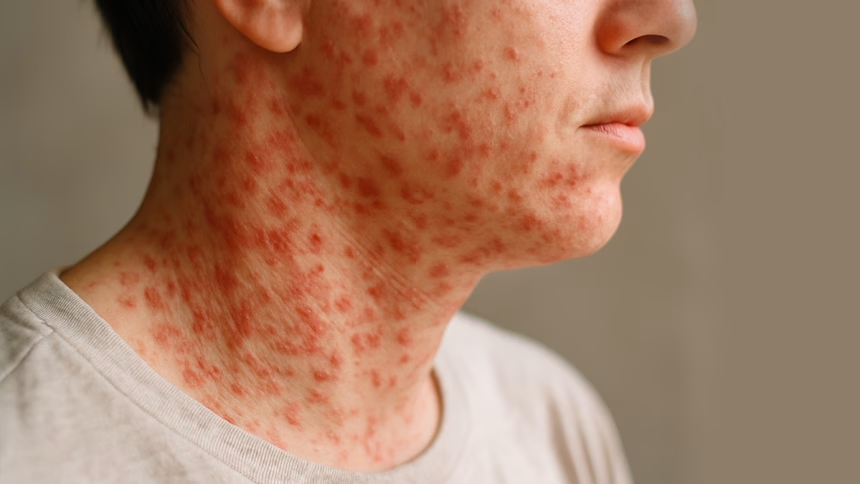
U.S. health officials are sounding the alarm after several clusters of measles cases were confirmed in multiple states, marking the largest surge since the early 2000s. The Centers for Disease Control and Prevention (CDC) reported that hundreds of cases have appeared in communities with low vaccination coverage, fueling concern about the return of a disease that was once declared eliminated in America.
This resurgence has left parents, schools, and healthcare providers asking urgent questions: What exactly is measles? Why are outbreaks increasing now? And what can be done to protect against it? Let’s break it down in detail.
Also Read: Measles outbreak threatens public health in Cuanza Sul
What is Measles?
Measles is a highly contagious viral infection caused by the measles virus (rubeola). This airborne disease spreads through respiratory droplets when an infected person coughs, sneezes, or talks. The virus can remain active in the air and on surfaces for up to two hours, making it one of the most transmissible diseases known to medical science.
The hallmark symptoms of measles include high fever, cough, runny nose, red watery eyes, and the characteristic red, blotchy rash that typically appears 3-5 days after symptoms begin. The rash usually starts on the face and spreads downward throughout the body.
What are the symptoms of Measles?
Symptoms of measles emerge 7-14 days post-exposure, mimicking a severe flu before escalating. Initial signs include a spiking fever (often exceeding 104°F), persistent cough, nasal congestion, inflamed eyes (conjunctivitis), and distinctive white Koplik’s spots inside the mouth.
A characteristic red, macular rash follows 3-5 days later, starting on the face and extending to the body and extremities. This itchy eruption persists for about a week. Complications affect roughly 20% of cases, ranging from pneumonia and ear infections to encephalitis (brain inflammation). Rarely, it leads to subacute sclerosing panencephalitis (SSPE), a progressive neurological disorder that can be fatal years after infection.
Understanding the root causes
Primary Transmission Factors
Measles spreads exclusively from person to person through the respiratory route. An infected individual can transmit the virus from four days before the rash appears until four days after. Without immunity through vaccination or previous infection, approximately 90% of exposed individuals will contract the disease.
Vulnerability Factors
Children under 5 years old, adults over 20, pregnant women, and individuals with compromised immune systems face the highest risk of severe complications. These complications can include pneumonia, encephalitis (brain swelling), and in rare cases, death.
Click here to join our WhatsApp channel here
Why Are Measles Cases Increasing in America?
Declining Vaccination Rates
The primary driver behind America’s measles resurgence is decreasing vaccination coverage. The MMR (measles, mumps, rubella) vaccine requires two doses for optimal protection, but vaccination rates have declined in several communities. Some areas report vaccination rates below the 95% threshold needed for community immunity.
Vaccine Hesitancy Movement
Growing vaccine skepticism, fueled by debunked studies linking vaccines to autism and amplified by social media misinformation, has led some parents to delay or refuse vaccinations for their children. This creates pockets of susceptible individuals within communities.
International Travel Patterns
Increased global travel brings measles from countries where the disease remains endemic. Unvaccinated travelers can contract measles abroad and introduce it to susceptible American communities upon return.
Geographic Clustering
Measles outbreaks often occur in communities with concentrated populations of unvaccinated individuals, including certain religious communities, alternative lifestyle communities, and areas with limited healthcare access.
Treatment of Measles
Currently, no specific antiviral medication exists to cure measles, making supportive care the cornerstone of treatment. Healthcare providers focus on managing symptoms and preventing complications while the immune system fights the viral infection. Essential treatment measures include:
- Fever management with acetaminophen or ibuprofen (avoid aspirin in children)
- Adequate hydration through increased fluid intake or IV fluids if necessary
- Vitamin A supplementation – WHO recommends high-dose vitamin A for children, which reduces complications by up to 50%
- Rest in a darkened room to ease light sensitivity
- Antibiotics only for secondary bacterial infections like pneumonia or ear infections
- Isolation for four days after rash onset to prevent transmission
For high-risk patients exposed to measles, post-exposure prophylaxis with immune globulin within six days can prevent or modify disease severity. Hospitalization may be required for patients with complications such as pneumonia, encephalitis, or severe dehydration.
Prevention of Measles
Vaccination is the most effective way to prevent measles. The MMR vaccine (measles, mumps, rubella) provides ~93% protection after one dose and ~97% after two doses. Public health experts recommend two doses: the first at 12–15 months of age and the second at 4–6 years. Adults born after 1957 without documented immunization should also be vaccinated. Measles prevention strategies go beyond vaccination:
- Ensuring community-wide coverage of at least 95% to maintain herd immunity
- Checking immunization status before international travel
- Isolating cases promptly during outbreaks to limit spread
- Educating communities on the dangers of vaccine misinformation
By maintaining high vaccine coverage and rapid outbreak response, measles infections can be prevented and the risk of serious complications significantly reduced worldwide.