



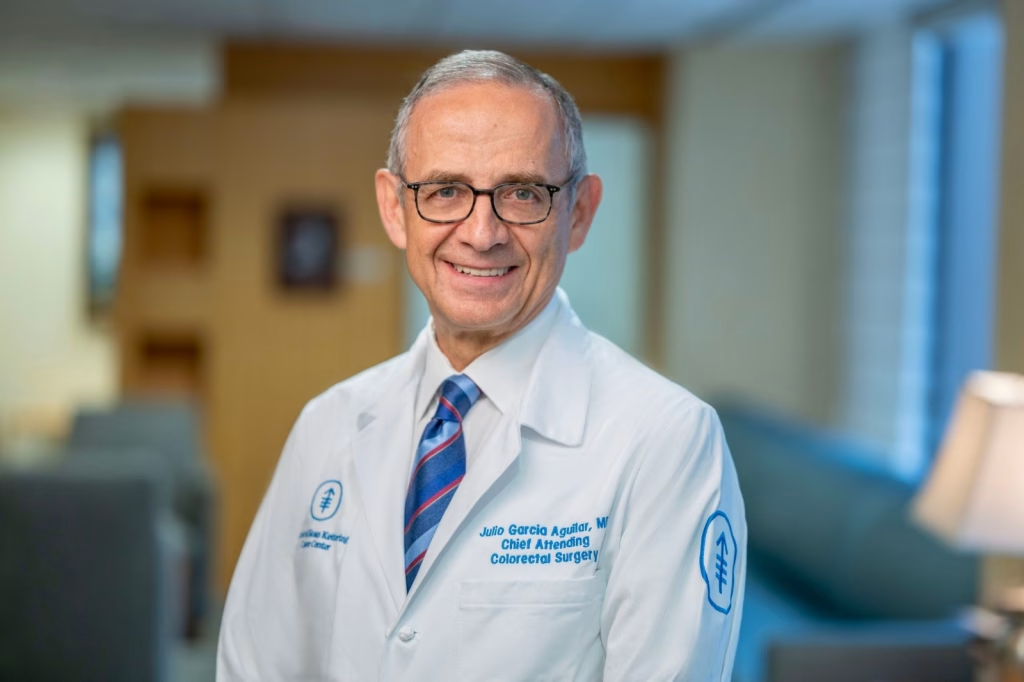
Colorectal cancer is the third most commonly diagnosed cancer worldwide and the second leading cause of cancer-related deaths globally. As Colorectal Cancer Awareness Month approaches, MedEdge MEA conducted an exclusive interview with Dr. Julio Garcia-Aguilar, Chief of the Colorectal Service at Memorial Sloan Kettering Cancer Center, at the WHX Dubai 2026 event, discussing the current advances in colorectal cancer care and medical innovation in the era of artificial intelligence and robotics.
- MedEdge MEA: Quality of life improvement is central to cancer care. From your global perspective, how are minimally invasive and robotic techniques enhancing patient outcomes in colorectal cancer care?
- MedEdge MEA: You are globally known for advancing organ-preserving approaches in colorectal cancer. How does the ability to safely reduce or avoid surgery after successful treatment change the patient experience?
- MedEdge MEA: How do modern surgical techniques help patients recover faster and maintain long-term wellbeing?
- MedEdge MEA: Collaboration between surgeons, oncologists, and researchers is a hallmark of leading cancer centers. How does this multidisciplinary model at Memorial Sloan Kettering improve decision-making and outcomes for colorectal cancer patients?
- MedEdge MEA: With healthcare systems in the Gulf rapidly adopting innovation, what surgical advances do you believe will have the greatest impact on colorectal cancer care in the coming years?
MedEdge MEA: Quality of life improvement is central to cancer care. From your global perspective, how are minimally invasive and robotic techniques enhancing patient outcomes in colorectal cancer care?
Dr. Julio: Minimally invasive techniques were developed to expedite recovery and minimize the side effects of surgery, and both laparoscopic and robotic surgery have delivered what they were intended to achieve. Most of the morbidity from abdominal surgery comes from the abdominal incision. By using laparoscopy or robotic platforms, we can perform the same oncological procedure without a major incision.
This has resulted in less pain, less ileus, faster recovery, shorter hospital stays, and lower rates of surgical site infections. There is also likely a reduction in adhesions, which decreases the long-term risk of bowel obstruction. By reducing the size of the incision and placing it in an area less likely to weaken the abdominal wall, we have significantly reduced hernia rates.
The advantage of robotic surgery over laparoscopy, in our hands and in global experience, is that it increases the probability of completing the operation using a minimally invasive approach. It reduces conversion to open surgery. In that sense, robotic surgery represents a step forward in minimally invasive colorectal cancer care.
MedEdge MEA: You are globally known for advancing organ-preserving approaches in colorectal cancer. How does the ability to safely reduce or avoid surgery after successful treatment change the patient experience?
Dr. Julio: When patients present with rectal cancer, their main concern is being cured, but a very significant concern is avoiding a colostomy. Organ preservation strategies allow patients who in the past would necessarily end with a colostomy to avoid the stoma.
Even patients who could undergo sphincter-saving surgery benefit from organ preservation because it avoids the bowel dysfunction associated with restorative surgery. Removing the rectum, even when the bowel can be reconnected, causes changes in bowel function known as low anterior resection syndrome. Patients usually experience frequent bowel movements, urgency, clustering, and repeated trips to the toilet. All of these symptoms impair quality of life.
There are also other side effects of rectal cancer surgery, including urinary and sexual dysfunction, which are quite bothersome. In summary, avoiding surgery prevents the sequelae associated with rectal removal and preserves the patient’s quality of life.
MedEdge MEA: How do modern surgical techniques help patients recover faster and maintain long-term wellbeing?
Dr. Julio: The oncological principles of cancer surgery have not changed significantly. What has changed is the approach. In the past, open surgery with a major abdominal incision led to significant pain, slow recovery, prolonged hospitalization, and delayed return to professional or economic activities.
Minimally invasive surgery, particularly robotic surgery, along with enhanced recovery programs and organ preservation, has transformed the surgical experience. Fifteen years ago, 100 percent of patients underwent open surgery and stayed in the hospital for at least a week. Today, patients requiring surgery for rectal cancer typically undergo minimally invasive procedures within enhanced recovery programs and are discharged in about one or two days
In the past, many decisions were based on dogma rather than scientific evidence. Patients routinely woke up from surgery with NG tubes that were keep for days, were not fed until had bowel movement, and had urinary catheters for several days. Now we do not routinely use NG tubes, patients are fed the same day of surgery, are mobilized early, and have the urinary catheters removed the following morning. Many meet discharge milestones within 24 hours.
This shift has dramatically improved patient recovery, reduced hospital stays, optimized resource utilization, and changed the overall patients experience compared to 15 years ago.
Also read: ‘Patient Need is the Only Credible North Star, With Evidence Aligning All Stakeholders’
MedEdge MEA: Collaboration between surgeons, oncologists, and researchers is a hallmark of leading cancer centers. How does this multidisciplinary model at Memorial Sloan Kettering improve decision-making and outcomes for colorectal cancer patients?
Dr. Julio: Our care model at MSK is based on disease management teams. In colorectal cancer, the team includes surgeons, medical oncologists, radiation oncologists, radiologists, pathologists, gastroenterologists, geneticists, stoma therapists, and social workers. Decisions are made together.
Colorectal cancer is treated using multiple modalities. Surgery remains treatment cornerstone for many colon and rectal cancer patients, but some require systemic chemotherapy, radiation therapy, immunotherapy, or targeted therapy. Treatment decisions are personalized based on disease stage, which historically was anatomically based, but now is increasingly molecularly based.
For example, some patients with MSI tumors benefit from immunotherapy, and others with specific genetic alterations such as KRAS or BRAF mutations, or HER2 amplification may receive targeted therapy. All decisions are discussed in weekly disease management team meetings and made by consensus.
This multidisciplinary, patient-centered approach ensures that each patient receives comprehensive, individualized care. It is the model we follow not only for colorectal cancer but across all cancers at our institution.
MedEdge MEA: With healthcare systems in the Gulf rapidly adopting innovation, what surgical advances do you believe will have the greatest impact on colorectal cancer care in the coming years?
Dr. Julio: Surgery is fundamentally based on anatomy, and we may be approaching the limits of what can be achieved anatomically. Minimally invasive and robotic surgery have been the most important advances in the past 25 years. Robotic platforms enhance visualization, stability, and dexterity making surgery more precise and effective.
However, the greatest future gains will likely come from a better understanding of the biology of the disease. We are already seeing this with immunotherapy for MSI tumors and targeted therapies for patients with specific genetic alterations. As systemic therapies become more effective and are moved from the treatment of advanced disease to the neoadjuvant treatment of early stage disease the role of surgery may shrink.
Artificial intelligence, combined with neoadjuvant therapies, will improve patient selection, enhance real-time anatomy recognition, and facilitate tumor visualization will make surgery more focused and precise, enhancing efficacy and safety. But surgery has anatomical limitations, and AI will likely refine rather than revolutionize surgical boundaries.
Screening and early detection remain critical tools in the fight against cancer. The screening age for colorectal cancer has been lowered from 50 to 45 because of increasing colorectal cancer incidence among younger patients. However, many cases still occur before 45. It may not be feasible to perform colonoscopy on the entire population, so we need new molecular technologies for broader screening and early detection.
We also need to better understand environmental factors contributing to rising colorectal cancer rates in younger patients. Greater emphasis on prevention, early detection, and biological understanding of the disease will likely produce the most meaningful gains in the years ahead.
The future of colorectal care rests on close collaboration among specialists, greater surgical precision, and the thoughtful adoption of advanced technologies. From robotic surgery and organ-preserving strategies to immunotherapy and AI-driven innovation, treatment is becoming more targeted and less invasive. The goal is no longer survival alone, but preserving function and quality of life, ensuring patients live not only longer lives, but better ones.