


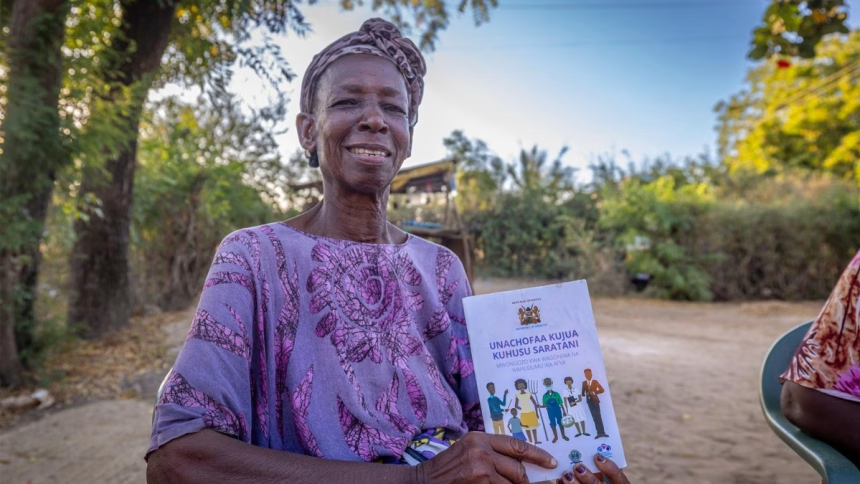
Kenya has launched a WHO-supported National Cervical Cancer Elimination Action Plan for 2026–2030, focusing on vaccination, early screening, integrated primary care services and nationwide scale-up to reduce cervical cancer deaths.
The Government of Kenya has unveiled the National Cervical Cancer Elimination Action Plan 2026–2030, a five-year national strategy developed in collaboration with the World Health Organization (WHO) to accelerate the prevention, early diagnosis and treatment of cervical cancer.
Also Read: WHO Urges Countries to Raise Taxes on Sugary Drinks and Alcohol to Tackle Rising Global Health Risks
Cervical cancer remains a major public health concern in Kenya, ranking as the second most common cancer among women. The country records an estimated 5,845 new cases and 3,600 deaths each year. Globally, cervical cancer is the fourth most common cancer affecting women, with around 660,000 new cases and 350,000 deaths annually, nearly 90% of which occur in low- and middle-income countries. Africa alone accounts for almost one-quarter of global cervical cancer deaths. Despite being largely preventable through human papillomavirus (HPV) vaccination and early screening, limited access to services continues to result in late-stage diagnoses for many women.
The Action Plan is aligned with WHO’s global cervical cancer elimination targets known as the 90–70–90 framework. These targets aim for 90% of girls to be fully vaccinated against HPV by age 15, 70% of women to be screened with a high-performance test by ages 35 and 45, and 90% of women diagnosed with cervical disease to receive appropriate treatment and care. The strategy is fully costed, results-driven, and places strong emphasis on equity, quality of care and nationwide scale-up.
Building on Kenya’s national HPV vaccination programme launched in 2019, the plan incorporates the country’s transition in November 2025 to a single-dose HPV vaccination schedule, in line with WHO guidance, to simplify delivery and improve coverage. WHO supported the Ministry of Health during this transition by training more than 11,000 health workers across the country, strengthening capacity for vaccine delivery and cervical cancer services.
The Action Plan also prioritizes the integration of cervical cancer services into primary health care through initiatives such as the Women Integrated Cancer Services (WICS) project. Currently implemented in Nyandarua and Bungoma counties with WHO support, WICS provides integrated screening for cervical cancer, breast cancer and common noncommunicable diseases, including hypertension, diabetes and mental health conditions, reaching at least 10,000 women.
Additional focus areas include expanding access to HPV DNA testing, introducing self-sampling to increase screening uptake, strengthening referral systems, and leveraging digital health tools to ensure cervical cancer services reach women in all 47 counties.
Click here to join our WhatsApp channel here
“Through coordinated action across prevention, screening and treatment, Kenya is strengthening its response to cervical cancer and advancing progress towards eliminating the disease as a public health problem,” said Dr Boston Zimba, speaking on behalf of Dr. Neema Rusibamayila Kimambo, WHO Representative to Kenya. “This Action Plan demonstrates Kenya’s commitment to ensuring that every woman, regardless of where she lives, has access to lifesaving cervical cancer services. With strong political will, community engagement, and continued partnership, we can make cervical cancer elimination a reality for future generations of Kenyan women.”