

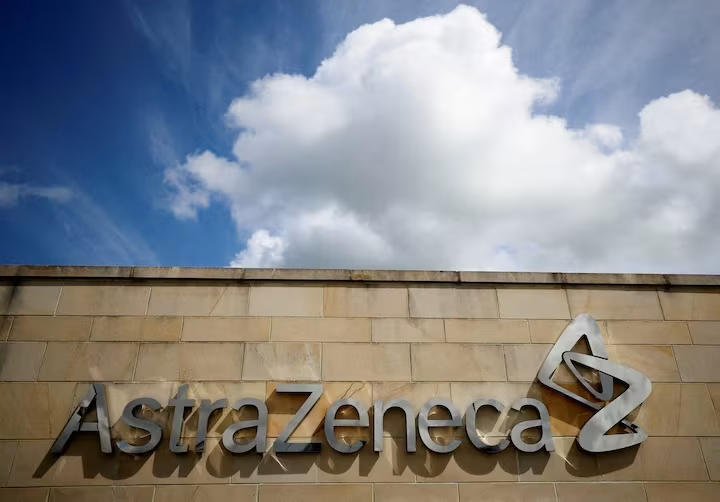

AstraZeneca has partnered with artificial intelligence biotechnology company insitro to discover and develop treatments for difficult-to-treat liver and heart conditions under a multi-year agreement valued at up to approximately $1.5 billion in potential milestone payments.
Under the agreement, AstraZeneca will pay insitro $40 million upfront. The California-based biotechnology company may receive up to $1.46 billion in development and commercial milestone payments, along with royalties representing a single-digit percentage of future sales.
Click here to join our WhatsApp channel here
The collaboration will focus on metabolic dysfunction-associated steatohepatitis (MASH), a serious liver disease, and cardiomyopathies, which affect the heart muscle. Researchers will use insitro’s Virtual Human platform, which combines lab-grown cell models with machine learning, to identify disease mechanisms and advance AstraZeneca-selected targets towards development candidates.
“Choosing the new targets that we want to put into our discovery pipeline is one of the hardest things we do across research and development,” Sharon Barr, executive vice president of biopharmaceuticals R&D at AstraZeneca, told Reuters. “By the time we read about a new pathway or target (in major scientific journals), it is no longer novel. It’s in the public domain and we’re already a few steps too late. But when we identify these unique connections early and test them in cellular systems, we’re ahead of the game.”
AstraZeneca will subsequently oversee and fund future clinical trials. The partnership aims to help researchers identify promising biological targets earlier, narrow laboratory testing and reduce uncertainty during drug discovery.
Also read: Kuwait Surgeon Ranks Among World’s Top 2% of Researchers
The agreement expands insitro’s work with pharmaceutical companies. The company has also collaborated with Bristol Myers Squibb on amyotrophic lateral sclerosis (ALS) research and partnered with Eli Lilly to develop AI models for predicting the pharmacological properties of small molecules in living organisms.
The collaboration highlights the growing role of artificial intelligence in pharmaceutical research and the development of potential treatments for complex diseases