
SEHA’s Salma Rehabilitation Hospital highlights the role of multidisciplinary rehabilitation in neurological recovery. A 52-year-old woman has made significant progress following a severe haemorrhagic stroke, highlighting the potential of intensive, multidisciplinary rehabilitation to help patients regain essential functions and independence.
When she was admitted to SEHA’s Salma Rehabilitation Hospital, the patient was unable to breathe independently, communicate or move without assistance. She required ventilatory support and tube feeding and depended on caregivers for everyday activities.
Her recovery involved a coordinated rehabilitation programme bringing together specialists in physical medicine and rehabilitation, physiotherapy, occupational therapy, and speech and language therapy. Through consistent therapy, she gradually regained her ability to breathe independently, communicate, sit and stand, and eventually walk with assistance.
Also read: 25-Year UAE Study to Advance Disease Prediction and Preventive Healthcare
As her physical and communication abilities improved, she also began singing and smiling again, marking an important emotional milestone in her recovery.
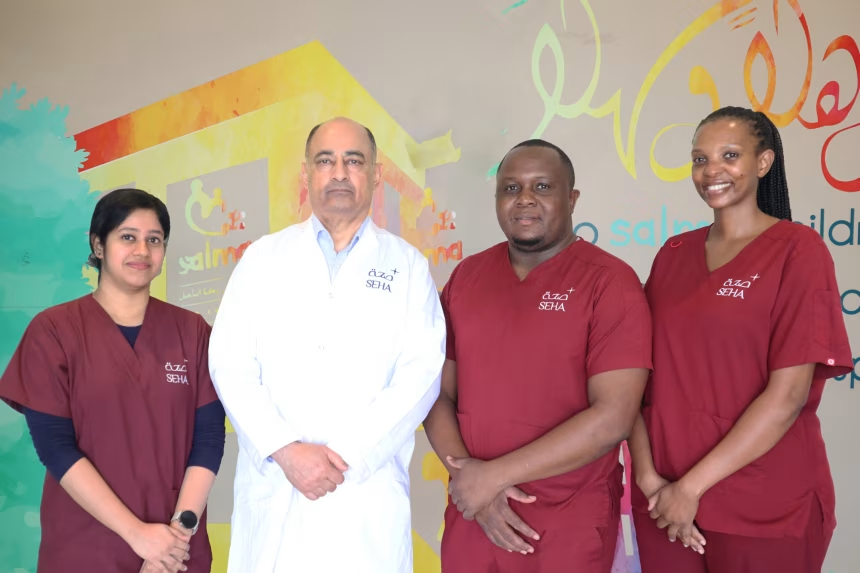
Dr. Khalid Anwar, Consultant in Physical Medicine and Rehabilitation at SEHA’s Salma Rehabilitation Hospital, said: “This case reflects the impact of intensive, coordinated rehabilitation in helping patients regain essential functions after severe neurological conditions. The goal was not only physical recovery, but also supporting the patient in reclaiming communication, movement, and greater independence in daily life.”
Sphelele Sikhakhane, Rehabilitation Supervisor at SEHA’s Salma Rehabilitation Hospital, said: “The patient’s journey reflects the value of close daily coordination across the rehabilitation team, with each specialty contributing to steady and meaningful progress across different stages of recovery”
The case underscores the role of specialised rehabilitation in helping patients and families navigate recovery after serious neurological illness.