


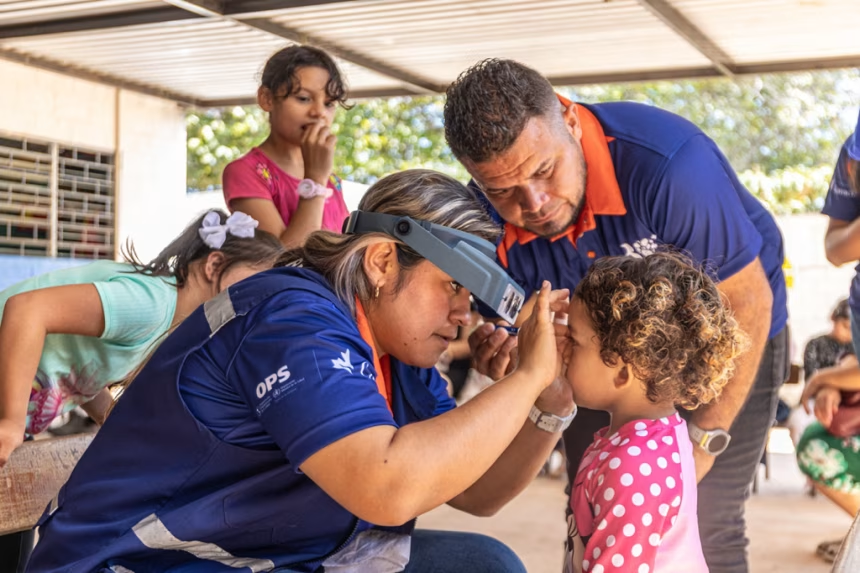

The World Health Organization (WHO) has validated El Salvador as having eliminated trachoma as a public health problem, making it the first country in Central America and the second in the Americas to achieve the milestone. Trachoma is the world’s leading infectious cause of blindness and is closely linked to poverty, poor sanitation and limited access to healthcare.
The validation follows a rigorous multi-year assessment conducted between 2023 and 2026, during which health authorities found no evidence of active trachoma transmission or advanced cases capable of causing blindness. WHO also confirmed that El Salvador has established strong surveillance systems and healthcare capacity to detect and manage any future cases.
Click here to join our WhatsApp channel here
Dr Tedros Adhanom Ghebreyesus, WHO Director-General, said, “I congratulate El Salvador on this remarkable achievement. It is a testament to the power of political commitment, strategic investment, and community engagement. El Salvador’s success is a vital step towards our global target of eliminating trachoma worldwide by 2030 and a clear signal that a healthier, more equitable future is within reach.”
The country’s success was driven by a multisectoral approach that strengthened primary healthcare, expanded eye care services, improved water, sanitation and hygiene (WASH) infrastructure, and enhanced collaboration between government agencies, communities and international partners, including the Pan American Health Organization (PAHO).
“This validation reflects El Salvador’s commitment to reaching populations in the most vulnerable conditions and generating solid evidence to demonstrate that trachoma is not endemic in the country,” said Dr Jarbas Barbosa, Director of the Pan American Health Organization (PAHO). “It is the result of sustained efforts to reach communities, identify potential cases, and ensure no one was left behind.”
Also read: UAE Performs First Balloon Pulmonary Angioplasty for Pulmonary Hypertension
El Salvador now joins 64 countries worldwide that have eliminated at least one neglected tropical disease, highlighting continued global progress in combating preventable infectious diseases while reinforcing the importance of sustained surveillance and access to quality eye care services.