


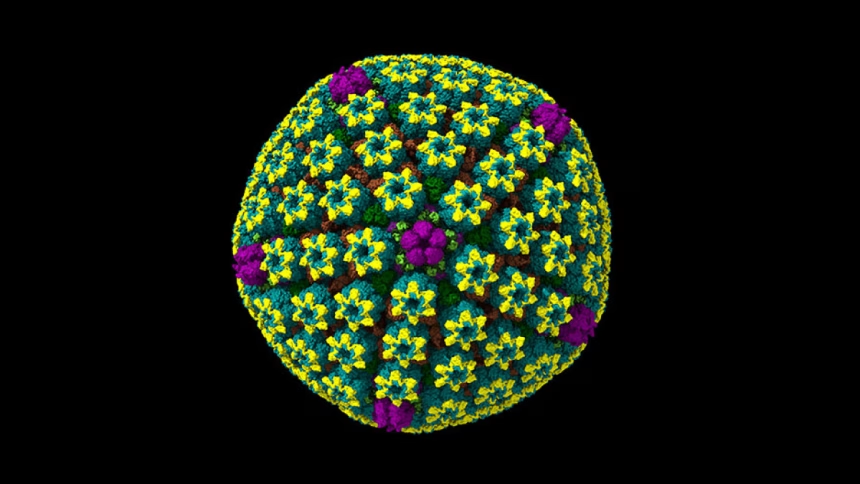
Harvard Medical School researchers have uncovered how a new class of antiviral drugs disables drug-resistant herpes viruses, providing insights that could inform future treatments for HSV and other DNA viruses.
Researchers at Harvard Medical School have identified key mechanisms behind the action of a new class of antiviral drugs, offering fresh insight into how emerging therapies can combat drug-resistant strains of the herpes simplex virus (HSV). The findings enhance scientific understanding of an important treatment approach and open new avenues for addressing herpesviruses and other DNA viruses that replicate within human cells.
Also Read: Global Healthcare Leaders to Gather in Dubai for World Health Expo 2026
The research is particularly significant for immunocompromised patients, who are at increased risk of developing severe HSV infections that no longer respond to standard antivirals due to repeated exposure to the same drug classes. Co-senior author Dr Jonathan Abraham, an infectious disease specialist at Brigham and Women’s Hospital and associate professor of microbiology at the Blavatnik Institute at HMS, has encountered such cases firsthand, motivating deeper investigation into alternative antiviral strategies.
“As a clinician, it’s disheartening when medicine can cure a patient of cancer, but the patient requires immunosuppression that leaves them vulnerable to a virus that doesn’t respond to the best drugs we have to treat it,” Abraham said. “As a researcher, this inspires me to learn as much as I can about how the virus works so that we can continue to find better options for people who are sick with resistant strains of viruses.”
While several drugs from this emerging antiviral class are currently undergoing clinical trials in the United States, and one has already received regulatory approval in Japan, their precise mode of action has remained largely unclear. To address this gap, Dr Abraham collaborated with co-senior author Dr Joseph Loparo, professor of biological chemistry and molecular pharmacology at HMS.
Using advanced structural biology and imaging technologies, the research team examined how these drugs bind to and disable a critical viral enzyme essential to the HSV life cycle. Dr Abraham’s laboratory mapped the structural interactions between the antiviral compounds and the viral protein, while Dr Loparo’s team captured real-time data illustrating how this binding process prevents the enzyme from functioning, effectively halting viral activity.
Click here to join our WhatsApp channel here
“A real strength of this study is the combination of high-resolution, atomistic pictures of the viral proteins bound by the inhibitors and real-time imaging of the viral proteins in action,” Loparo said.
Read More: https://hms.harvard.edu/news/researchers-now-understand-how-new-class-antivirals-works