

After years of displacement and zero access to healthcare, returning Afghan families in Nimroz Province are finally getting their children vaccinated, one community at a time.
Families returning to Khashrood district in Nimroz province are coming home with vaccinated children who have never received a single vaccine dose.
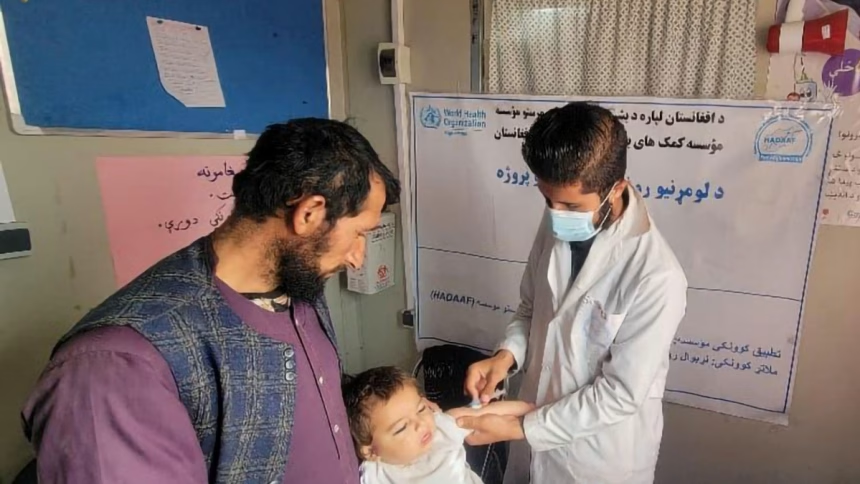
Karim, a 38 year old father of three, returned to Afghanistan after 13 years in the Islamic Republic of Iran. During those years of constant movement, his children never once visited a clinic. They had no vaccination cards and had never been vaccinated against measles, polio, or other life-threatening diseases.
Also Read: Women’s Health Data Gap Could Unlock $1 Trillion Opportunity
“During our displacement, we moved many times and had no access to clinics. My children never received vaccines and I was worried about their health,” Karim told the vaccinator at the Targreshk sub-Health Centre in Khashrood District.
Karim’s story is far from unique. Across Nimroz, large numbers of returning children are classified as “zero dose” meaning they have missed every routine immunization. The gap in coverage leaves entire communities exposed to outbreaks that can spread rapidly.
In December 2025, that began to change. Through WHO-supported primary healthcare outreach services, community mobilizers identified Karim’s children and referred the family to the Targreshk sub-Health Centre. For the first time, his children were registered in Afghanistan’s national immunization system, received age-appropriate vaccines, and were issued vaccination cards.
Today, Karim knows where to go for care. His children are protected and his family is connected to local health services.
Click here to join our WhatsApp channel here
“Reaching zero-dose children among returning families is critical to preventing outbreaks and protecting the most vulnerable,” said Dr Edwin Ceniza Salvador, WHO Representative and Head of Mission to Afghanistan.
WHO acknowledged the Central Emergency Response Fund (CERF) and other donors whose funding made this outreach possible.