


The World Health Organization (WHO) is promoting self-care as a key strategy to improve prevention, testing and treatment for HIV, tuberculosis (TB), viral hepatitis, sexually transmitted infections (STIs) and mental health.
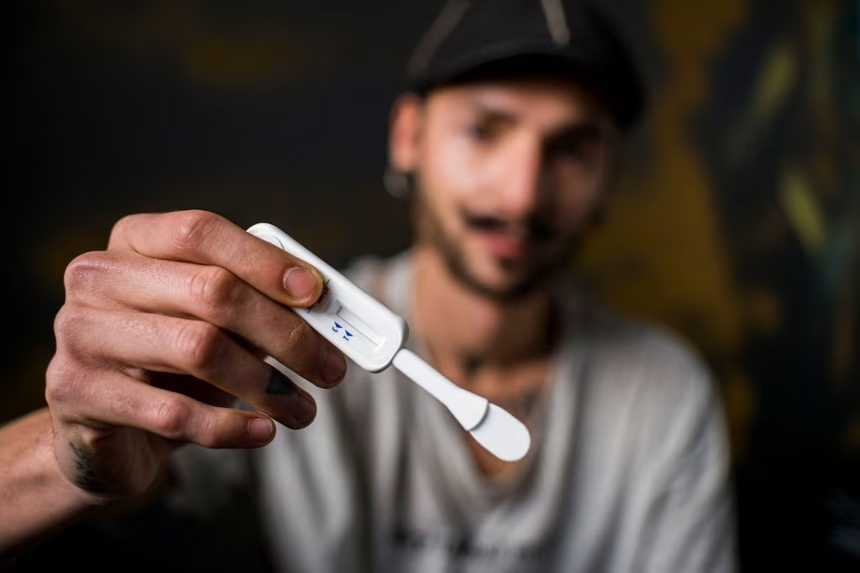
Marking International Self-Care Day and AIDS 2026, WHO said self-care interventions such as HIV, hepatitis C and syphilis self-testing, self-sampling, condom use, integrated community services and AI-powered digital health tools can help people access care more easily while supporting universal health coverage.
“Self-care options are a major step forward in making healthcare more accessible, personal and integrated into people’s daily lives,” said Dr Tereza Kasaeva, Director of WHO’s Department for HIV, TB, Hepatitis & STIs. “WHO urges countries and partners to expand access to these evidence-based self-care tools. Giving people agency over their health is one of our most effective strategies to close testing gaps, stop transmission and ensure everyone can achieve a better quality of life.”
Click here to join our WhatsApp channel here
“Evidence‑based self‑care options provide a powerful path toward integrated, people‑centred health care,” said Pascale Allotey, Director, WHO Department of Sexual, Reproductive, Maternal, Child, Adolescent Health and Ageing and HRP, the UN’s Special Programme in Human Reproduction. “By enabling individuals to manage elements of their SRHR, HIV, tuberculosis, hepatitis, STIs, and mental well‑being, self‑care supports truly holistic services. Equipping people with accessible tools for diagnostics, prevention, and mental health strengthens countries’ ability to reach those most at risk and uphold their health needs and rights.”
“Self-care is not an optional add-on to health systems; it is a core strategy for equity. Every tool that brings health care closer to people strengthens the ability to expand access to sexual and reproductive health services and to end HIV, TB, viral hepatitis and STIs,” said Dr Yogan Pillay, Director of TB and HIV Delivery Programmes, Gates Foundation.
WHO also emphasized the importance of healthy lifestyles, including proper nutrition, physical activity, mental well-being and reducing tobacco and alcohol use, to complement disease prevention and long-term health.
The organization will showcase the latest innovations in self-care, long-acting HIV prevention and AI-enabled healthcare during dedicated sessions at the 26th International AIDS Conference (AIDS 2026) in Rio de Janeiro.
Also read: Strategic Partnership Strengthens Integrated Autism Care in Abu Dhabi