

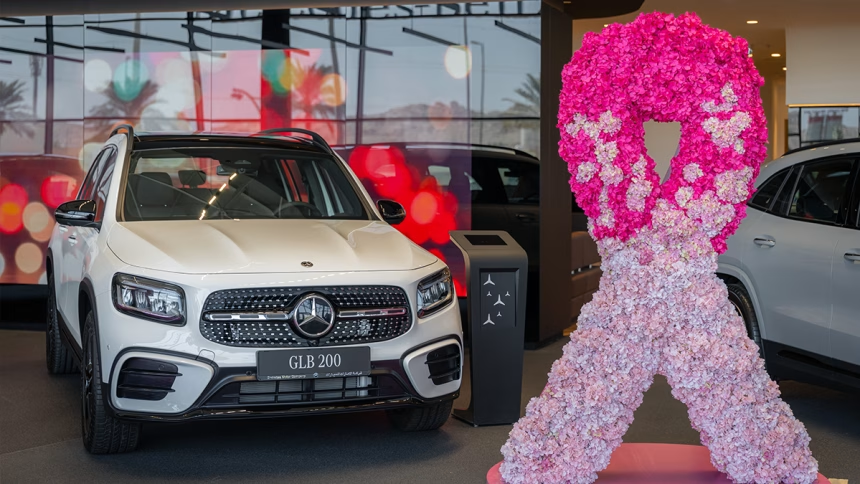
Last month, Emirates Motor Company (EMC), the flagship company of Al Fahim Group, and Abu Dhabi Health Services Company (SEHA) turned car showrooms into places of care. Under the banner “Pink October- A Month for Her” EMC’s locations in Abu Dhabi and Al Ain became accessible hubs for breast cancer awareness, prevention, and early detection, bringing trusted medical expertise into everyday spaces. The campaign has now concluded, but its message is meant to stay.
Step into an EMC showroom in October and you would have found more than polished vehicles. SEHA specialists were there to listen and guide. A mobile mammogram truck stood ready for on-site imaging and consultations, with referrals arranged when needed. Awareness workshops broke down what prevention and early detection really mean, how to notice changes, when to screen, and how to approach those conversations with confidence. At the Mercedes-Benz showroom in Al Ain, “Paint for Prevention” invited guests to create messages of hope on canvas, blending art with education in a warm, communal setting.
Small touches carried big weight. A pink leather seatbelt grip read, “If you feel something unusual, don’t ignore it. Early detection saves lives.” A mirror hanger reminded, “Fasten for life. Every fastening is a reminder.” These cues turned routine moments, sliding into a driver’s seat, adjusting the mirror, into prompts to pause, check in, and take action. Even as the campaign wraps, many of these reminders remain in circulation, continuing to nudge conversations and decisions toward prevention.
At its heart, the initiative made early detection approachable. Many women postpone screenings due to time pressures or uncertainty. By integrating services into familiar environments, test drives, service appointments, casual showroom visits, EMC and SEHA lowered the threshold for that crucial first step and made care feel closer.
A purposeful partnership
The partnership between an automotive leader and a healthcare provider might seem unconventional; in practice, it was pragmatic and human-centered. Built within Al Fahim Group’s Corporate Social Responsibility (CSR) framework, the collaboration drew on complementary strengths. EMC brought high-visibility spaces and trusted customer touchpoints. SEHA delivered licensed specialists, clinical capabilities, and mobile mammogram units. Together, they bridged the gap between daily life and preventive care.
The October milestones were clear and tangible. The campaign launched across EMC locations, SEHA deployed mobile mammogram units to Abu Dhabi and Al Ain, and community-led activations transformed showrooms into welcoming spaces for wellness and learning. Inside the mammogram truck, women received clinical breast examinations, mammogram imaging, and immediate consultations, with referrals for follow-up care when needed. Outside, specialists translated medical guidance into everyday steps, what to watch for, how often to screen, and how to support loved ones.
‘Paint for Prevention’ in Al Ain embodied the campaign’s tone: empathetic, engaging, and grounded. Guests painted messages of hope while speaking with SEHA experts, turning a sensitive topic into a shared experience. The act of painting made room for reflection; the conversation made room for clarity. Together, they helped normalize the topic of breast health in a way that statistics alone rarely can.
The collaboration also aligned with Al Fahim Group’s wider CSR commitments, supporting Emiratization, inclusion of People of Determination through initiatives such as Bee Café, and programs connected to the UAE’s sustainable development goals. By uniting mobility with medicine, the campaign delivered on a shared purpose: improving quality of life through accessible, preventive action. With the initiative now concluded, EMC and SEHA point to a replicable blueprint, pairing clinical expertise with community reach to make prevention part of everyday life.
Aligned with national vision
“Pink October–A Month for Her” supported the “Forward Society” pillar of We the UAE 2031 Vision, which prioritizes preventative healthcare, wellbeing, and social inclusion. By placing medical expertise in public, trusted venues, the campaign made health education less abstract and more actionable. It recognized a simple truth: people are more likely to act when care is close, information is clear, and the setting feels welcoming.
The strategy was designed for continuity. While the activations concluded in October, their influence extends beyond the calendar. Seatbelt grips and mirror hangers continue as gentle prompts; workshop learnings travel from showrooms into homes and workplaces; and first-time screenings often lead to regular check-ups. In this way, the campaign set a rhythm of reminders, small, steady cues that help shape healthier habits over time.
The impact moves on two timelines. Immediately, women gained timely access to screenings and credible advice, often in one visit. Over time, the ease of access and the openness of conversation help normalize preventive behaviors: booking check-ups, noticing changes, encouraging friends and family to do the same. That ripple effect, one person learning, another sharing, supports the nation’s broader goals for community health.
Throughout, the message was consistent: early detection saves lives. When breast cancer is identified early, treatment options broaden and outcomes improve. But awareness must meet people where they are. By transforming showrooms into spaces for care, EMC and SEHA showed how prevention can be woven into daily life. With the campaign concluded, the call remains clear: keep booking the appointments, keep sharing the reminders, keep the conversation alive.
From awareness to habit
The legacy of ‘Pink October–A Month for Her’ is measured not only in screenings completed or workshops held, but in the habits it helped spark. The campaign was meant to be felt: in the ease of stepping from a showroom floor into a screening unit; in the reassurance of a candid exchange with a SEHA specialist; in the quiet presence of a pink seatbelt grip prompting a moment of self-check or a call to schedule a mammogram.
Its strength lies in how it humanized prevention. It acknowledged that time is tight, that health conversations can be daunting, and that meaningful change often begins with small, consistent cues. By placing those cues within the flow of daily routines, EMC and SEHA created a practical, respectful model of prevention, one that can endure beyond a single month.
As an expression of corporate citizenship, the campaign shows what happens when reach and trust are put to work for public health. The showrooms may return to their usual rhythm, but the message stays fastened to mirrors, held in hands, and carried into conversations. In every visit, every canvas, and every screening, the objective was constant: to make early detection easier, bring care closer, and help build a community where prevention is embraced.
The calendar has turned, but the momentum need not fade. The lessons of last month’s campaign invite all of us to keep going, book the appointment, share the reminder, ask the question. That is how awareness becomes habit, and habit becomes a culture of care.