


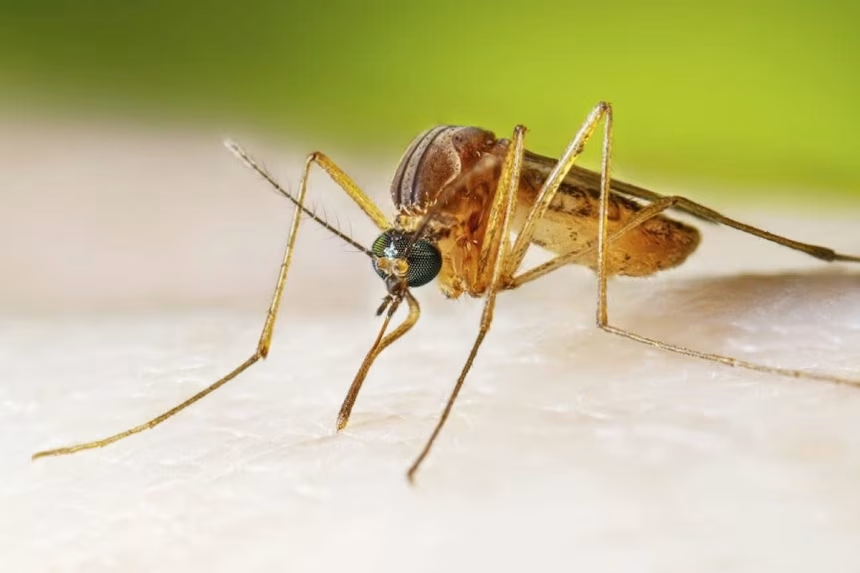

For most of us, a mosquito bite is nothing but an annoying itch that disappears in a few days. But what happens when that tiny bite carries a virus capable of travelling through the body and, in severe cases, affecting the brain and nervous system?
West Nile virus is one such mosquito-borne disease that often causes no symptoms at all, yet can turn into a serious illness. It may begin with something as ordinary as a mosquito bite, but its effects can be far from ordinary.
How does it spread?
The main cycle is bird to mosquito to bird. Mosquitoes become infected when they bite infected birds. An infected mosquito can then transmit the virus to humans or animals when it bites them.
The virus does not usually spread through casual human-to-human contact. In rare cases, it can be transmitted through blood transfusions, organ transplants, or from an infected mother to her baby.
What happens after infection?
Most infected people do not develop any symptoms. Some develop a mild illness called West Nile fever, which can cause fever, headache, body aches, tiredness, nausea, vomiting and occasionally a skin rash.
Click here to join our WhatsApp channel here
The more serious form is West Nile neuroinvasive disease, where the virus affects the nervous system and can cause meningitis, encephalitis, severe weakness, confusion, tremors, seizures and paralysis.
While the severe form is uncommon, it is life-threatening, particularly in older adults and people with underlying medical conditions.
Why is it dangerous?
The main concern is when the virus reaches the central nervous system, causing inflammation of the brain or surrounding tissues that can lead to neurological complications and, sometimes, long-term weakness or other problems.
Is there a treatment or vaccine?
There is no specific antiviral treatment for West Nile virus infection in humans, and no routinely available human vaccine. Treatment is mainly supportive, for example managing fever, pain, dehydration, seizures or breathing problems when necessary.
Also read: Cancer Patient Preserves Future Fertility Before Starting Chemotherapy
How can it be prevented?
The best protection is avoiding mosquito bites by:
• Using mosquito repellent
• Wearing long sleeves and trousers when mosquitoes are active
• Using window and door screens or mosquito nets
• Removing standing water around homes where mosquitoes can breed
• Following local mosquito-control measures
One interesting fact about West Nile virus is that birds are an important part of its natural transmission cycle, but humans are generally considered “dead-end” hosts, because the amount of virus in human blood is usually too low to efficiently infect another mosquito.
Another interesting fact is that West Nile virus was not named after the Nile River itself. It was named after the West Nile district of Uganda, where the virus was first isolated from the blood of a woman in 1937.
A mosquito bite may last only a moment, but the virus it carries can have consequences that last much longer. West Nile virus often remains unnoticed, yet when it becomes severe, it can affect the brain and nervous system and lead to life-threatening complications. What makes the virus particularly challenging is this contrast: it can be carried silently, spread quietly, and in rare cases cause serious illness. Sometimes, the smallest bite can carry the biggest threat.