


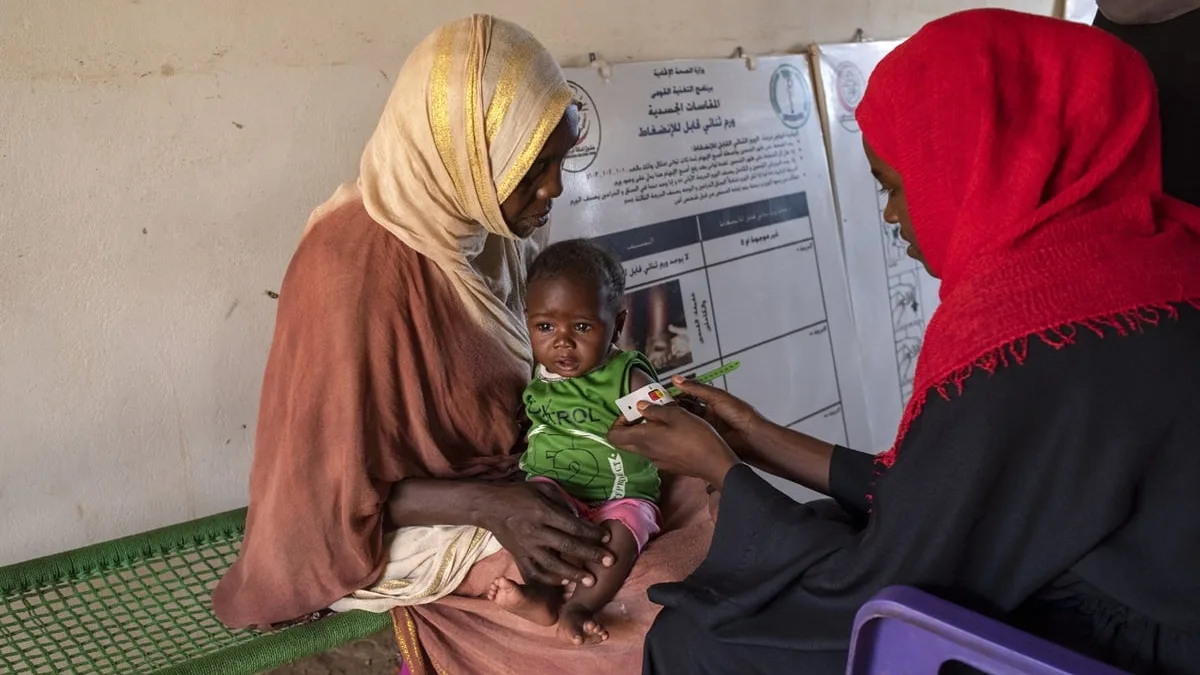
Geneva- May 2024- Three United Nations agencies issued a stark warning that all indications point to a significant deterioration of the nutrition situation for children and mothers in war-torn Sudan. Sudan’s children are at stake, and we urgently need to protect an entire generation from malnutrition, disease, and death.
- The year-long war is also severely impacting the delivery of humanitarian supplies, leaving countless women and children without access to vital food and nutritional support. The agencies have been struggling to deliver nutrition products as growing violence and bureaucratic procedures impede access to conflict affected areas.
- “Children in Sudan are experiencing horrific violence, displacement and trauma – and now they are confronted with potential famine,” said UNICEF Executive Director Catherine Russell. “When children suffer from serious forms of malnutrition, it harms their physical and cognitive development and can leave life-long damage. Parties to the conflict must urgently allow humanitarian access so children can receive food, water, medical care and shelter. But most of all, children need peace.”
A recent analysis conducted by the UN Children’s Fund (UNICEF), UN World Food Programme (WFP) and World Health Organization (WHO) highlights that the ongoing hostilities are worsening the drivers of child malnutrition. These include a lack of access to nutritious food, safe drinking water and sanitation, and increased risk of disease. The situation is compounded by massive population displacement, as large numbers of people flee the conflict. Sudan is facing an ever-increasing risk of conflict-induced famine that will have catastrophic consequences including the loss of life, especially among young children.
The year-long war is also severely impacting the delivery of humanitarian supplies, leaving countless women and children without access to vital food and nutritional support. The agencies have been struggling to deliver nutrition products as growing violence and bureaucratic procedures impede access to conflict affected areas.
Also Read: In Sudan, “the needs are growing by the day, but the response is deeply inadequate”
Child malnutrition in Sudan is at emergency levels. In Central Darfur, acute malnutrition is estimated to be at 15.6 percent among children under 5, while in ZamZam camp it’s close to 30%. The situation has deteriorated over recent months, with no sign of abating due to continued conflict and severely hindered humanitarian access. Acute malnutrition is life-threatening, with malnourished children up to 11 times more likely to die than a well-nourished child. Malnutrition and disease reinforce each other, with sick children becoming more easily malnourished and malnourished children becoming sick more easily, and suffering worse outcomes. Even when children recover, malnutrition can have lifelong effects on physical and cognitive development. Sudan risks a lost generation, with grave implications for the country’s future.
Levels of malnutrition are particularly worrying among pregnant and breastfeeding mothers. For example, screening carried out last month by Medecins Sans Frontières in ZamZam camp, North Darfur, found over 33 percent of pregnant and breastfeeding women are malnourished, indicating that they are likely sacrificing their own needs to feed their children. This situation poses an incredible risk not only for the health of mothers, but also for the next generation of Sudan’s children. As much as 30 percent of child malnutrition begins in utero, so children born to malnourished mothers are likely to be already malnourished themselves.
“Children in Sudan are experiencing horrific violence, displacement and trauma – and now they are confronted with potential famine,” said UNICEF Executive Director Catherine Russell. “When children suffer from serious forms of malnutrition, it harms their physical and cognitive development and can leave life-long damage. Parties to the conflict must urgently allow humanitarian access so children can receive food, water, medical care and shelter. But most of all, children need peace.”
“Mothers and children across Sudan are wasting away from malnutrition. The ongoing war has stripped them of everything they need to survive – food, medical support and shelter. We need immediate and safe access to deliver the humanitarian assistance that they so desperately need. Without it, this crisis risks becoming the world’s largest hunger emergency”, said WFP Executive Director Cindy McCain. “Millions of lives are at stake and the international community must act now or we risk losing an entire generation of children.”
“Malnutrition is not a one-time crisis. Malnourished children face a lifetime of developmental challenges and ill-health and are also more likely to die from infectious diseases”, said WHO Director-General Tedros Adhanom Ghebreyesus. “The clock is ticking, edging Sudan’s mothers and children closer to famine. WHO and partners are on the ground working to prevent and treat acute malnutrition to save precious lives but we need sustained humanitarian access and full financial backing to be able to do this.”
The agencies call for immediate, unimpeded and consistent access to communities who are suffering the worst effects of the brutal and lengthy conflict, through all possible crossline and cross-border routes with neighbouring countries, as well as a de-escalation of the situation in El Fasher and a nationwide ceasefire. We also count on a renewed and significant scaled up support from donors. The window to avert the worst is rapidly closing.


