


Business leaders in the UAE are being encouraged to treat executive mental health as a business-continuity and governance issue as prolonged regional uncertainty increases psychological pressure on decision-makers and employees.
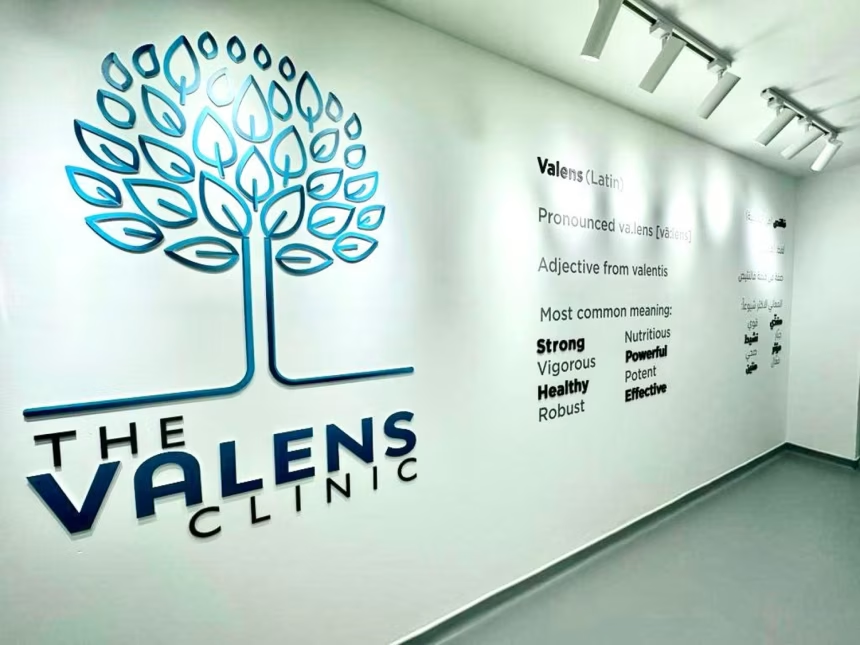
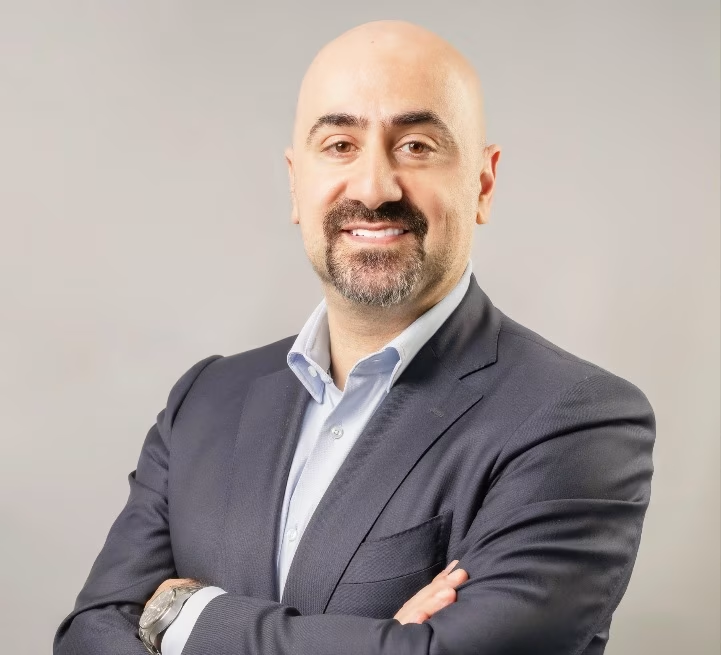
Dubai psychiatrist Dr Joseph El-Khoury, Co-founder, CEO and Medical Director of The Valens Clinic, said “There is a lot of wishful thinking that this will just pass once the economic situation improves, but the psychological damage can sometimes be irreversible regardless. This is the message that needs to be heard.”
Click here to join our WhatsApp channel here
“The executives I coach and the leadership teams I train are all learning the same thing: emotional skill is leadership skill. The ones who build a toolkit of self-awareness, compassion for themselves and others, and an adaptable mindset lead with more clarity, communicate with more precision, and build teams that feel safe to grow. Corporate wellbeing works when leadership treats it as part of their own growth and models it publicly.” said, Rahaf Kobeissi, Founder, Rays Your Mental Health
Economic pressures are adding to the uncertainty. An ICAEW Q2 2026 Middle East Economic Update projects a 4.1% contraction in Middle East GDP this year, compared with earlier growth expectations, while inbound arrivals to the GCC are forecast to decline.
Also read: U.S. FDA Approves XFG-Adapted COVID-19 Vaccine for 2026–2027
Experts also point to wider mental-health challenges across the region. A 2022 McKinsey Health Institute survey found that 66% of employees surveyed in Saudi Arabia, Kuwait, the UAE and Qatar had experienced at least one mental-health challenge.
Recommendations include normalising help-seeking among senior leaders, developing confidential peer networks, incorporating wellbeing into governance processes and providing early access to qualified mental-health professionals. Experts stress that resilience should focus not only on enduring pressure but also on recovery, sound decision-making and sustainable leadership.