


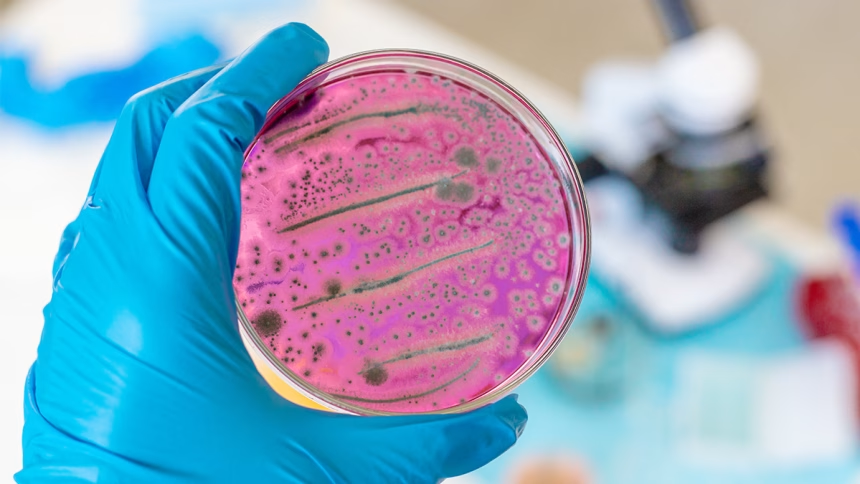
Antimicrobial resistance (AMR) occurs when bacteria evolve mechanisms that allow them to survive exposure to antimicrobial agents that were previously effective in treating infections. Through genetic mutations and the acquisition of resistance genes, bacteria can neutralize antibiotics, alter drug targets, reduce drug uptake, or actively expel antimicrobial agents. As a result, standard treatments become less effective or completely ineffective, leading to persistent infections and increased risk of transmission. AMR has emerged as one of the most critical public health threats of the 21st century, fundamentally challenging the foundation of modern medicine and reversing decades of progress in infectious disease control.
Globally, antimicrobial resistance threatens healthcare systems by undermining the effectiveness of antibiotics, leading to increased morbidity, mortality, prolonged hospitalizations, and escalating healthcare costs. In 2019, drug-resistant infections were directly responsible for an estimated 1.27 million deaths worldwide and were associated with approximately 4.95 million total deaths. Projections indicate that by 2050, AMR could result in up to 10 million deaths annually, with a cumulative economic cost estimated at $100 trillion. The clinical impact spans all medical specialties, affecting routine infections as well as complex medical interventions such as surgery, organ transplantation, cancer chemotherapy, and neonatal intensive care.
High-priority resistant pathogens exemplify the severity of the crisis. Carbapenem-resistant Klebsiella pneumoniae, methicillin-resistant Staphylococcus aureus (MRSA), and extended-spectrum β-lactamase (ESBL)-producing Escherichia coli are increasingly prevalent and associated with high mortality rates and limited therapeutic options. Without effective antibiotics, even routine medical procedures become significantly more challenging.
Drivers and global spread of antimicrobial resistance
The spread of antimicrobial resistance occurs through multiple interconnected pathways. Resistant bacterial strains can become established in healthcare facilities, circulating among patients via contaminated hands, medical equipment, and the hospital environment. In community settings, inadequate sanitation, contaminated food and water, and close human contact facilitate transmission. Agricultural practices, particularly the non-therapeutic use of antibiotics in livestock and food production, further contribute to the selection and dissemination of resistant organisms that can be transmitted to humans.
A critical driver of AMR is horizontal gene transfer, which allows bacteria to rapidly share resistance genes across species and genera. Mobile genetic elements such as plasmids, transposons, and integrons enable resistance traits to spread far more rapidly than through mutation alone. Global travel, migration, and trade accelerate this process, allowing resistant organisms to disseminate across borders and continents within short timeframes.
The burden of AMR is disproportionately borne by low- and middle-income countries, particularly in sub-Saharan Africa and South Asia. In these regions, limited laboratory capacity, weak surveillance systems, poor infection prevention infrastructure, and restricted access to effective second-line antibiotics amplify the impact of resistant infections and contribute to higher mortality rates.
Armed conflict and humanitarian crises further worsen antimicrobial resistance and significantly undermine antimicrobial stewardship efforts. War disrupts healthcare systems through the destruction of infrastructure, shortages of trained healthcare personnel, and breakdowns in supply chains for diagnostics, essential medicines, and infection prevention resources. In conflict settings, antibiotics are frequently used empirically in the absence of microbiological confirmation due to limited laboratory capacity, leading to overuse of broad-spectrum agents and poor treatment optimization. Inadequate regulation and informal pharmaceutical markets increase the availability of substandard or counterfeit antimicrobials, further driving resistance. Overcrowding in refugee camps, compromised water and sanitation systems, and high rates of trauma-related infections create conditions that facilitate the transmission of multidrug-resistant organisms.
Impact beyond infectious diseases
The consequences of antimicrobial resistance extend beyond infectious diseases, threatening advances in the management of non-communicable conditions. Patients with diabetes, cancer, autoimmune diseases, and organ failure are particularly vulnerable to infections due to immunosuppression and frequent healthcare exposure. Resistant infections in these populations can lead to treatment delays, increased complications, and poorer outcomes.
Armed conflict and humanitarian crises further worsen antimicrobial resistance and significantly undermine antimicrobial stewardship efforts.
Modern medical practices depend heavily on effective antimicrobial therapy. Procedures such as joint replacements, organ transplantation, and hematopoietic stem cell transplantation rely on antibiotics for infection prevention and treatment. Without reliable antibiotics, the safety and feasibility of these interventions are significantly compromised.
The economic burden of AMR is substantial. Globally, AMR threatens economic growth, particularly in resource-limited settings, by increasing healthcare expenditures and reducing workforce productivity.
Strategies to mitigate AMR
Addressing antimicrobial resistance requires a comprehensive, multi-pronged approach. Recommended strategies fall into five main categories: infection prevention and control, vaccination, reduction of non-therapeutic antibiotic exposure, antimicrobial stewardship, and sustaining the antibiotic development pipeline. Among these, infection prevention and control (IPC) represent one of the most effective and cost-efficient interventions. Improved hand hygiene, isolation precautions, environmental cleaning, and water, sanitation, and hygiene (WASH) programs can substantially reduce infection rates and limit the spread of resistant organisms.
Vaccination is a critical yet underutilized tool in combating AMR. Vaccines against Streptococcus pneumoniae, Haemophilus influenzae type b, and influenza have demonstrated reductions in antibiotic consumption and resistant infections. Vaccines targeting additional bacterial pathogens, including Staphylococcus aureus and Escherichia coli, are currently under development. Viral vaccines indirectly reduce AMR by preventing illnesses that frequently lead to inappropriate antibiotic use.
Antimicrobial stewardship programs (ASPs) are central to optimizing antibiotic use. These programs promote the appropriate selection, dosing, route, and duration of antimicrobial therapy through prescriber education, formulary management, prior authorization, audit and feedback, and clinical decision support. Led by multidisciplinary teams, ASPs have consistently demonstrated reductions in broad-spectrum antibiotic use while maintaining or improving patient outcomes.
Emerging role of Artificial Intelligence
Advances in artificial intelligence (AI) offer promising opportunities to strengthen antimicrobial stewardship efforts, particularly in resource-limited and high-pressure healthcare environments. AI-driven clinical decision support systems can integrate patient-level data, local resistance patterns, and treatment guidelines to provide real-time, evidence-based antibiotic recommendations. Machine learning algorithms have the potential to improve early pathogen identification, predict antimicrobial resistance profiles, and optimize antibiotic selection and duration before culture results are available.
AI tools can also enhance surveillance by identifying emerging resistance trends and outbreaks, supporting more targeted stewardship interventions. In conflict and post-conflict settings, where specialist expertise may be limited, AI-enabled platforms could help standardize prescribing practices, reduce unnecessary broad-spectrum antibiotic use, and support frontline clinicians. While ethical, regulatory, and implementation challenges remain, the integration of AI into antimicrobial stewardship represents a promising avenue to preserve antibiotic effectiveness and mitigate the growing global threat of antimicrobial resistance.