


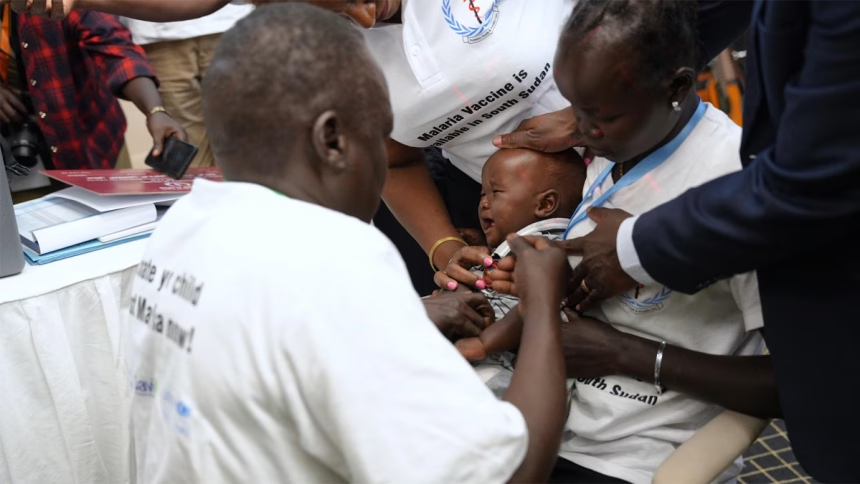
Malaria is endemic across all regions of South Sudan. As part of the efforts to prevent and control this disease, the Ministry of Health, with support from the World Health Organisation (WHO), UNICEF, Gavi and JSI, launched the introduction of the malaria vaccine in 28 counties with the highest malaria burden in July 2024. To increase access and tackle the rising number of deaths caused by malaria, South Sudan is scaling up the provision of malaria vaccines to the remaining 52 counties with a target of reaching 324,571 children aged 5 to 23 months. Malaria continues to be a major health challenge in South Sudan, with 5.5 million cases and over 4,000 deaths annually. Access to treatment, insecticide-treated bed nets (ITNs), and vaccines is low, with the 2023 malaria indicator survey showing a rise in malaria prevalence among children aged 6–59 months from 32% in 2017 to 52.6% in 2023. placing a heavy burden on South Sudan’s fragile healthcare system.
Also Read: Kenya Achieves Elimination of Human African Trypanosomiasis as A Public Health Problem
This vital initiative, spearheaded by the Ministry of Health and backed by WHO, UNICEF, and other partners, is a direct response to the alarming increase of malaria cases and related deaths, especially among children under five.
As part of the efforts to combat malaria, South Sudan introduced the R21 malaria vaccine in July 2024 with support from Gavi. As of August 2024, 91% (503 out of 551) of the targeted health facilities across the participating counties successfully received malaria vaccines. Out of these, 71% (356 facilities) have provided data on vaccine administration.
The malaria vaccine rollout, which targeted over 265,000 children in the first phase, has achieved partial success regarding first-dose coverage but faces significant challenges in ensuring completion of the full four-dose schedule. From July 2024 to May 2025, a total of 148,878 children received the first dose of malaria vaccine. While this figure indicates moderate initial reach, the steep drop in the number of children who continued with the subsequent doses reflects systemic issues in follow-up and service delivery. Of the children who received the first dose, only 83,668 (56%) returned for the second dose, 51,002 (34%) continued to the third dose, and only 11,370 (7.6%) completed the final fourth dose.
Click here to join our WhatsApp channel here
“This steep drop out in the first round of vaccinations and the increasing malaria-related deaths are concerning and highlight the urgent need for additional measures, including improved service delivery, defaulter tracking, community engagement, and follow-up mechanisms.” Said Honourable Sarah Cleto Rial, Minister of Health.
“We extend our gratitude to the Ministry of Health and all partners for their commitment and sustained efforts to combating malaria, especially with the scale up of malaria vaccines in this second phase” The scale up of this vaccine across the country is a critical step in protecting our communities by reducing deaths, it is an additional tool that complements our existing prevention interventions like bed nets and antimalarial drugs.”
“The launch of the second phase of the R21 malaria vaccine marks a pivotal step forward in our shared mission to protect South Sudan’s children from the devastating risk of malaria. We are not just delivering a vaccine; we are giving hope. Every child deserves a childhood free from malaria. The R21 vaccine will shield more children from sickness and death, allowing them to survive, thrive, and shape the future of this nation,” said Noala Skinner, UNICEF Representative to South Sudan.