


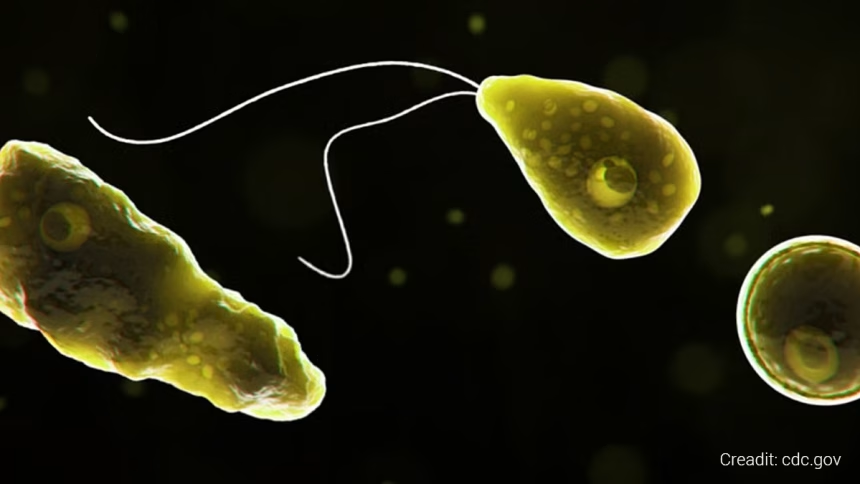
The southern Indian state of Kerala has recently found itself at the center of a concerning public health issue, as cases of brain-eating amoeba infections have made headlines across the region. This rare and often fatal condition, known as primary amoebic meningoencephalitis (PAM), has prompted authorities to take immediate action and raise public awareness.
What is brain-eating amoeba?
Naegleria fowleri is a free-living, single-celled amoeba commonly found in warm freshwater environments, such as lakes, rivers, hot springs, and inadequately chlorinated swimming pools. Unlike parasitic amoebas, it does not typically infect humans but can become pathogenic when it enters the body through the nasal passages. Once inside, the amoeba travels along the olfactory nerve to the brain, where it feeds on tissue, causing severe damage and inflammation.
Also Read: Narendra Vikramaditya Yadav: Inside the case of the fake cardiologist behind 7 deaths
This organism thrives in temperatures above 80°F (27°C), making it prevalent in tropical regions like Kerala, as well as in parts of the United States, Pakistan, and Australia. Naegleria fowleri exists in three forms: a cyst that survives harsh conditions, a flagellated form for movement, and an amoeboid form that actively feeds. Despite its fearsome nickname, infections are rare, with only a few hundred cases reported globally since the 1960s, but the outcomes are often tragic due to delayed diagnosis.
How infection occurs
The primary route of infection for Naegleria fowleri is through the nasal passages. When contaminated water enters the nose, the amoeba can travel up the olfactory nerve to the brain. This typically happens during activities such as:
- Swimming or diving: Engaging in water sports or swimming in warm freshwater.
- Water-related activities: Any activity where water enters the nose, such as waterskiing or wakeboarding.
- Ritualistic practices: Certain religious ceremonies involving full immersion in freshwater bodies.
- Sinus rinsing: Rare cases occur when using contaminated tap water for nasal irrigation or neti pots.
It is important to note that drinking water contaminated with Naegleria fowleri does not cause infection because the amoeba is destroyed by stomach acid.
Symptoms of brain-eating amoeba infection (PAM)
PAM is an aggressive and rapidly progressing illness. Symptoms usually appear within 1 to 12 days following exposure, and the disease can progress quickly, often leading to death within 1 to 5 days after onset. Early signs can resemble bacterial meningitis, making prompt diagnosis challenging. Initial symptoms may include:
- Severe frontal headache
- Fever
- Nausea and vomiting
As the infection advances, symptoms can escalate to:
- Stiff neck
- Confusion and disorientation
- Decreased attention span
- Seizures
- Hallucinations
- Coma
Treatment of brain-eating amoeba infection
Click here to join our WhatsApp channel here
Treatment for PAM is challenging due to rapid disease progression and rarity of cases. There is no standard cure, but the following have been used with varying success:
- Amphotericin B: An antifungal drug administered intravenously and sometimes directly into cerebrospinal fluid.
- Miltefosine: An investigational drug associated with survival in a few recent cases.
- Additional drugs: Rifampin, fluconazole, and azithromycin are sometimes used in combination, though evidence is limited.
Early diagnosis and treatment under expert medical supervision improve chances of survival, but mortality remains high.
Prevention strategies
Given the severe nature and low survival rate of PAM, prevention is crucial. Key measures include:
During water activities:
- Use nose clips or keep the head above water.
- Avoid disturbing sediment in shallow, warm freshwater.
- Limit head submersion in warm freshwater.
- Prefer cooler, well-maintained water bodies.
For nasal and sinus care:
- Use sterile, distilled, or previously boiled and cooled water for nasal irrigation or neti pots.
- Never use untreated tap water.
- Boil and cool water thoroughly if tap water must be used.
Maintaining water safety:
- Ensure swimming pools and hot tubs are properly chlorinated.
- Clean and disinfect hot tubs regularly.
Recent reports from Kerala serve as a reminder of the potential health risks present in our environment. By staying informed and following preventive measures, the likelihood of contracting this devastating infection can be significantly reduced.