

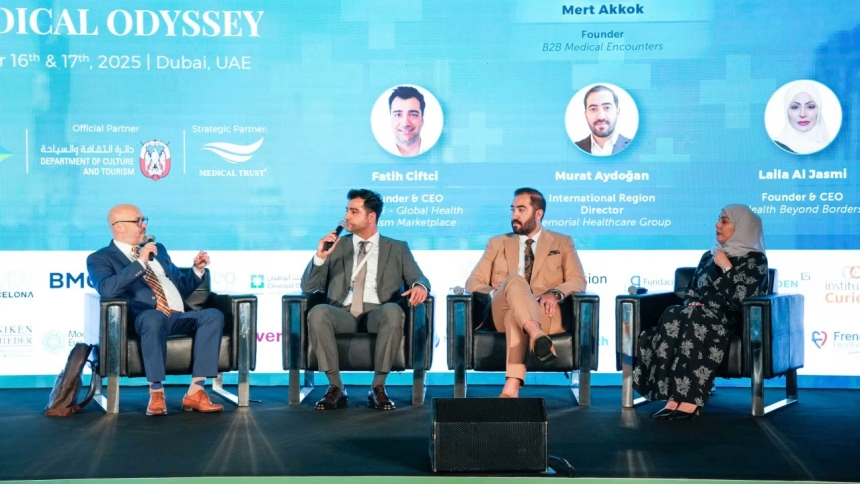

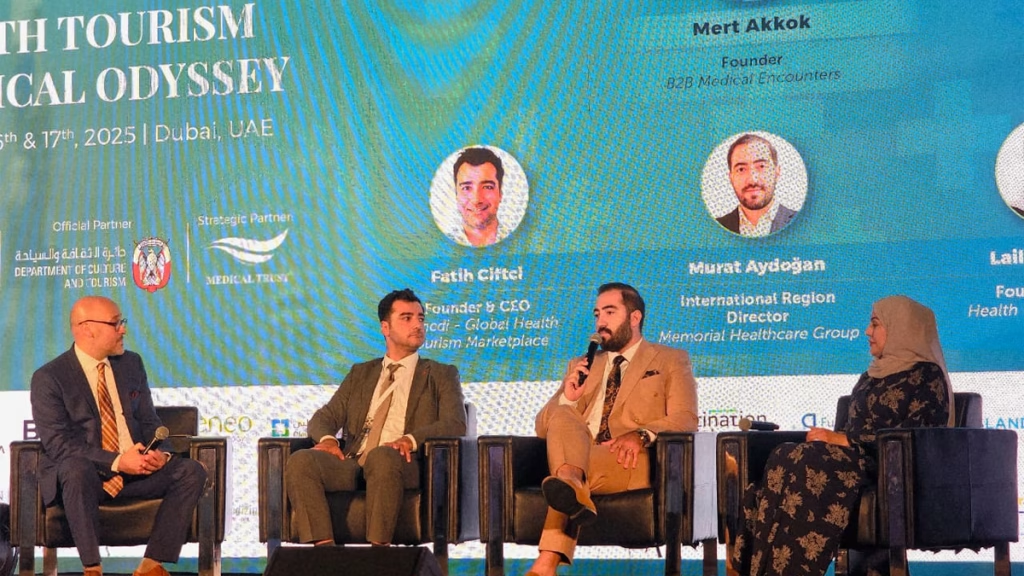
Dubai, UAE- The Health Tourism and Medical Odyssey event, held on September 16–17 at Sofitel, The Obelisk in Dubai, brought together industry leaders to discuss the shifting dynamics of global medical and wellness tourism. The panel discussion, titled “Redefining Boundaries: The Future of Medical & Wellness Tourism,” explored emerging destinations, innovations in patient care, and strategies to attract high-value wellness travellers.
Moderated by Mert Akkok, Founder of B2B Medical Encounters, the panel featured prominent voices in the industry: Fatih Ciftci, Founder & CEO of Flymedi, Global Health Tourism Marketplace; Murat Aydoğan, International Region Director at Memorial Healthcare Group; and Laila Al Jasmi, Founder & CEO of Health Beyond Borders.
UAE’s growing position in medical tourism
Speaking about the UAE’s expanding role, Laila Al Jasmi highlighted the country’s significant investment in infrastructure, digital health innovation, and wellness initiatives. She pointed to initiatives such as Dubai Health Experience, which simplifies patient access to healthcare services, and Abu Dhabi’s medical tourism e-portal that facilitates international patient engagement.
“UAE has done tremendous efforts learning from different countries around the world to establish the market for medical tourism,” Al Jasmi said. “The government’s investment in health technology, telemedicine, AI, and electronic medical record systems has allowed international patients to share their health records with physicians back home, enhancing continuity of care.”
She also noted the country’s growing focus on wellness tourism, citing wellness resorts in Al Ain, Liwa, and Ajman, and the integration of cultural wellness practices such as yoga, meditation, and hammam therapies. The UAE’s Vision 2031, which aims to position the country as a global wellness hub, continues to drive this momentum.
Challenges and opportunities for turkish healthcare
Murat Aydoğan addressed the changing patient flow patterns in the Gulf region, where new local facilities are reducing outbound medical tourism. While this poses challenges for Turkey’s healthcare sector, Aydoğan sees it as an opportunity for collaboration and growth.
Click here to join our WhatsApp channel here
“As one of the largest healthcare operators in Turkey, we support the localization of healthcare. The main aim of all this activity is the well-being of the patients,” he said.
Aydoğan explained that Memorial Healthcare Group has adapted its strategy by exploring international investment opportunities, including acquiring a hospital in Romania and conducting due diligence for potential projects in the GCC.
Expanding beyond patient referrals
Aydoğan emphasized that medical tourism should not be limited to patient referrals but should encompass training programs and international medical cooperation. Memorial Healthcare Group regularly organizes training sessions for healthcare staff in countries such as Bangladesh, enabling local doctors and nurses to learn from globally recognized specialists.
“This is about building an ecosystem,” Aydoğan said. “Sometimes, in order to gain something, you need to give. We are investing in long-term presence and brand reputation rather than short-term benefits.”
AI and innovative payment solutions
Fatih Ciftci focused on the role of technology, particularly AI, in shaping the future of medical tourism. Flymedi uses AI-driven tools across multiple stages of patient care, from pre-operation to post-operation, and has integrated AI into its marketing and operations to improve efficiency.
“Using AI provides fast and accurate information to patients,” Ciftci said. “However, we complement it with human interaction to ensure trust and a seamless experience.”
He also shared insights into a new payment system under development, aimed at solving one of the biggest challenges in international patient care: payment security. The solution allows patients to securely transfer funds, with payment released only after the first consultation, giving patients peace of mind and helping hospitals plan resources more efficiently.
The panel concluded with consensus that medical tourism is evolving into a broader concept of international medical cooperation, driven by technology, partnerships, and patient-centric solutions. While competition among destinations is intensifying, collaboration and innovation are seen as the keys to sustaining growth in this dynamic industry.