


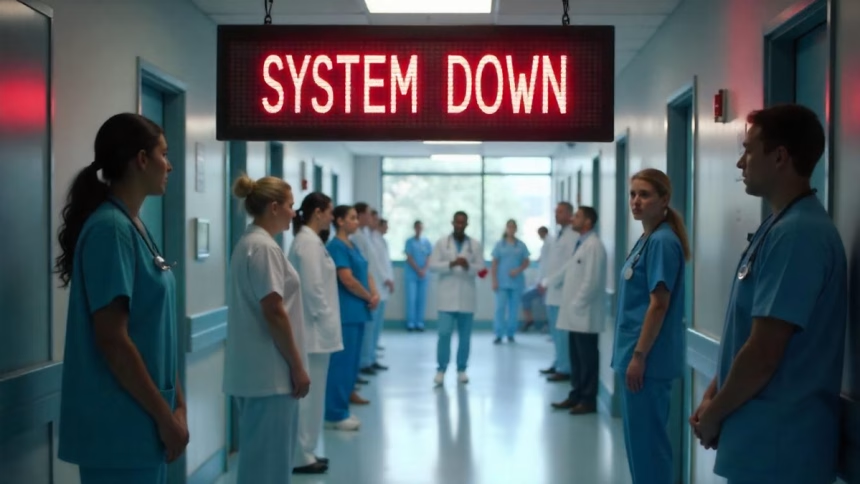
The emergency room at Sky Lakes Medical Center, a 90-bed lifeline for rural Oregon, went dark. Monitors blinked out. Computers froze. For 28 agonizing days in 2020, doctors treated patients with paper charts while technicians raced to repair 2,500 infected computers. This wasn’t a natural disaster. It was a ransomware attack that nearly bankrupted the hospital. Tragically, this scenario has become terrifyingly common across American healthcare, with ransomware evolving from an IT nuisance to a systemic threat endangering both patient data and lives.
- The Surging Crisis: By the Numbers
- Anatomy of a Disaster: The Change Healthcare Attack
- Why Healthcare? The Lethal Calculus
- The Policy Prescription: Beyond Technical Fixes
- 1. Mandatory Ransomware Reporting
- 2. Revised Severity Classifications
- 3. Cryptocurrency Payment Tracking
- The Evolving Threatscape: 2025 Trends
- Fighting Back: Solutions Beyond Technology
- The Path Forward
The Surging Crisis: By the Numbers
(Table: Healthcare Breach Trends (2010-2024)
| Year | Total Breaches | Hacking/IT Incidents (%) | Ransomware Breaches (%) | Records Exposed (Millions) |
|---|---|---|---|---|
| 2010 | 216 | 4% | 0% | 6 |
| 2020 | ~500 | ~75% | ~31% | ~138* |
| 2024 | 566 | 81% | 11% | 170 |
| Excluding Change Healthcare outlier. | Sources: JAMA Study, OCR Data |
The JAMA Network Open study reveals a seismic shift: Ransomware now impacts over half of all U.S. patients annually, surging from 0% of breaches in 2010 to 39% of all exposed records (285 million) by 2024. While the total number of ransomware breaches reported in 2024 was 61, the damage per attack intensified, particularly with the Change Healthcare catastrophe. The catalyst? The Change Healthcare catastrophe: a “9/11 moment” for healthcare cybersecurity.
Anatomy of a Disaster: The Change Healthcare Attack
In February 2024, Russian-speaking ransomware gang ALPHV/BlackCat breached Change Healthcare, a processor of 1 in 3 U.S. medical claims. The entry point? A server without multi-factor authentication “cybersecurity 101,” according to Senator Ron Wyden. The fallout:
- 190 million patients exposed, the largest health data theft in history (revised from initial 100M estimate).
- $3.09 billion in losses for UnitedHealth, quadrupling initial projections.
- Military pharmacies worldwide significantly disrupted; patients paying cash for lifesaving drugs.
- Double extortion: UnitedHealth paid $22 million, only for a splinter group (RansomHub) to demand more.
Why Healthcare? The Lethal Calculus
Healthcare is targeted because attackers know hospitals will pay to save lives. As one ransomware gang bluntly stated:
“Should I pay the ransom and continue to treat patients, or should I not and run the risk of… going out of business?” The economics fuel this crisis:
- Medical records fetch $1,000 on the dark market, far more than credit cards, as diagnoses/CT scans can’t be changed.
- Nation-states prize health data for intelligence; a patient today could be a security-cleared official tomorrow.
- Rural hospitals are “soft targets”: 69% lack multi-factor authentication; 33% have weak vendor security.
The Policy Prescription: Beyond Technical Fixes
The JAMA study calls for three key policy changes to dismantle ransomware’s financial and operational incentives:
1. Mandatory Ransomware Reporting
- Current Gap: OCR breach forms lack a dedicated “ransomware” checkbox, forcing hospitals to bury attacks under vague “hacking/IT incident” labels.
2. Revised Severity Classifications
- Current Gap: Breach severity is measured only by records exposed, ignoring whether patients were turned away or surgeries canceled.
3. Cryptocurrency Payment Tracking
- Current Gap: Ransom payments vanish into Bitcoin wallets with no tracing.
The Evolving Threatscape: 2025 Trends
Health-ISAC’s 2025 report confirms ransomware remains healthcare’s #1 threat, with alarming innovations:
- Patient-level extortion: Victims like Integris Health received demands to “pay $50 or your medical records leak.”
- AI-powered attacks: North Korean actors use AI to impersonate job candidates, infiltrating healthcare payrolls.
- Supply chain targets: Dental groups (e.g., Numotion, Chord Dental) compromised via email breaches in March 2025, exposing 668,000+ records.
- Physical-cyber convergence: Attacks can now disrupt elevators, climate control, and door locks, directly threatening patient safety. (RSM Case Study For Refrence)
Fighting Back: Solutions Beyond Technology
(Table: Essential Defenses vs. Adoption Gaps)
| Defense | Protection Offered | Adoption Gap |
|---|---|---|
| Multi-Factor Auth | Blocks 99% credential theft | 69% rural hospitals lack |
| Network Segmentation | Limits lateral movement | 62% struggle to implement |
| Vendor Security Audits | Prevents 3rd-party breaches | 33% lack strong requirements |
| AI Threat Monitoring | Cuts detection time by 28d | <20% use automation |
What Hospitals Are Doing Now
- Operational resilience: While experts advocate for planning for 30-day downtimes, most hospitals currently plan for 72-96 hours, and broader implementation of extended downtime protocols is in its early stages.
- “Whole-of-nation” collaboration: Threat intelligence sharing between hospitals/govt has surged post-Change Healthcare.
- Funding rural defenses: Microsoft’s free cybersecurity program reached 500+ rural hospitals, but federal subsidies are critical.
The Path Forward
As John Riggi (AHA Cybersecurity Advisor) warns:
“When we are attacked, will we be ready?” The JAMA data proves ransomware isn’t just about data, it’s about systemic vulnerability in an industry where every encrypted server risks lives.
The Prescription?
- Mandate ransomware reporting to expose the true scale of attacks.
- Reweight breach severity to reflect patient harm, not just data volume.
- Track cryptocurrency payments to starve attackers of funding.
Without these changes, the next Change Healthcare-scale disaster isn’t a matter of if, but when, and rural hospitals will be the first to flatline.
Sources
This article is based on insights from leading research and data:
- JAMA Network Open Study: “Trends in US Health Care Data Breaches Involving Ransomware, 2010-2024” (Link)
- Official Data: U.S. government (HHS OCR) breach statistics and industry reports (Health-ISAC, Microsoft).
- Current Reporting: Analysis from reputable news and financial publications covering recent cyber incidents.
Disclaimer
The information provided in this article is for general informational purposes only and does not constitute professional advice. While efforts have been made to ensure accuracy and timeliness, the cybersecurity landscape in healthcare is dynamic and constantly evolving. Readers are advised to consult with qualified cybersecurity, legal, and healthcare professionals for specific guidance tailored to their unique circumstances. The views expressed are those of the author and do not necessarily reflect the official policy or position of any organization or entity.