

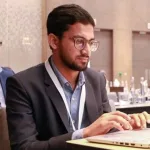

“I received a kidney and pancreas transplant at Cleveland Clinic Abu Dhabi. I’m not a policymaker or a doctor, but my life has changed because of that transplant. What matters to me even more than the organs is knowing they came from selfless people. One of them was my brother, who gave me his kidney. This experience teaches us what true love means—it comes from courage and a desire for life to continue,” shared a recipient of organ transplantation in the UAE during a panel discussion titled “The New Era of Organ Transplantation” on the first day of Abu Dhabi Global Healthcare Week 2025 (ADGHW), a leading healthcare event.
The three-day event, which began yesterday at the Abu Dhabi National Exhibition Centre, will run until 17 April.
Organ donation and transplantation have seen remarkable progress in the UAE over the past 5 to 7 years. In fact, the country has been internationally recognized as the fastest-growing nation in the field of organ donation and transplantation, a collective achievement made possible by the dedication and commitment of all those involved.
Building trust and awareness
During the panel discussion, H.E. Rashid Alsuwaidi, Director General of Abu Dhabi Public Health Centre (ADPHC), shared strategic insights on how the UAE is working to build public understanding around organ donation and transplantation through culturally responsive and community-centered education.
He emphasized that building public awareness in a way that respects diverse cultures and traditions requires a multi-faceted approach. “A strategic direction starts with community-centered outreach,” he explained. “This means tailoring educational content and messages to align with each community’s values, language, and customs.”
Storytelling, he noted, plays a particularly powerful role in changing perceptions. “Hearing real-life testimonies from donors, recipients, and their families has a profound impact. These stories help shift mindsets and encourage more people to consider organ donation.”
Also Read : MoHAP Holds Awareness Workshop in Fujairah on Organ Donation (Hayat)
One of the ADPHC’s proactive initiatives involves engaging the public during sporting events, platforms that promote healthy lifestyles while simultaneously serving as opportunities to encourage donor registration. “Our participation in these events has not only encouraged wellness but also helped boost the number of people willing to become donors,” he said.
He also highlighted the vital role of Hayat Ambassadors, volunteers from various backgrounds who have significantly contributed to raising awareness, breaking taboos, and influencing public attitudes. “Their outreach has been instrumental, especially among non-Emirati communities in the UAE.”
Importantly, H.E. Alsuwaidi pointed out the need to address religious and ethical concerns surrounding organ donation. “Religious and cultural leaders play a critical role in correcting misconceptions. By delivering accurate information and reassuring communities, they help people understand that organ donation can be aligned with their faith.”
Transparency and ethical practice remain top public concerns, and addressing these directly is essential, he stressed. “People need to know how organs are allocated, based purely on clinical urgency and compatibility. No other information is involved. That clarity builds public confidence.”
Providing clear data, such as waiting list figures and transplant success rates, also reinforces trust. “The UAE is performing at or above global benchmarks, especially in kidney and liver transplants. What’s more, 85% of recipients are non-Emirati residents or international patients, showing that the program is inclusive and equitable.”
The media’s role is equally important. “We must leverage influencers, celebrities, and respected media figures to resonate with the public and promote organ donation effectively.”
Finally, he emphasized the importance of investing in the healthcare workforce. “Medical professionals need advanced communication skills to navigate sensitive conversations with patients. Recruiting organ donation managers from diverse backgrounds in each transplant hospital will strengthen trust and improve donor registry rates.’’
Building a sustainable organ transplant system in the UAE
Continuing the panel discussion, Dr. Ali Abdul Kareem Al Obaidli, Chairman of the UAE National Transplant Committee, responded to the next question by outlining the essential pillars for building a leading organ donation and transplantation model.
He thanked the moderator and attendees, noting that the session had been truly inspiring and aligned well with the broader theme of advancing sophisticated organ donation and transplant systems. He reaffirmed that the first pillar is prevention.
Gaining public trust through full transparency is critical, he said. “Everyone must feel they are part of this program. In the UAE, 55 nationalities have either donated or benefited, and our law states that everyone is equal, regardless of ethnicity, religion, or social and financial status.”
This spirit of inclusion, he stressed, is fundamental to building a strong foundation. Quoting a well-known saying, “If you want to go fast, go alone. If you want to go far, go together” Dr. Al Obaidli adapted it for the transplant sector:
“In donation and transplantation, it seems that if you want to go fast and far, you have to work together.”
He emphasized that this field is inherently complex, requiring coordination across the medical community, logistics, airports, and society at large. “Interestingly, most people have a soft spot for this cause,” he added. “And when we use that as a foundation, we realize the importance of both focusing on prevention and understanding how generous the public truly is.”
Just as people willingly donate blood, he believes many are open to organ donation, if they are given the right information.
For a sustainable program, he noted, collaboration with all stakeholders is essential, starting with the medical community. “Once we address their questions and concerns, they become ambassadors who can extend awareness to the public.”
Sustainability, he explained, is further ensured when organ donation becomes an integrated part of health coverage. “As outlined in Article 9 of the UAE’s transplant law, all aspects of donation and transplant must be included within the scope of national health insurance or any insurance operating in the UAE.”
Dr. Al Obaidli also highlighted a noteworthy global development: the World Health Assembly’s resolution in May 2024, which introduced 15 pillars for building sustainable transplant systems. “What’s remarkable,” he said, “is that the UAE has already been proactively applying many of these recommendations, even before they were formally recognized by the global community.”
He concluded by emphasizing the importance of regional cooperation. “Among the key pillars is the idea that regional countries must work together. It’s more realistic to achieve regional self-sufficiency than for each country to try to build a complete system independently. For instance, regional countries can establish a single heart transplantation center that is accessible to all.”
Future of organ transplantation
Panelist Georges-Pascal Haber, CEO of Cleveland Clinic Abu Dhabi, offered an insightful response to the question on innovation and the future of organ transplantation.
“When we look at our quality at Cleveland Clinic Abu Dhabi, the quality and outcomes of transplant are equivalent, if not better, than top medical centers in Europe and in the US. That’s how we push the boundaries further,” he noted. “And the reason we are able to do this is because we continuously innovate and we’re continuously looking at how we can improve.”
He added, “We are able to do this and innovate by attracting talent. Through the Cleveland Clinic network, we can exchange ideas.”
“In terms of the type of transplant being done, heart, lung, heart-lung, pancreas, kidney, kidney-pancreas, multi-visceral, you name it. Every type of transplant that is being done in the world is being done here at Cleveland Clinic Abu Dhabi.”
Haber then turned attention to advancements in robotic surgery. “We’re not only doing the robotic donor procedure to remove the kidney, but we’re also using the robot to transplant the kidney, re-implant the kidney into the patient. This allows the patient to recover much faster and return to normal life.”
“In the robotic kidney transplant, we’re also doing dual kidney implantation. Instead of discarding kidneys that may not function well on their own, we transplant two kidneys into one patient. Very few centers in the world are doing this, and CCD is one of them.”
He emphasized future directions: “We talked about robotic. The next step will be, instead of using a robot with multi-incision, we’ll be using a robot with one incision to insert the kidney. This is a technique developed in Ohio with human donors, and we’ll be applying it here.”
“In addition, we need to continue pushing the boundaries in how we procure organs, and extend their life using perfusion machines. This allows us to fly organs from different countries much faster and gives us longer time to transplant them.”
He also highlighted the research frontiers ahead. “We need to push our research in terms of immunosuppression, how we can improve it. We’re also exploring 3D printing of organs, xenografting, and organ variants. These are all areas we’ll be investigating and advancing.”
“we don’t want any patient to be on dialysis or waiting in the ICU for organs. We want to have organs already available so patients can benefit from them. And I have to say, we as a UAE community should feel proud, because the UAE is providing equal transplant resources as any other major center globally.” he concluded.
Abu Dhabi Global Healthcare Week 2025 continues at the Abu Dhabi National Exhibition Centre until 17 April, bringing together global experts, policymakers, and healthcare leaders to discuss advancements across the sector. The panel on organ transplantation marked a significant highlight, showcasing the UAE’s progress and future vision in this life-saving field.