


Johns Hopkins Aramco Healthcare (JHAH) has reported the successful treatment of a 41-year-old Saudi Aramco worker who survived a severe heart attack while working on a remote offshore platform near Tanajib, Saudi Arabia.
Jamal Abdullah Al Hilal developed sudden chest pain during his shift, prompting the offshore medical team to conduct an electrocardiogram (ECG), confirm a heart attack and begin initial treatment. A helicopter medical evacuation was activated to transfer him to JHAH in Dhahran, while the hospital’s Emergency Department and catheterisation laboratory prepared for his arrival.
Further assessment revealed a complete blockage of the left anterior descending (LAD) artery, a major blood vessel supplying the heart. A blockage in this artery can cause extensive heart damage and is commonly associated with the term “widowmaker” heart attack.
Click here to join our WhatsApp channel here
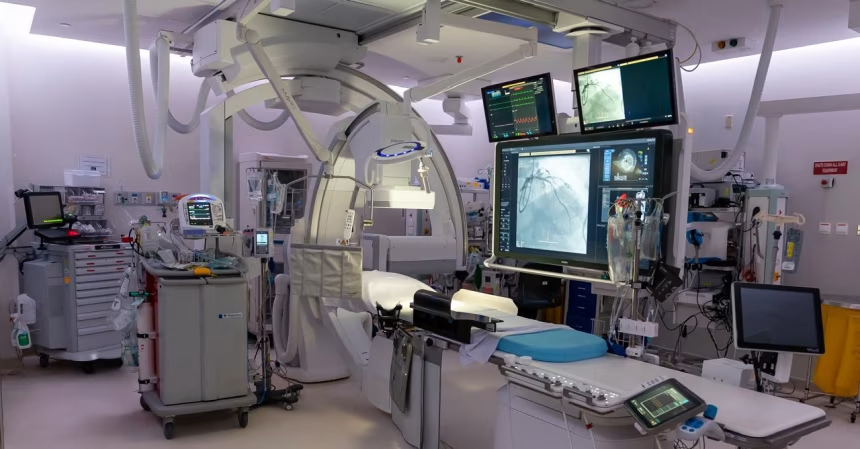
The cardiology team performed a minimally invasive procedure using a catheter inserted through an artery in the wrist to reopen the blocked vessel and place a stent. The intervention was completed in 61 minutes, within the widely used 90-minute benchmark for timely treatment of eligible heart attack patients.
“In a case like this, the work that happens before the patient even arrives is what saves the life,” said Dr. Ali M. Shehri, Cardiology Consultant at Johns Hopkins Aramco Healthcare. “Because the offshore team recognized the heart attack early, started treatment and kept him stable in the air, our team was able to move with the speed and precision the moment demanded. We reopened the LAD artery in about one hour — well within a life-saving timeframe.”

Also read: Abu Dhabi Advances Diabetic Eye Care Through Real-World Evidence Collaboration
Following the procedure, Jamal recovered and completed six months of cardiac rehabilitation, receiving physical, nutritional and emotional support before returning to work on the same offshore platform.
The case demonstrates the importance of coordinated emergency response, rapid medical evacuation and timely specialist intervention in improving outcomes for patients in remote locations.


