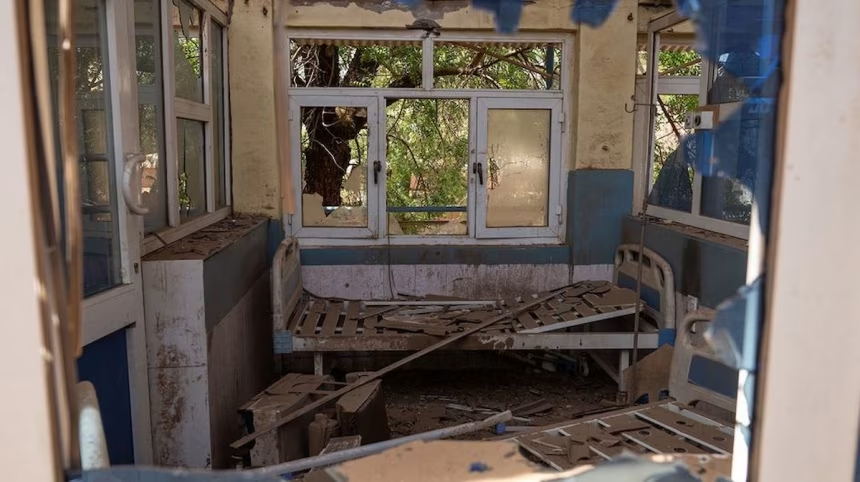

Healthcare facilities, workers and patients have faced more than 10,400 attacks across 29 countries and territories since 2018, resulting in around 5,700 deaths and more than 8,000 injuries, according to the World Health Organization (WHO). Despite the scale of the attacks, the UN health agency said no one has been held accountable for the reported incidents.
WHO recorded more than 900 attacks between January and August 2026, causing at least 900 deaths and more than 1,400 injuries. Ukraine, Lebanon and the occupied Palestinian territory accounted for many of the incidents, while attacks were also reported in Sudan, the Democratic Republic of the Congo, Myanmar, Iran, Syria, Nigeria and other locations.
Click here to join our WhatsApp channel here
WHO warned that attacks on healthcare have consequences far beyond immediate casualties, disrupting services, damaging facilities and preventing patients from receiving care. In northwest Syria, one study found outpatient consultations dropped by 51% following attacks, while in Sudan, 37% of healthcare facilities were reported non-functional in 2026. WHO also verified attacks affecting healthcare during the ongoing Ebola response in the DRC.
“What we are witnessing are multiple forms of violence,” said Altaf Musani, WHO Director for Humanitarian and Disaster Management, briefing journalists in Geneva. Heavy weapons were the most frequently reported means of attack in 2026, he said, followed by destruction of healthcare “and then, of course, the psychosocial violence”.
Also read: Health Awareness and First Aid Skills Highlighted at Sheikh Zayed Summer Festival
WHO called for stronger protection of healthcare and greater accountability, stressing that attacks can undermine public trust, prevent health workers from returning to work and leave communities without essential services.