


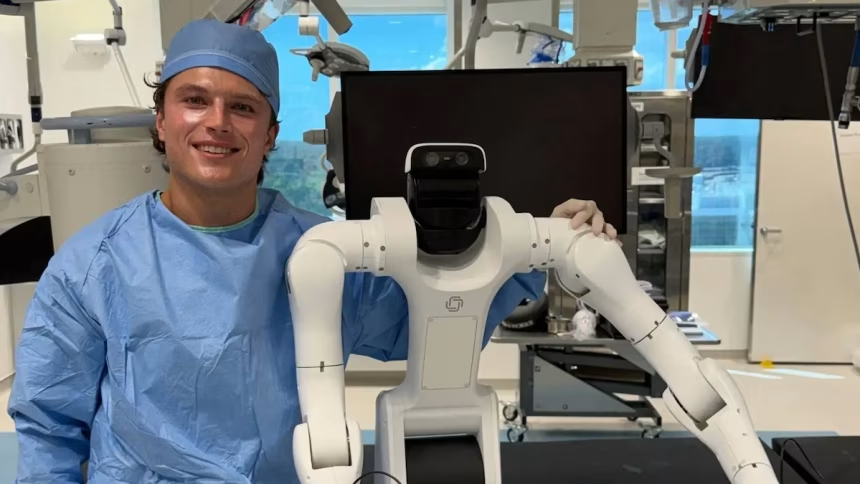
Mayo Clinic residents are gaining hands-on experience in healthcare innovation by exploring how emerging technologies, including humanoid robots, could support clinical teams and improve patient care.
As part of Mayo Clinic’s Internal Medicine Residency Innovation and Entrepreneurship Track, residents are working with engineers and innovation leaders to evaluate potential uses for robotics in clinical settings. A humanoid robot is being tested in a simulated cardiovascular care environment, where it performs routine tasks such as retrieving medical supplies, organizing equipment and helping prepare procedure rooms.
The project began by examining real-world workflows in cardiac catheterization settings to identify activities where technological assistance could be useful. The goal is to assess whether robotics could help healthcare professionals manage routine tasks more efficiently without replacing clinical judgment or expertise.
Click here to join our WhatsApp channel here
The initiative also gives residents an opportunity to develop technical skills beyond traditional medical training. Residents have learned programming fundamentals and used artificial intelligence-assisted coding tools to develop and test robotic workflows.
Rena Hale, Ph.D., director of Mayo Clinic’s Clinical Innovation and Entrepreneurship program, said, “Dr. Robinson brought that curiosity with him, and through the program developed the skills and confidence to act on it, Whether designing a new technology or exploring the potential of humanoid robotics, the underlying question remains the same: How can we make healthcare better for patients and the teams who care for them?”
Also read: When Everyday Comfort Becomes Possible Again
Residents from multiple Mayo Clinic campuses have contributed to the project. Guy Robinson, M.B.B.S., helped lead programming work in Florida, while Kiyan Heybati, M.D., contributed remotely from Rochester. Mayo Clinic engineers and innovation leaders provided technical guidance and mentorship throughout the project.
The initiative reflects Mayo Clinic’s broader effort to prepare future physicians to identify healthcare challenges, work across disciplines and evaluate emerging technologies for safe and effective clinical use.


