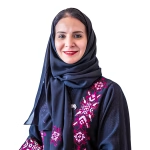


Even with life-saving vaccines available, millions of children still miss out on basic immunization, not because science has failed, but because of inequality. In an exclusive MedEdge MEA interview, Khadra Abdullahi from Gavi explains why vaccine access is more than just a health issue, it’s about fairness and justice. She shares how reaching children in conflict zones, supporting hesitant communities, and strengthening health systems are key steps. True vaccine equity means no child’s chance of survival should depend on where they are born or their family’s income.
- MedEdge MEA: What makes vaccine equity a moral responsibility beyond public health?
- ME: What do you see as top barriers to kids’ vaccines, and Gavi’s priorities?
- ME: Is vaccine hesitancy a communication problem or deeper trust deficit?
- ME: Which diseases need special immunization strategies in the Middle East?
- ME: What’s the future role of youth and education in vaccine acceptance?
MedEdge MEA: What makes vaccine equity a moral responsibility beyond public health?
Khadra Abdullahi: Making sure everyone has fair access to vaccines isn’t just the right thing to do, it’s a smart and practical choice. It helps protect public health and supports economic growth and development. Vaccine fairness isn’t about giving handouts; it’s about making sure we all stay safe and thrive together.
Fundamentally, however, vaccine equity is also about justice, and the minimum standard of fairness we owe one another. No child’s survival should depend on where they are born or their family’s income. Yet millions of children still miss out, not because vaccines don’t exist, but because access remains unequal.
That’s why equity is more than a health goal, it’s a moral imperative. It’s about fairness, dignity, and the basic right to life. Vaccines are among the most cost-effective and impactful tools we have to ensure this right to life and health is protected. If the most vulnerable children cannot access this tool, we have failed them, not just as public health professionals, but as a global community.
ME: What do you see as top barriers to kids’ vaccines, and Gavi’s priorities?
KA: Today’s barriers to immunization are rarely scientific. We are lucky to live in an era of prolific scientific innovation, and Gavi shapes markets to make sure the right products are available and affordable.
What prevents children from being reached are issues like poverty, conflict, fragile health systems, and geographic isolation. A child in a remote village or refugee camp is far more likely to be left behind, not just with immunisation but many other basic services. Trust is another major barrier. If families don’t believe the health system will care for them or if they’re exposed to misinformation they may hesitate, even when vaccines are available.
Gavi’s top priority is reaching “zero-dose” children, those who haven’t received a single vaccine. Reaching these children and the missed communities they live in not only saves lives, but it also strengthens health systems and builds resilience for future challenges. We do this by tailoring our solutions – for example, to fragile and humanitarian contexts, countries with large populations of missed children. It means identifying the right partners, supporting health workers and supply chains, and working with communities to remove barriers.
ME: Is vaccine hesitancy a communication problem or deeper trust deficit?
KA: Hesitancy is often an issue of trust. It is normal to have questions. Effective communication – clear, transparent, accurate, and culturally sensitive – is essential. But it is not enough if underlying issues like weak health services or inequality persist.
Inclusion is key. When people feel neglected or excluded, it is understandable that they question health messages, even when vaccines are offered. What truly builds confidence is when communities feel heard, health workers are supported, and families experience consistent care, not just during campaigns, but every day.
So yes, communication matters. But vaccine confidence is built through respect and relationships. It’s not about persuasion; it’s about earning trust. Demand for vaccines is higher than ever, as families recognise all too well the life-saving importance of ensuring children are protected.
ME: Which diseases need special immunization strategies in the Middle East?
KA: Several diseases require tailored strategies due to the region’s unique context. Polio is a key concern. The 2024 vaccine-derived polio outbreak in Gaza underscored the need for vigilance, rapid response, and cross-border coordination in fragile settings.
Measles is another priority. It spreads rapidly, and even small gaps in coverage can trigger outbreaks. Constant vigilance through strong routine immunization and catch-up campaigns are essential.
Meningococcal disease also stands out, especially due to mass gatherings like the Hajj. Vaccinating pilgrims has been a critical measure to protect both the region and global health.
Diseases like cervical cancer hit hardest in lower-income countries, even though we already have the tools, like the HPV vaccine, to prevent them. Yet, access to these vaccines remains limited. By bringing vaccination programs into schools, we can reach more young people early, protect future generations, and save lives.
ME: What’s the future role of youth and education in vaccine acceptance?
KA: Young people are central to the future of vaccine confidence. They’re already shaping conversations online and, in their communities, and soon, they’ll be the parents making decisions for their own children. Engaging youth now means empowering a generation to stand up for science and against misinformation.
Education is equally vital. Schools are where health habits begin. When children learn early why vaccines matter and see classmates receiving HPV or measles vaccines, it becomes part of what’s normal.
Together, youth and education create lasting momentum. Investing in vaccine literacy today doesn’t just protect children now, it lays the foundation for healthier, more resilient societies tomorrow.