

• Duphat
  • infinia camp
mededge mea logo web MedEdge_Logo_Dark

Public Relations, Top Health Magazine and Healthcare News GCC

  • Newsletters
  • Magazines
  • Subscribe
  • Home
  • News
  • Opinion
  • Interviews
  • Featured
  • Cover Stories
  • Events
  • Health For all
    • Ageing Gracefully
    • Family Health Matters
    • Environment Health
    • Women and Child Health
    • Men’s Health
  • Resource Hub
    • Fresh Perspectives
    • Medical Tourism
    • Medical Education
    • Personnel
    • Research
      • Healthcare Journals & Publishers
    • Healthcare Campaigns
    • Health Tools Hub
    • Dubai Health Centers Directory | Services, Locations & Timings
    • ME Explained
Reading: How to Lower Your Blood Pressure?
Share
Notification
  • Duphat
  • infinia camp
mededge mea logo web
  • Magazines
  • Newsletters
  • Profiles
  • Subscribe
Search
  • Home
  • News
  • Opinion
  • Interviews
  • Featured
  • Cover Stories
  • Events
  • Health For all
    • Ageing Gracefully
    • Family Health Matters
    • Environment Health
    • Women and Child Health
    • Men’s Health
  • Resource Hub
    • Fresh Perspectives
    • Medical Tourism
    • Medical Education
    • Personnel
    • Research
    • Healthcare Campaigns
    • Health Tools Hub
    • Dubai Health Centers Directory | Services, Locations & Timings
    • ME Explained
Have an existing account? Sign In
MedEdge MEA > What Doctors Say > How to Lower Your Blood Pressure?
What Doctors Say

How to Lower Your Blood Pressure?

Dr. Yogeeswari Vellore
Published: January 26, 2026
Share
3 Min Read
How to Lower Your Blood Pressure?
SHARE

High blood pressure, or hypertension, is often called a โ€œsilent killerโ€ because many people feel normal until serious complications develop. Uncontrolled blood pressure can lead to heart attack, stroke, heart failure, and kidney damage. The encouraging reality is that, for most people, blood pressure can be lowered through practical daily habits and, when required, the appropriate use of medication under medical guidance.

One of the most important first steps is reducing salt, or sodium, intake. Excess sodium commonly comes from packaged and processed foods, pickles, instant meals, processed meats, sauces, and restaurant food. The World Health Organization recommends keeping sodium intake below 2,000 mg per day, which is roughly equal to 5 grams of salt, or just under one teaspoon. Even modest reductions in daily salt intake can contribute to meaningful improvements in blood pressure levels.

Adopting a proven dietary pattern also plays a major role. The DASH eating plan, which emphasizes fruits, vegetables, whole grains, low-fat dairy products, and reduced saturated fat, has been shown to significantly lower blood pressure. In the original DASH clinical trial, people with hypertension experienced notable reductions simply by following this balanced and structured approach to eating. Research shows that combining the DASH pattern with lower sodium intake produces an even greater drop in blood pressure, as demonstrated in the DASH-Sodium trial.

Body weight and lifestyle habits further influence blood pressure. Evidence from a strong meta-analysis of randomized trials shows an average reduction of about 1 mmHg in systolic blood pressure for every kilogram of weight lost. Alcohol intake also matters; reducing consumption beyond light levels leads to measurable blood pressure improvements, with larger benefits seen as intake decreases. Smoking cessation is strongly recommended, as quitting not only supports blood pressure control but also dramatically lowers overall cardiovascular risk.

Managing stress and sleep quality should not be overlooked. Mindfulness-based programs have demonstrated measurable blood pressure reductions in randomized trial meta-analyses, making stress control a useful supportive strategy. Short or inadequate sleep has also been linked to higher hypertension risk, so maintaining consistent and adequate sleep is important.

Click here to join our WhatsApp channel here

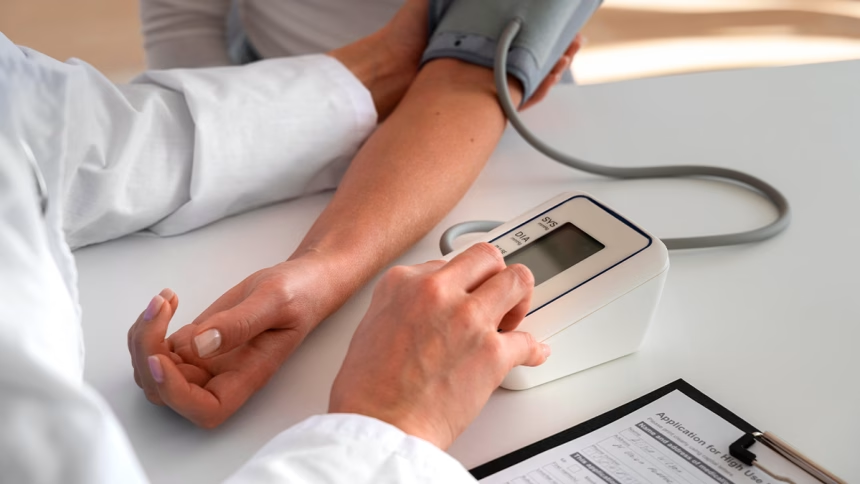
Clinical guidelines emphasize starting with lifestyle changes and adding medication when indicated, because untreated or poorly controlled hypertension leads to preventable complications. Ultimately, lowering blood pressure is not about one drastic action, but about steady habits, regular monitoring, and appropriate medical follow-up over time. Regular tracking helps ensure these measures remain effective and adjusted as needs change.


Share This Article
Facebook Whatsapp Whatsapp LinkedIn Copy Link
Share
Previous Article Dr. Mohammed Ashwaque How Long Does the Flu Last?
Next Article How Diet and Exercise Can Ease Menopause Symptoms? How Diet and Exercise Can Ease Menopause Symptoms?

Recent Posts

  • From market access to national ambition, gulf healthcare is playing a longer game
  • New Push for HIV Innovation and Access Aims to Accelerate Progress Toward 2030 Goals
  • WHO Discusses Digital Health and Humanization of Care at Scientific Conference
  • Rising Ebola Cases Deepen Humanitarian Crisis for Children in DR Congo
  • Burjeel holdings secures dual credit ratings and launches USD 1.5 billion sukuk programme
  • duphat
  • MedEdge-Infinia
Two Point Five Logo white
  • About Us
  • Contact Us
  • Medical Disclaimer
  • Privacy Policy
  • Terms and Conditions
  • Cookie Policy (EU)
  • Submit Your Story
  • MediaKit
Reading: How to Lower Your Blood Pressure?
Share

Published by Two Point Five Media FZCO

  • About Us
  • Contact Us
  • Medical Disclaimer
  • Privacy Policy
  • Terms and Conditions
  • Cookie Policy (EU)
  • Submit Your Story
  • MediaKit
Reading: How to Lower Your Blood Pressure?
Share

Follow US on Social Media

Facebook Instagram Linkedin X-twitter Youtube Whatsapp
Manage Consent
To provide the best experiences, we use technologies like cookies to store and/or access device information. Consenting to these technologies will allow us to process data such as browsing behavior or unique IDs on this site. Not consenting or withdrawing consent, may adversely affect certain features and functions.
Functional Always active
The technical storage or access is strictly necessary for the legitimate purpose of enabling the use of a specific service explicitly requested by the subscriber or user, or for the sole purpose of carrying out the transmission of a communication over an electronic communications network.
Preferences
The technical storage or access is necessary for the legitimate purpose of storing preferences that are not requested by the subscriber or user.
Statistics
The technical storage or access that is used exclusively for statistical purposes. The technical storage or access that is used exclusively for anonymous statistical purposes. Without a subpoena, voluntary compliance on the part of your Internet Service Provider, or additional records from a third party, information stored or retrieved for this purpose alone cannot usually be used to identify you.
Marketing
The technical storage or access is required to create user profiles to send advertising, or to track the user on a website or across several websites for similar marketing purposes.
  • Manage options
  • Manage services
  • Manage {vendor_count} vendors
  • Read more about these purposes
View preferences
  • {title}
  • {title}
  • {title}

WhatsApp us

Logo of Medede mea
Welcome Back!

Sign in to your account

Username or Email Address
Password

Lost your password?