
Middlesex University Dubai hosted its inaugural Digi-Health Lab Symposium 2026, bringing together experts from healthcare, government, academia and technology to explore the future of digital healthcare.
The symposium focused on how artificial intelligence, digital health, wearables, remote monitoring and connected technologies can support preventive, personalised and accessible healthcare.
Click here to join our WhatsApp channel here
Discussions also examined responsible AI, health data, ambient listening and the challenges of integrating emerging technologies into healthcare systems. The event comes as the UAE advances its national focus on digital healthcare and AI.
Dr Ikram Rehman, Head of the Digi-Health Lab at MDX Dubai, said “the shift creates an important opportunity to examine not simply what emerging healthcare technologies can do, but how they can translate into meaningful improvements in health and care. For decades, we have said prevention is better than cure. What is changing is our ability to make that principle much more actionable.”
The symposium also showcased student projects, including AI-enabled assistive glasses, camera-free elderly monitoring technology and SignBridge, an AI system designed to help convert American Sign Language finger-spellings into text.
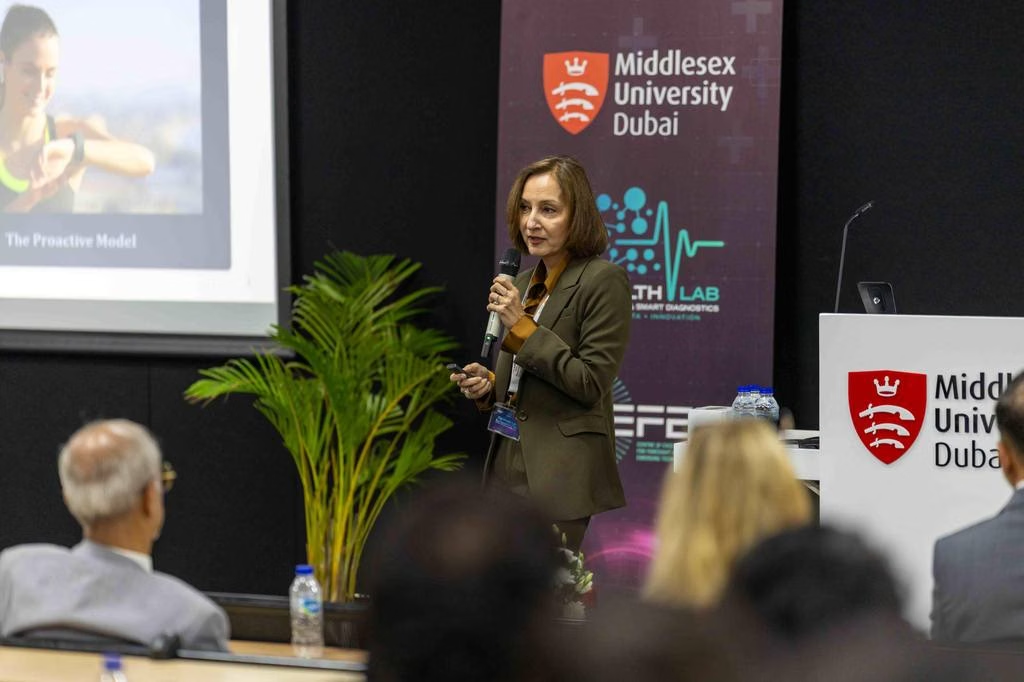
A real-life example was provided by Dr Rashid of King’s College Hospital London Dubai, who presented the transition from traditional snapshots of health data to continuous monitoring via wearables. “The stethoscope was invented 200 years ago to listen to the human body for the first time,” she said. “Now we have digital health, which tells you, constantly, every heartbeat, every detail of your life, your sleep schedule, your glucose, every minute, 365 days a year. But just getting that data is not enough, our job is to change that data into decisions – decisions that will make sure people don’t end up in the ICU.”
Also read: Children’s Hospital Los Angeles Receives National and Global Pediatric Recognition
Professor Fehmida Hussain is Deputy Director, Head and Founder of the Centre of Excellence for Foresight and Emerging Technologies (CEFET), and Head of the Computer Engineering and Informatics Department at MDX Dubai, said: “Universities must not simply study technological change; we must help shape it. The future of healthcare will not be shaped by technology alone, but through collaboration between clinicians, researchers, government, industry, technologists, patients and communities. Through the Digi-Health Lab, we want to bring these perspectives together and translate promising ideas into practical solutions.”