


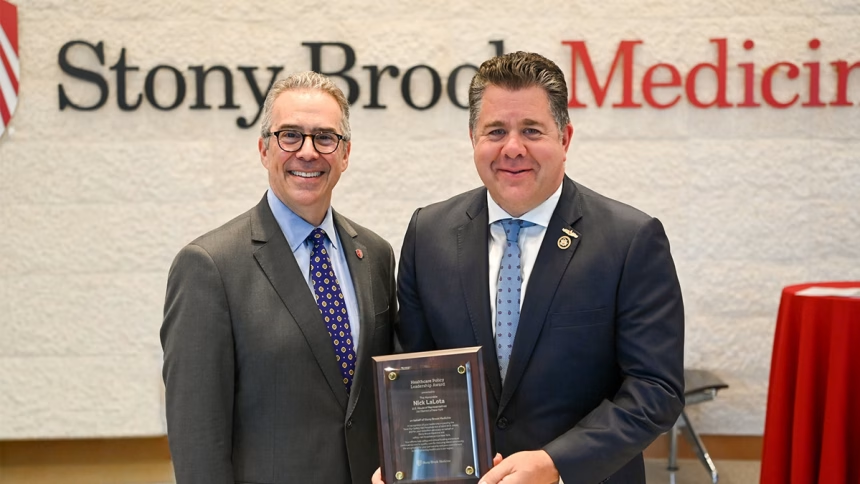
Stony Brook Medicine recognized Congressman Nick LaLota with its inaugural Healthcare Policy Leadership Award for his bipartisan leadership and steadfast advocacy on behalf of public safety-net hospitals like Stony Brook.
The award was presented on May 27 by Executive Vice President William Wertheim during Stony Brook’s 2026 Symposium on Tick-borne Diseases. Co-sponsored by the Renaissance School of Medicine’s Departments of Medicine and Microbiology and Immunology, the symposium brought together leading researchers, clinicians, and stakeholders to discuss the latest advancements in the prevention, diagnosis, treatment, and research of vector-borne diseases.
Also read: Sakar Healthcare, Zydus Lifesciences join hands to expand oncology supply across GCC markets
“The work that our researchers are doing is vital to improving the education, prevention, diagnosis and treatment of vector-borne disease,” said Wertheim. “Given the impact of vector-borne disease on Long Island, we are pleased to have Congressman LaLota and his team here today to learn more about this important work.”
“For generations, Stony Brook Medicine has been more than a hospital system,” Wertheim said. “We are a place where families turn in moments of crisis, where groundbreaking research becomes lifesaving treatment, and where patients receive care regardless of their income, background, or circumstances.”
A major focus of the recognition centered on Congressman LaLota’s leadership in advancing the bipartisan Save Our Safety-Net Hospitals Act, legislation that addressed unintended changes to the Medicaid Disproportionate Share Hospital (DSH) funding formula that threatened critical federal support for safety-net hospitals like Stony Brook Medicine.
Click here to join our WhatsApp channel here
Additionally, Stony Brook Medicine announced that it will also present its Healthcare Policy Leadership Award to Senator Chuck Schumer and Senator Kirsten Gillibrand in recognition of their leadership in addressing the DSH funding formula and their efforts to help protect critical federal funding for safety-net hospitals. Both senators have long been strong advocates for Stony Brook, consistently supporting the institution’s mission and federal priorities.