


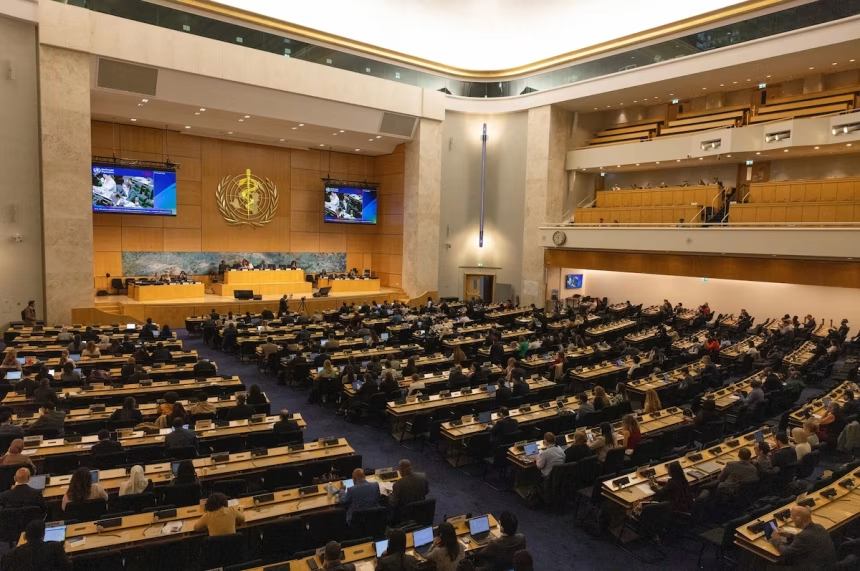

Geneva, Switzerland: Nearly 300 civil society organizations have called on WHO leadership and Member States to strengthen domestic health financing, presenting four key priorities during a side event at the Seventy-ninth World Health Assembly (WHA79).
Developed through a year-long consultation led by the WHO Civil Society Commission and Save the Children, the recommendations emphasize protecting essential health services, increasing investment in primary healthcare, strengthening domestic health financing, institutionalizing civil society participation in health governance, and improving transparency and accountability in health financing data.
Click here to join our WhatsApp channel here
During the dialogue, WHO highlighted that development assistance for health has declined by an estimated 23–30%, with low-income countries facing the greatest impact. Speakers stressed that stronger domestic investment and sustainable financing are essential to maintaining health services and advancing universal health coverage (UHC).
“Sustainable health financing must be built on three mutually reinforcing elements: strong country leadership, a more coherent and efficient global health financing architecture, and a genuine partnership with communities and civil society,” said Ambassador Patricia McCullagh, Deputy Permanent Representative of Canada to the United Nations organizations in Geneva.
Country representatives from South Africa and Thailand shared experiences demonstrating how national leadership and long-term investment in health can strengthen healthcare systems and improve resilience.
Also read: Primary Care Network to Expand Beyond 100 UAE Facilities by 2030
Professor Mariana Mazzucato, Professor of Innovation and Public Value at University College London (UCL), reinforced a central theme of the series. “Health is not a sector that supports the economy. Health is an objective, the economy must be designed to deliver,” she said, pointing to the human and economic costs of underinvestment in health.
The recommendations will help inform preparations for the 2027 United Nations High-Level Meeting on Universal Health Coverage, with WHO and its partners continuing to advocate for stronger country-led health financing and community engagement.