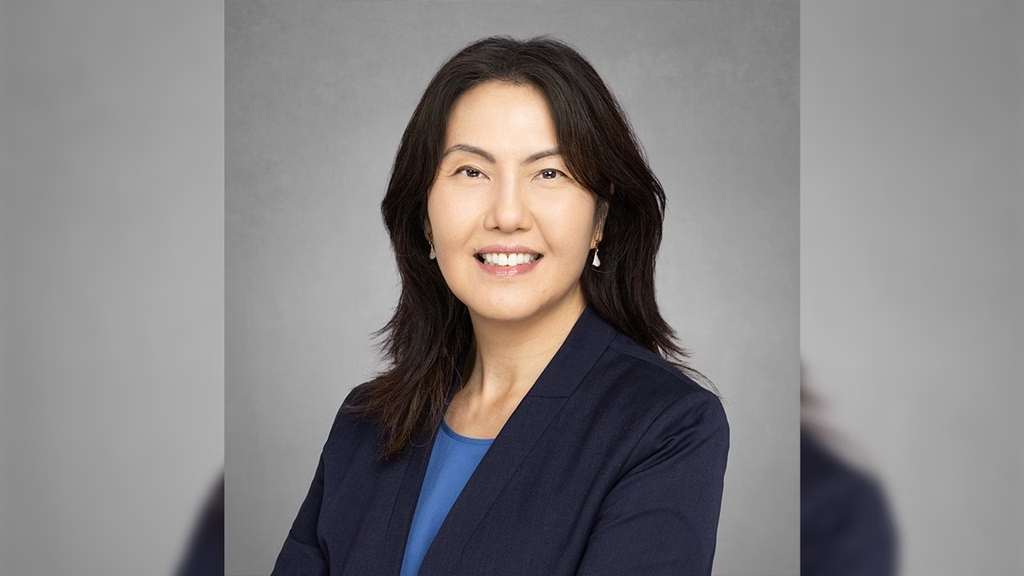
Jieun Choe explains why earlier detection matters only when it leads to better decisions, why slow-moving neurodegenerative disease demands objective measurement over time, and why a timely, clear brain health evaluation should not depend on where a patient happens to live.
MedEdge MEA: You have spent your career moving between health technology companies, from drug development software at Certara to AI stroke detection at Viz.ai, and now brain diagnostics. What keeps pulling you back to healthcare specifically, rather than technology more broadly?
Jieun Choe:Healthcare is where better information at the right time can change the course of someone’s life. At Certara, I saw how better models could inform drug development. At Viz.ai, I saw how AI-powered workflows could help clinicians deliver timely stroke care and expand access totreatment.
Both experiences reinforced something I believe deeply: a technical breakthrough has value when it reaches the people who can use it and improves decisions for patients. Bringing science and technology into real-world care is the challenge that keeps drawing me back.
ME : What first drew your interest to neurodegenerative disease and brain health as a field, personally or professionally?
JC: My interest in brain health is both professional and personal. Several years ago, a close family member went through a frightening health scare. I learned firsthand how difficult it can be to get clear answers when brain health is involved. We consulted specialists across the country before finding the right care. That experience stayed with me.
Professionally, I’ve spent my career bringing better information into healthcare decisions. Oxford Brain Diagnostics offered a chance to work on a question I find compelling: how do we make more of brain health measurable?
Our approach to Cortical Disarray Measurement (CDM®) gives us a way to quantify aspects of brain biology that have historically been difficult to assess. The work now is to establish where that information can make the greatest difference for clinicians and patients.
Click here to join our WhatsApp channel here
ME: Alzheimers and other neurodegenerative diseases are often diagnosed only after significant damage has occurred. From what you have seen across your career, why has earlier detection remained such a persistent challenge in medicine?
JC: The biology of a disease can begin changing long before symptoms become obvious, and early symptoms can be subtle or nonspecific. Historically, many of our tools have been better at identifying established disease than characterizing subtle biological change and how it evolves over time.
But finding an earlier signal is only part of the challenge. Patients need access to an evaluation, clinicians need to understand what a result means, and there needs to be a useful action that follows.
In neurodegenerative disease, earlier detection will matter most when it leads to better decisions: a clearer diagnosis, appropriate treatment, or a more informed plan for monitoring and follow-up.
ME: You have worked across drug development and stroke care before this. How does thinking about a chronic, slowly progressing disease change the way you think about patient care compared with an acute condition like stroke?
JC: In stroke, the clock is visible and seconds are ticking. The care team has a narrow window to understand what is happening and act. With a slowly progressing condition, the clock is measured in months and years, and change can be much harder to recognize. Patients need an initial assessment and objective ways to understand what happens over time.
The questions evolve: What explains the symptoms? Is the condition progressing? Is treatment helping? Answering them requires objective measurements that clinicians can interpret alongside the patient’s symptoms and experience over time.
ME: What do you think doctors and health systems most misunderstand about how brain health should be assessed?
JC: I see this more as a limitation of the tools available to clinicians than a misunderstanding on their part. We often ask a brain scan a relatively narrow question: Is there a visible structural abnormality? That is an essential question, but it does not capture everything that may be relevant to a patient’s symptoms or underlying biology.
Also read: PureHealth and Ma’an Partner to Expand Healthcare Access
We need to make more of brain health measurable, then interpret those measurements alongside clinical history, cognitive evaluation, and other biomarkers. The goal is a fuller understanding of the patient that can support better care decisions.
ME: AI and advanced imaging are increasingly part of neurology and diagnostics. In your view, what is genuine progress in this space, and what is overhyped?
JC: Genuine progress is a tool that works reliably across patients and care settings, answers a meaningful clinical question, and improves decision-making. Approaches such as Cortical Disarray Measurement (CDM) can quantify aspects of brain biology that have been difficult to assess. The hype begins when a striking image or an impressive model result is treated as proof of clinical value. I would ask: Does it generalize across scanners and populations? Can a clinician interpret it? Does it provide information that is useful to patient care?
At OBD, we’re focused as much on deployment, evidence, and clinician adoption as we are on the underlying science.
ME: What would meaningful progress on Alzheimer's and neurodegenerative disease look like to you over the next decade, from a patient’s perspective rather than an industry one?
JC: It would mean less time living with uncertainty. Someone who notices a change in memory or thinking should be able to get a timely evaluation and a clear explanation of what the findings do and do not mean. If treatment is appropriate, they should have a fair opportunity to access it. Whatever the result, they should understand what comes next.
I would also want geography to matter less. The quality of a brain health evaluation should not depend on where a patient happens to live. Making better assessment and treatment more broadly accessible is an important challenge for health systems as we build the next generation of neurological care.
ME: If you could change one thing about how brain health is discussed or prioritised in public health conversations today, what would it be?
JC: I’d like us to stop thinking about brain health as something we investigate only after something has gone wrong or once someone reaches a certain age.
We routinely measure and monitor other aspects of health over time. As the science and tools improve, brain health should increasingly move in that direction too. People need practical information about protecting their brain health, recognizing when to seek an assessment, and understanding what an assessment can and cannot tell them.
Ultimately, awareness is most valuable when people have access to reliable information, appropriate evaluation, and meaningful options for what to do with that information
QUOTE : In stroke, the clock is visible and seconds are ticking. The care team has a narrow window to understand what is happening and act. With a slowly progressing condition