



The World Health Organization (WHO) has introduced an updated oral health module for its STEPwise approach to noncommunicable disease risk factor surveillance (STEPS), aimed at helping countries collect more reliable population-level data on oral diseases.
Published in the Bulletin of the World Health Organization, the revised module was developed to address gaps in oral health surveillance and provide evidence that can support national policies, prevention strategies and monitoring of oral health programmes.
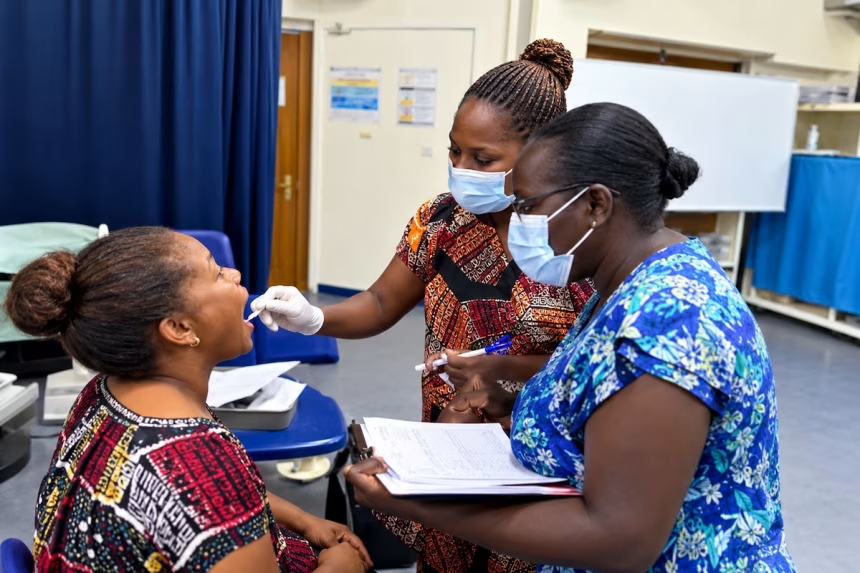
The updated module is designed for integration into routine STEPS surveys and includes a streamlined questionnaire covering key oral health and access-to-care indicators. It also features a simplified clinical assessment that can be carried out by trained survey staff, including those without specialist oral health qualifications.
Click here to join our WhatsApp channel here
By combining self-reported information with basic clinical assessments from representative populations, the approach enables countries to incorporate oral diseases into broader NCD surveillance systems and assess shared risk factors.
The revised module was developed with input from international experts and WHO collaborating centres and reflects current evidence and global public health priorities. It is also aligned with the WHO Global Oral Health Action Plan 2023–2030 monitoring framework and global burden of disease requirements.
“The updated STEPS Oral Health Module gives countries a practical way to integrate oral diseases into broader NCD surveillance. By generating data on oral diseases alongside other NCDs and their shared risk factors, it provides the evidence needed for better decision-making, more effective prevention strategies and stronger health systems,” said Dr Søren Brostrøm, Director, Department of Noncommunicable Diseases and Mental Health, WHO.
The updated approach is expected to strengthen the availability of comparable oral health data and support evidence-based decisions to improve prevention, access to care and health system planning.
Also read: Rare Tumour Extending from Uterus to Heart Removed in Single Surgery