


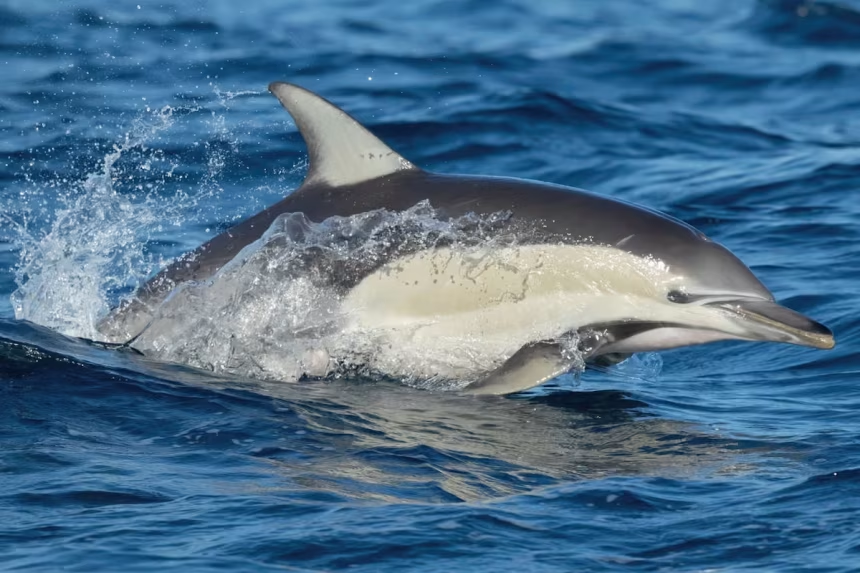

A common dolphin has died from H5N1 bird flu in South Australia, marking the second native mammal species in the country known to have contracted the virus.
The dolphin was found recently deceased near Goolwa on the Fleurieu Peninsula. State testing confirmed H5N1 infection, with samples sent to the Australian Centre for Disease Preparedness for further analysis.
The detection follows earlier cases in long-nosed fur seals at Beachport and the Pages Islands, as well as a red fox near Port Adelaide. A federal risk assessment has classified common dolphins as being at high risk from bird flu, raising concerns about potential population declines if the virus becomes established.
Also read: Surgical Science Launches Aeris, an Interactive Ultrasound Simulation Technology
Meanwhile, authorities in Tasmania are assessing the deaths of around 100 little penguins found at Stokes Point on King Island. The penguins could not be tested for H5 bird flu because their remains were too decomposed. The cause of death has not yet been established.
The Australian government has also announced plans to withdraw 24 expeditioners from the Macquarie Island research station due to concerns over the potential psychological impact of witnessing significant seal deaths during the upcoming breeding season. Although bird flu has not yet been detected on Macquarie Island, the island has large elephant seal populations, and experts have assessed a high likelihood of a significant mortality event.
The department’s deputy secretary, Sean Sullivan, said: “This is an unusual measure, but is the most appropriate course of action, based on our assessments of risk, and operational realities.“