

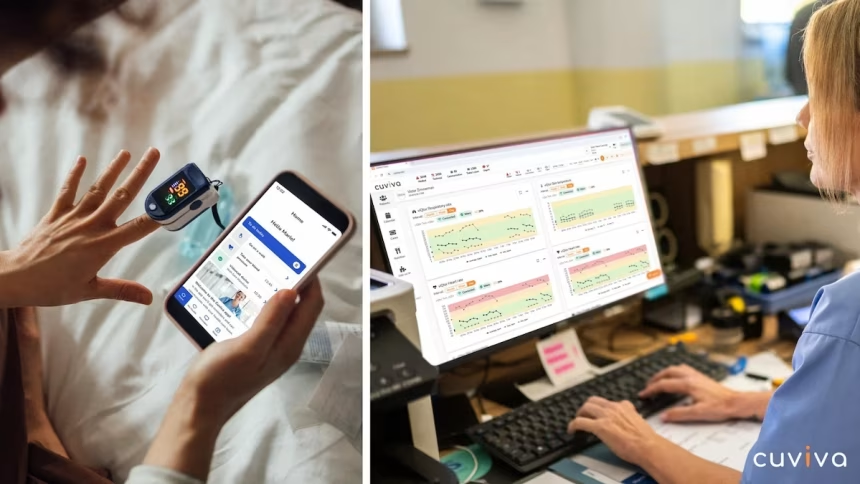

Cuviva and Philips have expanded their global cooperation to advance connected transitional care, building on their selection to support Hospital at Home services at Karolinska University Hospital and Region Stockholm.
The collaboration aims to connect patients and clinicians across the care journey, from hospital admission through recovery at home, using continuous monitoring, early detection of patient deterioration and structured digital care pathways.
Cuviva’s platform uses open standards, including HL7 FHIR and openEHR, to integrate data from multiple monitoring devices, wearables and hospital IT systems without locking healthcare providers into a single technology ecosystem.
Also read: Biotech Collaboration Aims to Advance Personalized Brain Cancer Therapy in Saudi Arabia
The expanded cooperation will combine Cuviva’s Hospital at Home platform with Philips’ patient monitoring portfolio and technologies from wearable and biosensor partners, including Respiree, smartQare, Blue Spark Technologies, Caretaker Medical and LifeSignals.
“The Karolinska University Hospital and Region Stockholm contract award earlier this year marked an important milestone in our collaboration with Philips,” said Henrik Cederqvist, CEO of Cuviva. “Expanding that cooperation into global transitional care is a natural next step. We firmly believe that healthcare providers should retain full control and governance over their patient data and their technology choices – not be locked into a single vendor’s ecosystem. By combining Philips’ in-hospital monitoring leadership with a network of best-in-class wearable innovators, on top of our platform built on open standards and secure, sovereign cloud infrastructure, we enable health systems to maintain data stewardship while delivering coordinated, connected care from hospital to home without compromise.”
Click here to join our WhatsApp channel here
The platform is designed to support secure, scalable and interoperable remote patient monitoring while giving healthcare organisations greater control over patient data and technology choices.
The collaboration reflects growing demand for care models that extend beyond hospitals and support continuous, patient-centred care at home.