


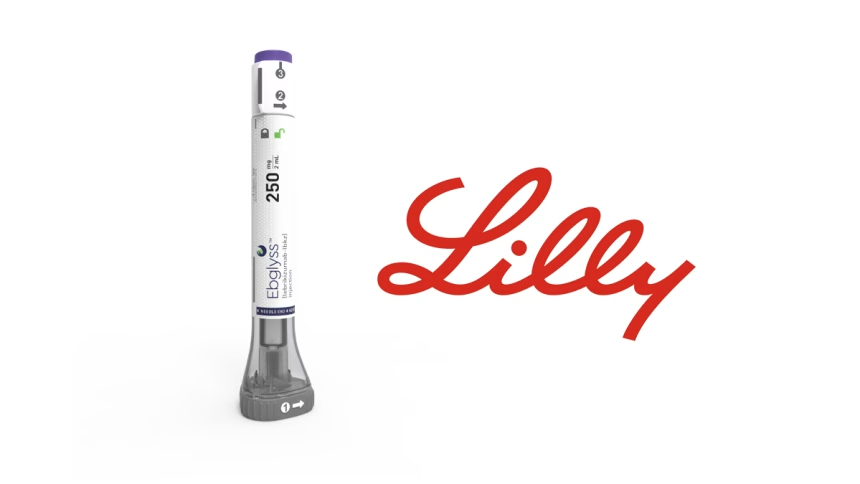

Eli Lilly and Company (NYSE: LLY) announced today that the U.S. Food and Drug Administration (FDA) approved a regimen of one maintenance dose every eight weeks of a single injection (250 mg/2 mL) of EBGLYSS (lebrikizumab-lbkz) for subcutaneous use in adults and children 12 years of age and older who weigh at least 88 pounds (40 kg) with moderate-to-severe atopic dermatitis. EBGLYSS is already approved for a once-monthly maintenance dose, with long-term data showing durable disease control. Now, EBGLYSS gives patients with moderate-to-severe atopic dermatitis the option to manage their condition with as few as six maintenance injections per year.
“Today’s approval builds on EBGLYSS’ established long-term durability, with a new option for one maintenance dose every eight weeks. For people living with moderate-to-severe atopic dermatitis, that means a treatment they only need to take as few as six times a year without prescription topicals from the start,” said Adrienne Brown, executive vice president and president of Lilly Immunology. “EBGLYSS now gives patients the opportunity to flare less and live their lives with fewer interruptions from atopic dermatitis.”
Also read: Sheikh Mohammed approves new Emirates Health Services Board
The approval is based on longitudinal exposure-response modeling data and supported by every-eight-week clinical data from an extension to the Phase 3 ADjoin long-term trial, which evaluated EBGLYSS maintenance dosing every four weeks or every eight weeks over 32 weeks.2
“The option to extend EBGLYSS maintenance dosing to every eight weeks represents an important moment for patients living with moderate-to-severe atopic dermatitis,” said Peter Lio, M.D., author of the ADjoin study and clinical assistant professor of dermatology and pediatrics, Northwestern University. “This new dosing regimen without mandatory topicals gives patients a new option to manage their condition based on individual needs. It’s about meeting patients where they are in their lives.”
“Living with moderate-to-severe atopic dermatitis often means dealing with a cycle of symptoms and time-intensive treatment routines during and in-between flares,” said Kristin Belleson, president and CEO of the National Eczema Association. “Patients living with moderate-to-severe atopic dermatitis seek treatments that can offer durable disease control and fewer injections. This new option can ease the burden, allowing patients to spend less time thinking about managing their condition on a daily basis.”