


March 2026- On the occasion of World TB Day, the World Health Organization has urged countries to step up efforts to end tuberculosis by adopting new diagnostic innovations and expanding access to lifesaving services.
In its latest guidance, WHO has introduced new diagnostic tests that can be used near the point of care, marking a significant step towards faster detection and treatment of one of the world’s deadliest infectious diseases. These portable and easy-to-use tests are designed to bring TB diagnosis closer to where patients typically seek care, reducing delays in identifying and managing the disease.
The newly recommended tests are available at less than half the cost of many existing molecular diagnostics and can operate on battery power. They deliver results in under an hour, enabling patients to begin treatment much sooner. This is expected to support countries in scaling up access to testing, particularly in resource-limited settings.
Beyond tuberculosis, WHO noted that these diagnostic devices could also be used to test for other diseases such as HIV, mpox, and HPV. This multi-disease capability aligns with efforts to make healthcare services more patient-centered and efficient through integrated, one-stop diagnostic approaches.
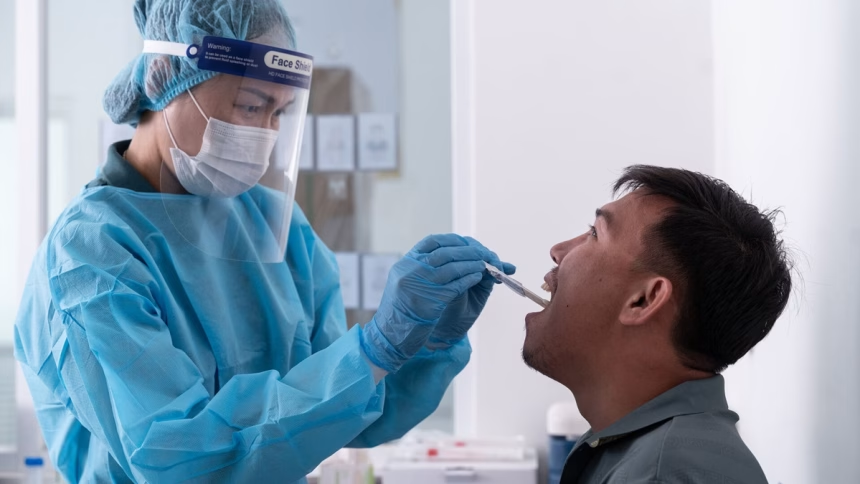
The updated guidelines also highlight the use of tongue swab samples as an easier alternative for TB testing. This method is especially beneficial for adults and adolescents who are unable to produce sputum, allowing broader access to diagnosis among high-risk groups.
Also read: Health profession regulators agree on education quality standards in Africa
Additionally, WHO has recommended a sputum pooling strategy to improve testing efficiency. By combining samples from multiple individuals and testing them together, this approach can reduce costs and machine usage, delivering faster results in settings where resources are limited.
Through these measures, WHO aims to support countries in accelerating progress towards ending tuberculosis by improving early detection and expanding access to timely treatment.
‘‘These new tools could be truly transformative for tuberculosis, by bringing fast, accurate diagnosis closer to people, saving lives, curbing transmission and reducing costs,” said Dr Tedros Adhanom Ghebreyesus, WHO Director-General. “WHO calls on all countries to scale up access to these and other tools so every person with TB can be reached and treated promptly.”